DbcultAccessing Vault...
Cult Review
Senior Film Conservator
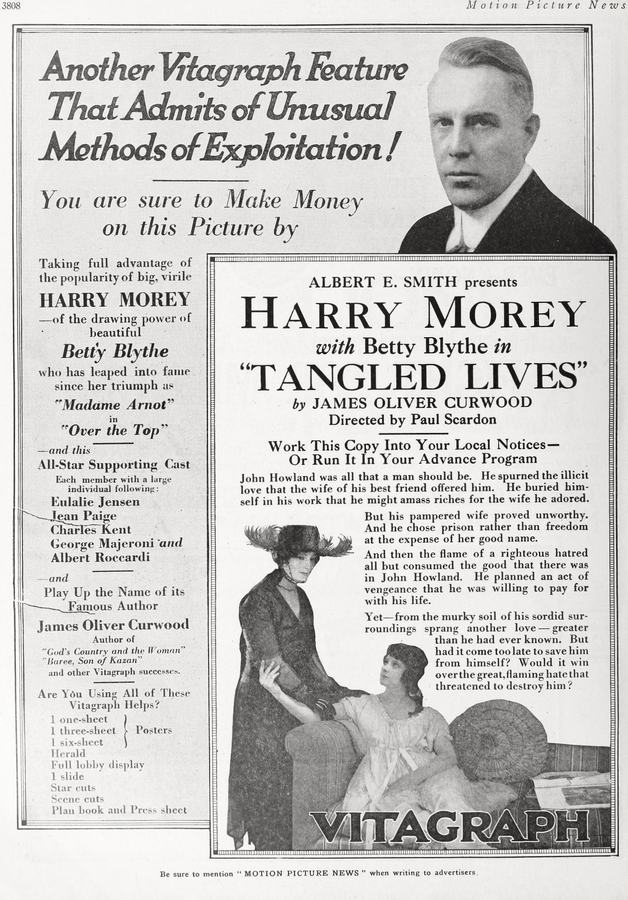
Stepping back into the cinematic annals of 1918, one encounters Tangled Lives, a silent drama that, even a century later, retains a potent, almost visceral, grip on its audience. This isn't merely a film; it's a meticulously crafted tapestry of human folly, miscommunication, and the relentless pursuit of justice, or perhaps, what one believes to be justice. From its very inception, the narrative plunges into the murky waters of suspicion and tragedy, setting a tone that is both somber and utterly captivating. The era of silent film, often dismissed by casual observers as quaint or simplistic, was in fact a crucible for profound storytelling, relying on the sheer power of visual rhetoric and the nuanced performances of its players. Tangled Lives stands as a testament to this artistry, showcasing how a well-structured plot, coupled with expressive acting, could transcend the absence of spoken dialogue.
The film’s genesis lies in a catastrophic misunderstanding, a common but eternally effective trope in melodrama. Colonel West, portrayed with a tragic intensity by Charles Kent, witnesses what he perceives to be an illicit liaison between his wife, Cora (Eulalie Jensen), and John Howland (Harry T. Morey). The Colonel’s immediate, devastating response—suicide—is a stark, almost brutal, opening gambit, instantly establishing the high stakes and emotional volatility that will permeate the entire narrative. What makes this particular incident so poignant is its foundation in utter fallacy: John Howland was not seducing Cora but rather attempting to politely, yet firmly, dissuade her persistent advances. This crucial detail, tragically unseen and unheard by the Colonel, becomes the original sin, the prime mover in a chain reaction of sorrow and vengeance. It’s a testament to the writers, James Oliver Curwood and Garfield Thompson, that they build such a compelling and intricate web of consequences from such a singular, grievous error in judgment.
John Howland, thrust into this maelstrom of undeserved culpability, embodies the archetypal wronged hero. Harry T. Morey, a veteran of the screen, brings a compelling gravitas to the role, his expressions conveying a complex blend of bewilderment, stoicism, and simmering indignation. His character is soon presented with an opportunity for redemption, or at least, a momentary diversion from his woes, when he bravely intervenes to save Lola Maynard (Betty Blythe) from a street attack. This act of gallantry, a classic cinematic device, sows the seeds of a new, pure affection. Lola, recognizing John’s inherent goodness, quietly falls for him, her love a silent, steadfast beacon amidst the storm brewing around him. Betty Blythe, with her ethereal beauty and understated performance, imbues Lola with a quiet strength, making her devotion feel genuine and deeply empathetic. Her decision to keep her love a secret, while perhaps frustrating for a modern audience accustomed to overt declarations, perfectly aligns with the sensibilities and narrative conventions of the silent era, where unspoken glances and subtle gestures often carried more weight than any dialogue could.
The narrative then twists back into the realm of the malicious, propelled by Cora’s relentless and quite frankly, toxic, obsession with John. Unable to secure his affections, she resorts to a cruel deception, informing him that his wife, Hilda (Jean Paige), is engaging in an affair with a young millionaire, Paul Wescott (George Majeroni). This false accusation, a venomous whisper, ignites a furious passion in John. His protective instincts, coupled with a profound sense of betrayal, lead him to threaten Wescott’s life. This escalation is expertly handled, showcasing how quickly a man, pushed to his emotional brink, can abandon reason for raw, primal emotion. The subsequent charge of “murderous assault” and John’s imprisonment, despite his innocence, highlights a recurring theme in silent cinema: the fallibility of the justice system and the ease with which reputation can be tarnished by circumstantial evidence or malicious intent. One might draw parallels here to other films of the era exploring similar themes of unjust accusation and imprisonment, such as The Tempting of Justice, where legal systems often serve as crucibles for moral dilemmas rather than infallible arbiters of truth.
While John languishes in prison, the world outside continues its relentless turning, and not in his favor. Hilda, seizing the opportunity presented by John's incarceration and the perceived scandal, obtains a divorce and promptly marries Paul Wescott. This development adds another layer of betrayal to John’s already heavy burden, transforming his initial anger into a burning desire for retribution. The swiftness of Hilda’s actions, while perhaps shocking, speaks to the societal pressures and limited options for women in that era, as well as a certain opportunism that makes her character less sympathetic. Upon his release, John is a man consumed, his purpose singular: to finally carry out the threat he made against Wescott. This journey into the heart of vengeance is a compelling character arc, demonstrating the corrosive power of unresolved anger and perceived injustice. However, fate, or perhaps a more compassionate narrative hand, intervenes once more. Lola, ever vigilant and still deeply in love, along with John’s steadfast friend, Peter Hyde (Albert Roccardi), prevents him from committing a deed that would only further entangle his life in tragedy. Their intervention is a crucial turning point, pulling John back from the precipice of an irreversible act.
The climax of Tangled Lives is both melodramatic and profoundly impactful, delivering a powerful punch that few modern films dare to attempt. John learns that Paul Wescott has been killed by a lightning strike, a sudden, almost divine intervention that removes the object of his vengeance in a manner entirely beyond human control. Furthermore, Hilda, the woman who betrayed him, has been permanently blinded. These twin blows of fate are not merely convenient plot devices; they serve as a stark, almost biblical, commentary on consequences and the unpredictable hand of destiny. The sudden, violent demise of Wescott and Hilda’s permanent sightlessness are powerful visual metaphors for the destructive forces unleashed by the initial misunderstanding and subsequent betrayals. It's a moment that forces John to confront the futility of his anger, to see the larger, more cosmic justice at play. This kind of heightened dramatic resolution, often incorporating elements of the supernatural or divine judgment, was a hallmark of the era, seen in films that explored grand moral themes, perhaps even more overtly than a film like A Daughter of the Gods which focused more on mythological grandiosity but still touched on epic scales of consequence.
The emotional denouement sees John finally shedding the shackles of his past grievances. The realization of Paul’s death and Hilda’s blindness allows him to transcend his vengeful impulses, paving the way for a deeper, more profound self-awareness. It is in this moment of catharsis that he truly recognizes the unwavering, selfless love of Lola. Her quiet devotion, which had been a constant undercurrent throughout his trials, now surfaces as the singular, undeniable truth. Lola, sensing his change of heart and the dissipation of his anger, finally declares her own long-held affection. This mutual confession brings the tumultuous narrative to a gentle, yet immensely satisfying, close. It’s a resolution that speaks to the enduring power of true love, even against a backdrop of betrayal, injustice, and tragic fate. The performances of Morey and Blythe in these final scenes are particularly moving, conveying a depth of emotion through their eyes and gestures that transcends the silent medium.
The technical aspects of Tangled Lives, while perhaps not groundbreaking for its time, are certainly commendable. The cinematography, though limited by the technology of the era, effectively captures the mood and intensity of the unfolding drama. Close-ups are used judiciously to highlight emotional states, and the staging of key scenes, such as the street attack or John’s confrontation with Wescott, is effective in conveying urgency and conflict. The intertitles, the textual explanations that punctuate the silent action, are well-written and concise, guiding the audience through the narrative without feeling overly didactic. The direction ensures a steady pace, allowing the dramatic tension to build naturally, culminating in the powerful final act. The film’s strength lies not in flashy spectacle, but in its unwavering commitment to character-driven storytelling.
In a broader cinematic context, Tangled Lives fits comfortably within the prevailing melodramatic traditions of the 1910s, a period where moralistic tales and emotionally charged narratives dominated the screen. It shares thematic DNA with other films that explored the complexities of human relationships and the consequences of deception, though perhaps without the overt sensationalism of some contemporary works. The cast, featuring names like Betty Blythe who would go on to greater fame, and Harry T. Morey, a reliable leading man, delivers solid, era-appropriate performances. Eulalie Jensen as Cora is particularly noteworthy; her portrayal of a woman driven by unrequited desire and ultimately, malice, is chillingly effective and provides a crucial antagonist force within the narrative. George Majeroni as Paul Wescott, though his role is shorter-lived, manages to convey the essence of a man caught in a web not entirely of his own making.
Ultimately, Tangled Lives is more than just a historical curiosity; it’s a compelling piece of early cinema that speaks to universal themes. It explores the destructive power of jealousy and misunderstanding, the redemptive quality of love, and the often-unpredictable hand of fate. For enthusiasts of silent film, it offers a rich viewing experience, a window into a bygone era of storytelling where emotion was paramount and conveyed through the subtlest of gestures and the most expressive of eyes. For newcomers, it serves as an excellent entry point into the depth and artistry of early cinema, proving that a story well told, regardless of spoken dialogue, can resonate across generations. Its intricate plot, driven by compelling characters and punctuated by dramatic twists, ensures that these 'tangled lives' remain captivating, drawing the viewer into their complex, emotional journey right up to the very last frame. It’s a reminder that the human heart, with all its desires and deceptions, has always been the most potent subject for cinematic exploration, long before sound ever graced the silver screen.
IMDb —
1928
Community
Log in to comment.