DbcultAccessing Vault...
Cult Review
Senior Film Conservator
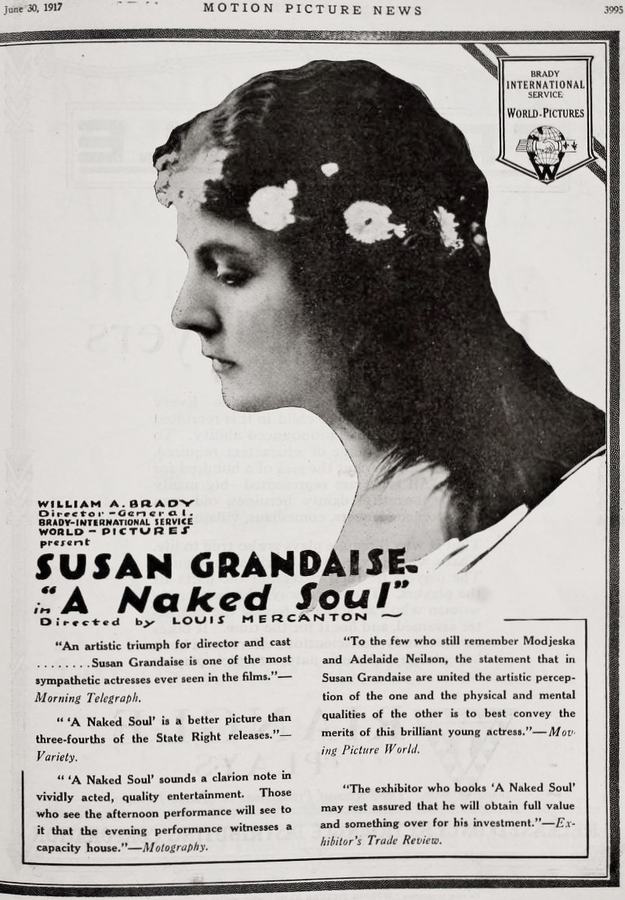
There are silents that merely flicker, and then there are silents that detonate inside your ribcage. A Naked Soul—a 1915 French production now so scarce that even archivists speak of it in hushed past-tense—is emphatically the latter, a nitrate bomb soaked in brackish longing.
From its first iris-in on Suzanne Grandais—face tilted like a pre-Raphaelite martyr—you sense you’re not in for the usual pastoral frolic. Director Henri Desfontaines (yes, the same wizard who later toyed with mythic fatalism) shoots Brittany’s coastline as if it were a character nursing a grudge: waves gnaw cliffs, gulls scream subpoenas, clouds bruise. The landscape is prosecutor and accomplice, mirroring Susan’s internal jurisprudence.
Visually, the picture codifies confinement through verticals: judge’s books, castle turrets, even the brother’s ship masts. Every upright line seems to sentence Susan to a life ninety degrees from joy. When she finally flees to Daddy Dorand’s island, the camera abandons its rigid medium shots and tilts toward the horizon—an ecstatic diagonal that whispers escape. Yet the freedom is mirage-thin; the goatherd’s hut is still framed through a doorway, a reminder that patriarchal architecture shadows even the wilderness.
Grandais—often dismissed as just another femme fragile of Gaumont’s stable—delivers micro-calibrated acting here. Watch her pupils in the letter-interception scene: they contract like a camera’s aperture, shutting out hope in real time. It’s silent-film semaphore at its most surgical.
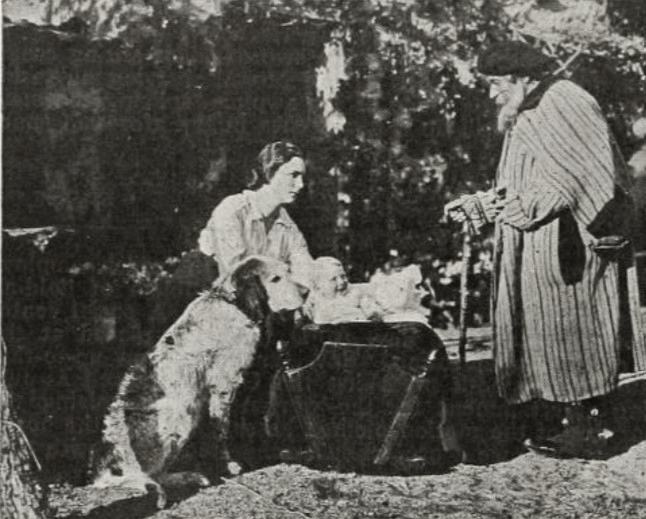
Let’s linger on the Duke of Valdimere, played by Georges Tréville with a silken menace that predates Erich von Stroheim’s Teutonic villains. His erasure of the Prince’s letter is not merely narrative device; it’s an act of epistolary violence. In 1915 Europe—where postal service was the Wi-Fi of the heart—intercepting a letter equaled identity theft. The Duke’s gesture weaponizes bureaucracy, turning ink into shackles. No mustache-twirling here; Tréville’s calm folding of the parchment feels more sinister than any dagger.
The script, adapted from a then-popular but now-obscure serial novel, compresses volumes into sixty-three breathless minutes. Yet it retains the novel’s most radical flourish: the heroine’s suicide is not tragic accident but deliberate apotheosis. Susan’s final walk into the spume is framed in long shot, her white dress blooming like a toxic jellyfish until the current swallows her. A title card follows—"And the sea kept her secret"—that simultaneously romanticizes and indicts.
Cinephiles weaned on Charlotte Brontë adaptations might spot DNA strands: the castle/governess dialectic, the madwoman-in-the-attic refigured as patriarchal law. But unlike Jane, Susan never earns a Ferndean respite; her reward is dissolution. In that sense, A Naked Soul feels closer to House of Tears, another 1915 shocker where female desire ends in aqueous annihilation.
Conversely, the film’s sibling-avengement subplot anticipates the muscular melodrama of Anton the Terrible, though here the brother’s demise is less spectacle than catalyst, forcing the Prince to confront the moral arithmetic of his privilege.
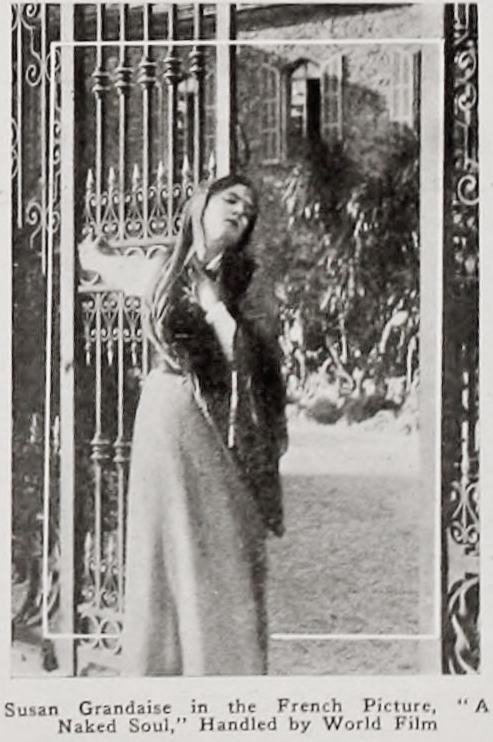
Surviving prints—those rumored two at Cinémathèque de Bretagne—are hand-tinted with a feverish palette: cyan for nights, ochre for interiors, magenta for Susan’s cloak. When projected, the sea becomes a bruised tangerine, suggesting passion irradiated by injustice. Modern restorations often desaturate such hues under the alibi of "authenticity," but doing so here would lobotomize the film’s emotional chromatics. If you ever curate a retrospective, insist on the tinted 35 mm; let audiences drown properly.
Because no original score survives, each screening becomes a séance where musicians channel ghosts. I witnessed a 2019 Bologna revival: a trio used Breton bagpipes and water-phone—anachronistic yet eerily apt, replicating the diegetic wind that haunts nearly every exterior shot. Purists scoffed, but the dissonance underlined the story’s proto-modernist alienation. Avoid piano-only accompaniment; it flattens the film’s tidal dynamics into drawing-room respectability.
What makes the film still throb is its dissection of juridical femininity. Susan’s father wields the law as paternal extension: her body is a legal brief he annotates at will. The Prince’s ring—initially a token of mutual contract—becomes evidentiary exhibit once repossessed by the Duke. Even motherhood is criminalized; Susan’s pregnancy sentences her to exile, whereas the Prince’s parallel sexuality is neutralized through dynastic marriage. The double standard is so brazen it feels Brechtian, though the film never winks at its own cruelty.
Grandais died in a 1920 car crash; she was twenty-seven. Viewing A Naked Soul today, you sense a premonition of that abrupt curtain. Her Susan vibrates with uncanny fin-de-siècle fatalism, as if she already intuits her interpreter’s truncated lifespan. It invests the suicide scene with metatextual shivers—an actress merging with character, both stepping out of time.
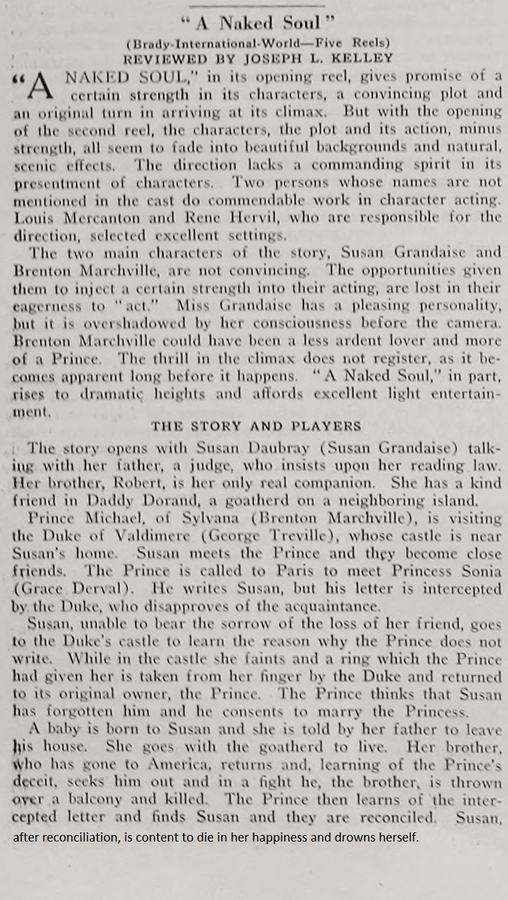
Georges Tréville essays the Prince as a man haunted by predestination. Every princely prerogative—banquets, uniforms, treaties—feels like a velvet leash. His belated race to Susan’s seaside hut replays the Orpheus myth minus divine reprieve; he arrives bearing redemption, only to embrace corpse-cold epiphany. In the final shot he cradles her soaked veil, a man learning that crowns cannot buy erasure of complicity.
Desfontaines repeatedly frames Susan through windows, keyholes, and veils. We, the spectators, become co-voyeurs with the Duke, implicated in the patriarchal panopticon. Yet the film’s final moments deny us consoling close-ups; Susan’s death occurs in extreme long shot, her body a pale hyphen between foam and night. The refusal of spectacle indicts our thirst for feminine suffering—an ethical maneuver rare in 1915 cinema.
Because only fragments are known to exist, A Naked Soul circulates more as myth than matter. Bootleg DVDRs traded at Cinecon carry Portuguese intertitles lifted from a South-American release; their translations warp nuance ("Dear Susan" becomes "Beloved Siren"). Still, such mutations testify to the film’s viral resilience. In an age when cloud servers swallow movies whole, the scarcity of Naked Soul feels perversely vital—cinema as endangered species whose every celluloid sliver shimmers with pleas for clemency.
We live reboot-saturated times where narratives of female despair too often serve as prequels to triumphant survival arcs. A Naked Soul withholds that catharsis; it offers no phoenix, only ashes rinsed by lunar tides. Yet in its uncompromising terminus lies a strange liberation: the acknowledgment that some systems—patriarchy, monarchy, even narrative itself—cannot be reformed from within. Susan’s suicide is not surrender but secession, a refusal to let the Prince’s belated contrition script her into absolution.
Seek the film, if you can, at cinematheques bold enough to flaunt incompleteness. When the lights die and the water-phone moans across those Breton cliffs, you may glimpse cinema’s most harrowing equation: love intercepted equals life intercepted. And as the projector’s final click echoes like a gavel, you’ll exit into night air that tastes of salt and complicity, newly aware that every unposted letter still hovers somewhere, ghost-lit, waiting for a censor-Duke to snatch it from the sky.
For further context, pair your viewing with Traffic in Souls (white-slavery panic, 1913) and Her Life and His (karmic melodrama, 1917) to map early cinema’s obsession with female agency under siege.
IMDb 5.8
1930
Community
Log in to comment.