DbcultAccessing Vault...
Cult Review
Senior Film Conservator
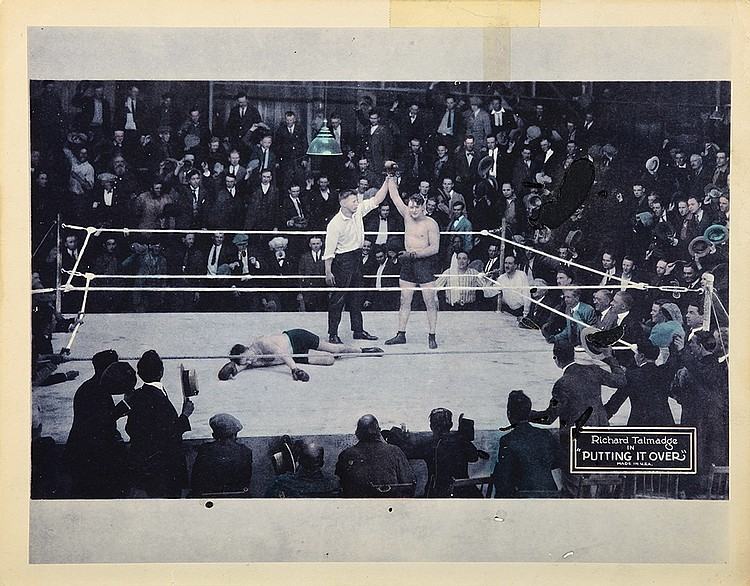
Stepping back into the cinematic landscape of 1922, one encounters a fascinating tapestry of storytelling, where nascent film language was still finding its voice, yet already capable of crafting compelling narratives. Among these forgotten gems emerges 'Putting It Over,' a film that, at first glance, appears to be a straightforward tale of political machinations and personal redemption. However, a deeper examination reveals a nuanced exploration of morality, duty, and the transformative power of love, all wrapped in the thrilling package characteristic of its era. This isn't merely a relic of a bygone age; it's a testament to the enduring appeal of universal themes, brought to life by the energetic performances of its cast, particularly the acrobatic prowess of Richard Talmadge.
The narrative's genesis lies in a familiar trope: the wayward son. Bob Merritt, portrayed with a blend of youthful recklessness and underlying potential by Richard Talmadge, is granted what his powerful father, James Merritt (Tom Ricketts), terms a 'thirteenth chance.' This final opportunity isn't a simple plea for good behavior; it's a high-stakes directive to defeat Arnold Norton in the fiercely contested Carterville mayoral election. James Merritt, a man accustomed to wielding considerable influence in state politics, sees this as a means to both secure his own political interests and, perhaps, instill a sense of purpose in his seemingly aimless offspring. The initial thrust of the plot, therefore, positions Bob as an instrument of his father's will, a pawn in a larger political game. His initial efforts, driven by a desire to finally 'make good' in his father's eyes, are earnest, if somewhat unrefined. This sets the stage for a classic hero's journey, albeit one fraught with ethical pitfalls and unexpected romantic detours.
However, the true complexity of the story unfurls with Bob's encounter with Barbara Norton, played by the captivating Doris Pawn. Barbara is not merely a love interest; she is the moral compass that reorients Bob's trajectory. Her integrity, coupled with her unwavering belief in her father's honest campaign, begins to chip away at Bob's inherited political cynicism. The revelation of the insidious tactics employed by Mark Durkham (Harry von Meter), James Merritt's ruthless political henchman, serves as the ultimate catalyst. Durkham's underhanded efforts to undermine Arnold Norton expose the darker underbelly of power, forcing Bob to confront a stark choice: continue to serve his father's morally dubious agenda or align himself with truth and justice, even if it means betraying his familial obligation. This pivotal moment of realization is crucial, transforming Bob from a reluctant participant into an active agent of change, mirroring similar narratives of individuals finding their conscience amidst corrupt systems, much like the internal struggles seen in films where personal integrity clashes with external pressures, such as The Conquering Hero.
Bob's dramatic switch of allegiance marks the true beginning of his redemption arc. He throws his considerable energy and resourcefulness into securing Norton's victory, simultaneously striving to win Barbara's affection. This commitment isn't without its challenges. The film, true to the era's taste for spectacle, injects a series of 'exciting events,' most notably a prizefight. Richard Talmadge, renowned for his athletic prowess and willingness to perform his own daring stunts, shines in these sequences. His physical acting, a cornerstone of silent cinema, conveys a sense of dynamism and urgency that transcends the lack of spoken dialogue. These action set pieces are not mere diversions; they are integral to Bob's journey, testing his resolve and demonstrating his newfound dedication. The prizefight, for instance, symbolizes his battle against the forces of corruption, his willingness to physically fight for what is right, a stark contrast to his earlier, more passive existence. This blend of romantic drama and thrilling action was a popular formula, effectively engaging audiences who sought both emotional resonance and exhilarating entertainment.
Doris Pawn's performance as Barbara Norton provides a compelling counterpoint to Talmadge's physicality. Her character embodies grace and moral fortitude, serving as the emotional anchor of the film. In a time when female characters were often relegated to damsel-in-distress roles, Barbara exhibits a quiet strength and conviction that makes her a formidable influence on Bob. Their burgeoning romance feels earned, a natural consequence of shared values and a common struggle against injustice. The chemistry between Talmadge and Pawn, though expressed through the exaggerated gestures and facial expressions typical of silent film acting, is palpable, lending genuine warmth to the political machinations. It’s a love story that acts as the very engine of the hero's transformation, much like how emotional connections drive the narrative in other character-focused silent dramas such as Peg o' My Heart.
Grover Jones's screenplay, while adhering to the conventions of its time, skillfully weaves together elements of political drama, romance, and action. The pacing is brisk, a necessity in silent cinema where intertitles had to efficiently convey dialogue and plot points without losing the audience's attention. The reliance on visual storytelling is paramount, and the film generally succeeds in communicating complex emotions and narrative developments through performance and staging. Tom Ricketts as James Merritt effectively portrays the nuanced arrogance and eventual dawning realization of a powerful man. His character's arc, though secondary to Bob's, provides a reflection of the consequences of unchecked ambition and the potential for parental redemption through witnessing a child's moral growth. Harry von Meter's Mark Durkham is the quintessential silent film villain, his expressions and gestures conveying a conniving ruthlessness that is easily understood without a single spoken word. These performances, though perhaps melodramatic by modern standards, were perfectly calibrated for the audiences of the 1920s, who were accustomed to a more expressive and demonstrative acting style.
The direction of 'Putting It Over' effectively utilizes the tools available to filmmakers of the era. While specific directorial credits for this film are sometimes ambiguous in historical records, the execution demonstrates a clear understanding of how to build tension, stage action sequences, and elicit emotional responses from the audience. The cinematography, though lacking the sophisticated camera movements of later eras, employs effective framing and lighting to highlight key dramatic moments. Close-ups are used judiciously to emphasize emotional reactions, while wider shots establish the setting and the scope of the action. The visual quality, even in surviving prints, speaks to a professional production that aimed to deliver a polished and engaging cinematic experience. Considering other films of the period, such as A Slave of Vanity or Captain Kidd's Kids, 'Putting It Over' stands as a competent example of the era's storytelling capabilities, balancing spectacle with a coherent narrative.
Beyond the thrilling stunts and romantic entanglements, 'Putting It Over' subtly engages with significant societal themes pertinent to 1920s America. The film's depiction of political corruption, though perhaps simplified for mass appeal, reflects a public awareness and concern regarding the ethics of power. The idea of an 'honest' politician like Arnold Norton, fighting against the 'underhanded efforts' of a political machine, resonated with an audience that was increasingly scrutinizing the integrity of its leaders. Bob Merritt's journey from a privileged, disaffected youth to a principled advocate for justice speaks to the era's ideals of individual responsibility and the potential for personal transformation. His redemption is not merely about winning the girl or his father's approval; it's about finding his own moral compass and asserting his independence from a corrupting influence. This theme of personal growth and ethical awakening is a timeless one, and 'Putting It Over' presents it with a clarity and conviction that remains impactful.
The film also touches upon the evolving role of women. While Barbara Norton's primary function is to inspire Bob, she is not a passive figure. Her conviction and influence are central to the plot, demonstrating the growing recognition of women's moral authority in society, especially in the wake of the suffrage movement. She is a character of agency, even if her actions are primarily confined to the emotional and ethical spheres. This subtext adds another layer to what might otherwise be perceived as a purely action-oriented romance. The clash between old-guard politics and a demand for transparency, represented by James Merritt and Arnold Norton respectively, serves as a microcosm of broader societal shifts occurring in the early 20th century. The film, in its own way, advocates for a more ethical and accountable political system, a sentiment that continues to echo through contemporary discourse.
Though 'Putting It Over' may not hold the same iconic status as some of its more celebrated silent contemporaries, it nevertheless offers valuable insights into the filmmaking practices and cultural values of its time. Richard Talmadge's performance, a blend of physical daring and earnest dramatic effort, is a highlight, showcasing why he was a popular star of the era. Doris Pawn's understated elegance provides the necessary emotional grounding, making the romantic elements genuinely engaging. For enthusiasts of silent cinema, this film provides an excellent example of how complex narratives were constructed without spoken dialogue, relying instead on visual cues, intertitles, and the expressive capabilities of its actors. It's a reminder of a period when the very grammar of film was still being written, and yet, stories could be told with immense clarity and emotional impact.
Revisiting 'Putting It Over' today is more than just an academic exercise; it's an opportunity to appreciate the foundational elements of cinematic storytelling. It demonstrates how a compelling plot, well-defined characters, and a touch of thrilling action could captivate audiences a century ago, and how those same ingredients continue to resonate. The film serves as a small but significant piece in the vast puzzle of early American cinema, contributing to the understanding of popular entertainment and the evolving artistry of the moving picture. Its themes of redemption, integrity, and the struggle against corruption remain remarkably relevant, proving that good storytelling, regardless of technological limitations, possesses an enduring power. It reminds us that even in the absence of sound, a film can speak volumes, 'putting over' its message with grace, excitement, and a timeless appeal. This enduring quality is what makes exploring films like 'Putting It Over' so rewarding, allowing us to connect with the past while recognizing the threads that bind it to the present, much like the timeless narratives found in other compelling dramas of the era, such as Zhenshchina, kotoraya izobrela lyubov, which also delves into profound human experiences through the lens of silent film.
IMDb —
1918
Community
Log in to comment.