DbcultAccessing Vault...
Cult Review
Senior Film Conservator
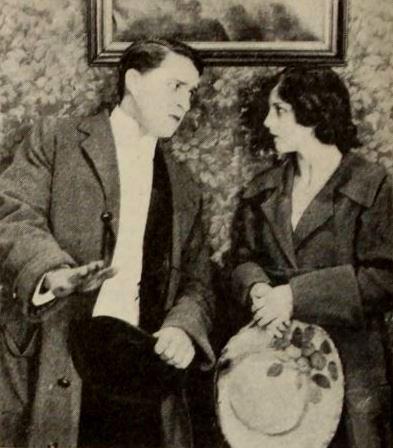
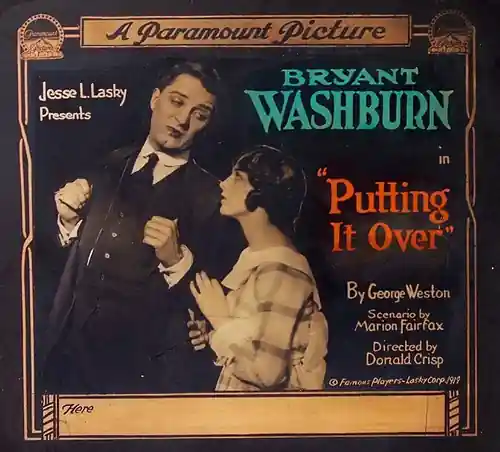
Ah, the silent era! A time when narratives unfurled with a grand theatricality, where emotions were writ large across faces, and the sheer ingenuity of visual storytelling held audiences captive. Today, we're dusting off a fascinating relic from 1919, a film that, despite its relative obscurity in the grand tapestry of cinematic history, offers a compelling glimpse into the societal anxieties and aspirations of its time: Putting It Over. Directed with a keen eye for dramatic tension, and brought to life by the penmanship of Marion Fairfax and George Weston, this picture is far more than a mere historical curiosity; it’s a vibrant testament to the power of human spirit against formidable odds, a tale of innovation clashing with the entrenched greed of industrial titans.
From the outset, Putting It Over plunges us into a world teetering on the cusp of profound change. Our protagonist, Jack Thorne, portrayed with earnest conviction by Bryant Washburn, is not merely an inventor; he is an avatar of progress, a solitary figure whose brilliant mind has conceived an engine design poised to revolutionize industry. Washburn, a seasoned performer of the era, imbues Thorne with a quiet determination, his expressive eyes conveying the weight of his dreams and the burden of his impoverished circumstances. He is the archetypal underdog, a character designed to elicit immediate audience sympathy, and Washburn navigates this complex portrayal with a nuanced understanding of silent film's demands. His physicality is restrained yet purposeful, allowing the audience to project their hopes and fears onto his journey.
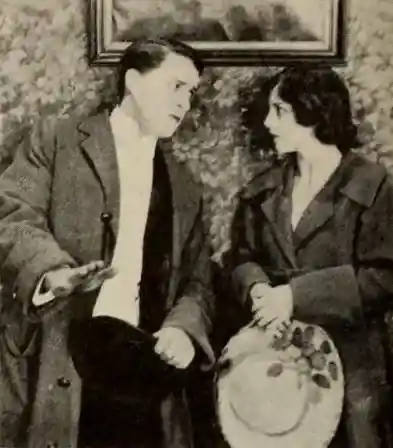
The narrative engine, if you'll pardon the pun, truly ignites with the introduction of Silas Vance, a character brought to formidable life by Clarence Geldert. Vance is the antithesis of Thorne: a ruthless industrialist, a titan whose empire is built on the cold calculation of acquisition and the exploitation of others' genius. Geldert, with his imposing stature and chillingly calm demeanor, crafts a villain who is both menacing and subtly insidious. He’s not a mustache-twirling caricature but a portrait of corporate malfeasance, a man who believes deeply in the might of his own capital and the inherent right to claim whatever he desires. His scenes are charged with a quiet menace, a palpable sense of threat that permeates the screen even in moments of apparent calm. The conflict between Thorne’s integrity and Vance’s avarice forms the bedrock of the film’s moral landscape, an eternal struggle that resonates as powerfully today as it did a century ago.
The plot thickens with the arrival of Evelyn Cross, played by Adele Farrington. Farrington embodies the sophisticated femme fatale, a woman of undeniable charm and enigmatic motives, dispatched by Vance to infiltrate Thorne's inner circle and pilfer his precious designs. Her performance is a masterclass in subtle duplicity; she glides through scenes with an aura of detached elegance, her smiles concealing a calculated agenda. The tension generated by her presence is exquisite, as the audience is left to wonder if Thorne will succumb to her wiles or see through her carefully constructed façade. This element of industrial espionage adds a thrilling layer to the drama, reminiscent in its intrigue, perhaps, of more contemporary thrillers focused on corporate secrets, though presented here with the unique visual language of the silent screen. One might even draw a thematic parallel to the moral ambiguities explored in films like Within the Law, where characters navigate the precarious edges of legality and ethics in pursuit of their goals, albeit Putting It Over focuses more on the proactive defense of innovation rather than the aftermath of a legal transgression.
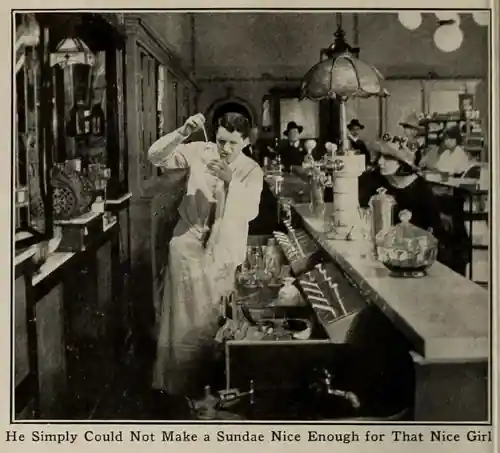
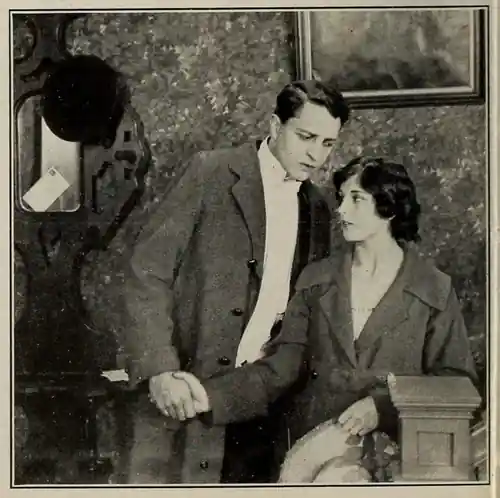
However, the film’s heart and moral compass truly emerge with Mary Dalton, portrayed by the luminous Edna Mae Cooper. Cooper delivers a performance of remarkable empathy and spirited resolve. Initially employed by Vance, Mary quickly becomes disillusioned by his unethical practices. Her transition from a cog in Vance’s ruthless machine to Thorne’s most vital ally is handled with delicate precision, Cooper conveying a growing unease and eventual defiance through subtle shifts in expression and posture. Her character is not a mere damsel in distress but an active participant, a woman whose intelligence and moral fortitude are instrumental in turning the tide against Vance. The chemistry between Cooper and Washburn is understated yet palpable, their shared purpose forging a bond that blossoms into a quiet, hopeful romance. It’s a refreshing take on the romantic subplot, grounding it in shared peril and mutual respect rather than superficial attraction.
The brilliance of Marion Fairfax and George Weston's screenplay lies in its meticulously crafted counter-scheme. Thorne and Dalton, united in their resolve, devise an audacious plan: a public demonstration of a deliberately flawed, ersatz prototype of Thorne’s engine. This intricate deception is designed to bait Vance, luring him into exposing his nefarious intentions and the network of spies he has deployed. The tension during this sequence is expertly managed, a silent symphony of anticipation and dread. The audience is privy to the true nature of the demonstration, making Vance’s smug confidence all the more infuriating, and Thorne and Dalton’s quiet desperation all the more poignant. This narrative device allows for a thrilling interplay of wit and strategy, elevating the film beyond a simple good-versus-evil confrontation into a sophisticated game of cat and mouse.
The supporting cast, though perhaps less prominent, provides crucial texture to this industrial drama. Casson Ferguson, Robert Dunbar, Winifred Greenwood, Edward Alexander, Shirley Mason, and Guy Oliver each contribute to the film’s rich tapestry, portraying various employees, accomplices, and unwitting pawns in Vance’s schemes or Thorne’s desperate fight. Their collective performances, often through exaggerated but effective pantomime, underscore the pervasive influence of power and the vulnerability of the individual within the industrial landscape. The film's portrayal of the corporate environment, while perhaps simplistic by today's standards, effectively conveys the power dynamics and ethical quandaries inherent in burgeoning capitalism.
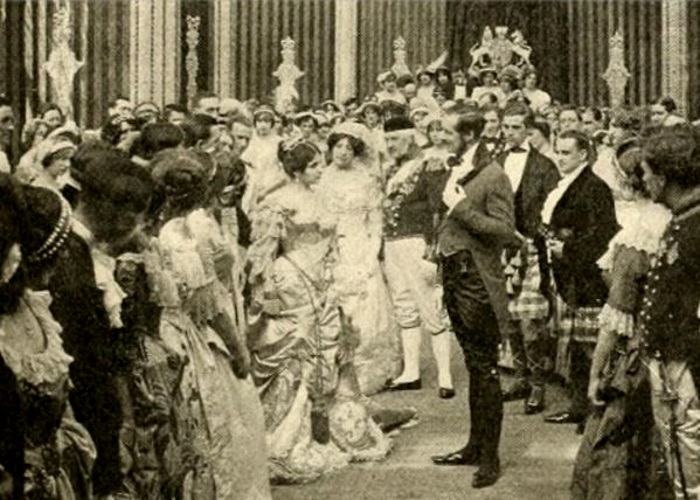
Visually, Putting It Over is a fascinating document. The sets, though likely modest by modern Blockbuster standards, are effectively utilized to convey the stark contrast between Thorne's humble workshop and Vance's opulent, yet morally sterile, offices. The cinematography, a cornerstone of silent film artistry, employs dramatic lighting and carefully composed frames to heighten emotional impact and advance the narrative. Close-ups on characters' faces, a technique crucial for conveying unspoken dialogue, are used judiciously to reveal inner turmoil, cunning, or nascent affection. The editing maintains a brisk pace, ensuring that the tension never slackens, particularly as the climax approaches. The film’s aesthetic, while constrained by the technology of its era, demonstrates a remarkable understanding of visual storytelling, proving that spectacle is not solely dependent on sound or color.
Thematically, Putting It Over is surprisingly prescient. It delves into universal struggles: the David-and-Goliath battle against overwhelming power, the moral compromises demanded by ambition, and the enduring human quest for recognition and justice. It champions ingenuity and integrity over brute force and deception, a message that remains eternally relevant. The film subtly critiques the rampant industrialism of the early 20th century, where individual genius was often preyed upon by corporate behemoths. This theme echoes in other silent era films that explored social injustice or the plight of the individual against systemic corruption. For instance, one might consider the moral quandaries presented in a film like The Silence of Dean Maitland, which grapples with hidden truths and consequences, or even the fight for justice seen in The Convict Hero, where a character must overcome societal prejudice and prove their worth.
The climax of Putting It Over is a masterclass in silent film suspense. As Vance's plot unravels, culminating in a thrilling chase sequence and a dramatic public revelation, the energy on screen is palpable. The physical comedy inherent in some of the chase elements, combined with the genuine stakes of Thorne's future, creates a captivating spectacle. The resolution, while satisfyingly conclusive, avoids simplistic saccharine endings, instead opting for a hard-won victory that emphasizes the resilience of its protagonists. It’s a reminder that true triumph often comes not from brute strength, but from cunning, courage, and a steadfast belief in one's own principles.
In terms of its place within the broader cinematic landscape, Putting It Over stands as a fine example of a well-crafted silent drama. While it may not possess the grand epic scale of some contemporary blockbusters, its intimate focus on character and moral conflict gives it an enduring appeal. It's a film that asks us to consider the value of true innovation against the corrosive influence of greed. The performances, particularly from Washburn, Cooper, and Geldert, are exemplary, showcasing the nuanced artistry required to convey complex emotions without spoken dialogue. The writers, Fairfax and Weston, deserve commendation for a tightly plotted script that balances suspense, romance, and social commentary with admirable skill.
Reflecting on the film’s legacy, one can see how its themes reverberate through cinema even today. The struggle of the lone inventor against corporate giants is a perennial favorite, a narrative that continues to captivate audiences. Putting It Over, in its unassuming way, contributes significantly to this rich tradition. It’s a film that deserves to be rediscovered, not just as a historical artifact, but as a compelling piece of storytelling that transcends the limitations of its medium. For those interested in the evolution of cinematic narrative, the power of visual performance, and the timeless struggle between right and wrong, this silent gem offers a surprisingly potent experience.
This film, like many from its era, reminds us of the sheer expressive power of the human face and body, the meticulous choreography required to stage action and emotion, and the universal language of storytelling that predates the advent of synchronized sound. It’s a testament to the fact that compelling cinema has always been about character, conflict, and the ingenious ways in which filmmakers bring these elements to life. Putting It Over, with its blend of thrilling intrigue and heartfelt human drama, successfully 'puts over' its message with quiet conviction and enduring charm. It's a film that, once seen, lingers in the mind, a poignant echo from a bygone era that still speaks volumes.
And speaking of echoes, the portrayal of women in Putting It Over, particularly through Edna Mae Cooper's Mary Dalton, is noteworthy. Mary is not a passive observer but an active agent in her own destiny and in Thorne’s success. This portrayal, while perhaps not overtly feminist by modern standards, shows a progressive lean for its time, contrasting sharply with purely ornamental female roles sometimes seen. Her intellectual contribution to the scheme is as vital as Thorne's inventive genius. This nuanced depiction of female agency can be seen in other films of the era that sought to challenge conventional gender roles, perhaps even finding distant thematic cousins in the independent spirit embodied in characters from films like Miss Jackie of the Navy or the determined protagonist of The Wine Girl, both of which feature women navigating complex situations with agency and resolve. The film avoids reducing its female characters to mere romantic interests, instead positioning them as integral to the plot's unfolding and the ultimate triumph of justice.
The meticulous attention to detail in the script by Marion Fairfax and George Weston is evident in how each character, even those in minor roles, serves a purpose in advancing the central conflict. There are no superfluous scenes or unnecessary diversions; every moment is carefully calibrated to build suspense, develop character, or propel the plot forward. This economy of storytelling, a hallmark of effective silent film writing, ensures that the audience remains fully engaged from the opening frame to the dramatic conclusion. It's a masterclass in how to convey complex narrative arcs and character motivations through purely visual means, relying on the actors' expressions, gestures, and the director's staging to communicate volumes without a single spoken word. One can appreciate the tight plotting and focused narrative, a quality that perhaps sets it apart from some contemporaries that occasionally meandered into episodic tangents. The writers understood the power of visual cues, ensuring that every glance, every movement, every prop had a narrative function.
The film's exploration of corporate espionage and the ethical dilemmas surrounding intellectual property also provides a compelling historical lens. In an era of rapid industrial expansion and technological breakthroughs, the question of who owns an idea, and how one protects it from predatory forces, was acutely relevant. Putting It Over tackles this head-on, presenting a compelling argument for integrity and fair play in the cutthroat world of business. It’s a timeless theme that continues to resonate in our own age of digital innovation and global competition. The film acts as a cautionary tale, illustrating the lengths to which individuals and corporations might go to secure advantage, and the resilience required to combat such machinations. This makes it not just a piece of entertainment, but a socio-economic commentary, reflecting the anxieties of a society grappling with the consequences of unchecked industrial power. The moral clarity, despite the intricate plot, is never in doubt, providing a satisfying sense of justice.
Ultimately, Putting It Over is a triumph of silent cinema. It showcases the formidable talents of its cast, particularly Bryant Washburn and Edna Mae Cooper, whose performances are both captivating and deeply empathetic. The sophisticated script by Marion Fairfax and George Weston ensures a thrilling and intellectually engaging experience, while the direction expertly crafts a world of high stakes and moral clarity. It’s a film that reminds us of the enduring power of a well-told story, regardless of the technological limitations of its time. For those seeking to delve into the rich archives of early cinema, Putting It Over offers a remarkably fulfilling journey, a true testament to the artistry and storytelling prowess of the silent film era. It truly 'puts over' the idea that a compelling narrative, strong performances, and thematic depth are paramount, regardless of the era or the medium's constraints.
IMDb 5.2
1930
Community
Log in to comment.