DbcultAccessing Vault...
Cult Review
Senior Film Conservator
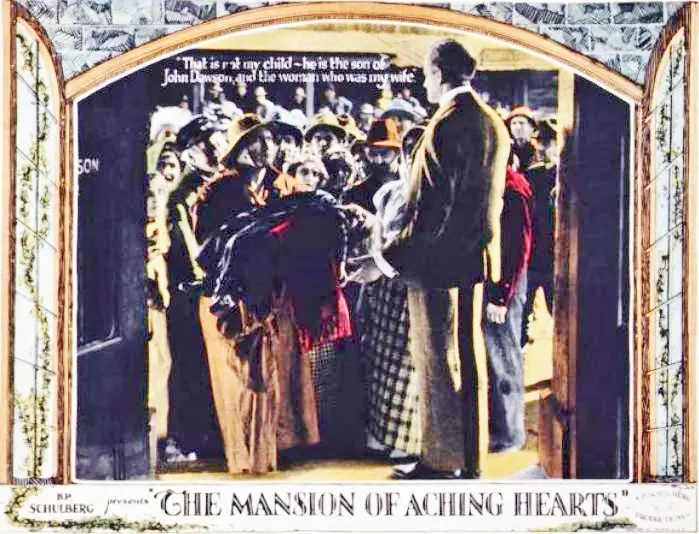
There are certain cinematic artifacts that transcend their era, speaking to the timeless human condition with an eloquence that defies the passage of time. The Mansion of Aching Hearts, a silent era drama from the collaborative minds of writers Frederick Stowers, Harry von Tilzer, and Arthur J. Lamb, is unequivocally one such film. It's a narrative tapestry woven with threads of betrayal, misunderstanding, and the arduous, often circuitous, path to redemption. This isn't merely a story; it's an operatic tragedy unfolding in stark black and white, a profound exploration of how suspicion, once sown, can germinate into a bitter harvest that blights generations.
The film commences with an act of devastating cruelty, setting a tone of profound injustice that reverberates throughout its entire runtime. Martin Craig, portrayed with a chilling stoicism by an actor whose name is lost to the mists of time (the cast list provided focuses on the later adult roles, leaving the early Martin to our imagination), is a banker whose financial acumen is matched only by his emotional impenetrability. His heart, we are told, is as 'hard-hearted' as his ledgers are meticulous. Blinded by an unfounded suspicion of his wife Pauline's infidelity, he commits an act that defines the tragedy: he casts her and their young son into the unforgiving world. This initial expulsion is more than a plot device; it's the primal wound from which all subsequent suffering emanates. It immediately draws parallels to other narratives of societal judgment and wronged women, perhaps even echoing the moral dilemmas found in films like Forbidden Fruit, though The Mansion of Aching Hearts delves deeper into the familial fracture rather than solely external societal pressures.
The narrative then swiftly descends into a maelstrom of misfortune. Pauline, now a solitary figure, loses her son during a ferocious storm, believing him to be swallowed by the merciless elements. The irony, a cornerstone of this dramatic construct, is almost unbearable: Martin, the architect of her initial despair, unwittingly becomes the savior of his own son. He finds the boy, nameless and parentless in his eyes, and raises him as a foundling. This act, born of a twisted twist of fate, underscores the film's profound engagement with dramatic irony. The audience is privy to this devastating secret, watching the characters navigate a world where truth is agonizingly withheld, a narrative technique that builds immense emotional tension. This separation and unknowing reunion is a powerful engine for the plot, reminiscent of classic literary tragedies where identity and lineage are obscured by circumstance.
Years, those relentless weavers of destiny, unfurl, transforming the discarded wife into a formidable figure of compassion. Pauline, now a matron in a home for 'friendless girls,' embodies resilience. Her suffering has not hardened her; instead, it has imbued her with an empathy that becomes her defining characteristic. It is in this role that she encounters Martha, a young woman whose life has been similarly blighted by Martin Craig's unyielding judgment and persecution as a 'fallen woman.' This convergence of two victims, one past, one present, ignited by the same source of malevolence, serves as the critical catalyst for the film's climactic confrontation. This thematic thread, the long-lasting impact of a powerful man's moralizing, resonates with the societal critiques often subtly embedded in silent dramas, where the consequences of rigid social norms are laid bare.
Pauline's dormant fury, awakened by Martha's plight, propels her toward a confrontation with Martin. This is not merely a personal vendetta; it's a quest for justice against a man who has systematically destroyed lives with his unbending will and unfounded suspicions. Helen Hoge, as Pauline, delivers a performance that, even through the lens of silent film acting conventions, conveys a potent mixture of maternal grief, righteous anger, and an unwavering moral compass. Her journey is the emotional core of the film, a testament to the enduring strength of a woman wronged.
In a twist of fate that only adds to the narrative's profound pathos, Pauline encounters her son, now known as Bill Smith. Cullen Landis, playing the adult Bill, embodies a young man shaped by a life without true familial roots, a foundling who, unknowingly, carries the weight of his father's initial error. The gradual revelation of their true relationship, as Pauline tenderly shares the truth with Bill, is fraught with a delicate tension. The audience anticipates either a joyous reunion or a dramatic rejection, and the film, in its unsparing honesty, delivers the latter with a brutal effectiveness. Bill, fueled by a lifetime of perceived abandonment and a visceral need for vengeance against the mother he believes deserted him, incites a mob. This mob, a physical manifestation of communal judgment and unreasoned anger, attempts to drive Pauline away, a cruel echo of her initial expulsion from Martin's home. The cyclical nature of suffering, perpetuated by ignorance and misplaced blame, is powerfully rendered here, making one ponder the depths of human misunderstanding and its devastating repercussions.
It is at this critical juncture, on the precipice of irreparable damage, that Martin Craig finally steps forward. Sam De Grasse, likely portraying the older, guilt-ridden Martin, delivers a performance that must have been profoundly impactful, even without spoken dialogue. His confession, the unveiling of the 'unfounded suspicions' that led to Pauline's initial banishment and the subsequent separation from their son, is the film's cathartic release. It is a moment of profound truth, shattering the edifice of lies and misunderstandings that have dictated the lives of these characters for decades. This act of self-revelation is not merely a plot resolution; it's an acknowledgment of culpability, a desperate plea for atonement, and a testament to the corrosive power of unaddressed guilt. This theme of a hidden truth finally coming to light, often with dramatic consequences, can be seen in other films of the era, such as The Prodigal Liar, where deceit unravels lives, though The Mansion of Aching Hearts imbues it with a more tragic, fated quality.
The reconciliation between Pauline and Martin, born from this crucible of confession and collective suffering, feels earned, albeit tinged with the lingering sorrow of lost years. It's not a facile happy ending, but rather a fragile truce, a recognition of shared humanity and the possibility of healing, even after profound trauma. The film doesn't shy away from the immense cost of Martin's initial error, emphasizing that while forgiveness may be possible, the scars of the past remain. The performances from the supporting cast, including Priscilla Bonner as Martha, Edward Delaney, Ethel Clayton, Philo McCullough, Barbara Bedford, Eddie Gribbon, and Eddie Phillips, would have collectively contributed to the rich tapestry of this dramatic world, each face and gesture adding to the emotional resonance without the aid of spoken words.
Beyond the intricate plot, The Mansion of Aching Hearts delves into several universal themes. The corrosive nature of unfounded suspicion is perhaps the most prominent, demonstrating how a single, unverified belief can unravel lives and create decades of pain. This is juxtaposed with the redemptive power of truth and confession. Martin's eventual admission, though belated, is the only force capable of mending the fractured family. The film also explores the resilience of the human spirit, particularly through Pauline's transformation from a wronged wife to a compassionate matron, highlighting her capacity for empathy and forgiveness even after immense suffering.
The depiction of societal judgment, particularly concerning women like Pauline and Martha, is another poignant aspect. Martha's persecution as a 'fallen woman' by Martin underscores the harsh moral codes of the era and the power individuals held to enforce them. In this, it shares thematic resonance with films that critiqued social injustice, though perhaps less overtly than a film like The Yellow Traffic, which often tackled more specific social ills. Here, the societal critique is woven into the personal tragedy, showing how individual actions, fueled by societal norms, can have profound and lasting repercussions on the lives of others. The film implicitly critiques the patriarchal structures that allowed men like Martin to wield such destructive power over the lives of women, often based on flimsy evidence or moralistic zeal.
Furthermore, the narrative masterfully employs dramatic irony. The audience's knowledge of Bill's true parentage while the characters remain oblivious creates a heightened sense of tension and tragedy. This narrative device ensures that every interaction between Pauline, Bill, and Martin is imbued with a deeper, more poignant meaning, making the eventual revelations all the more impactful. The visual storytelling, characteristic of the silent era, would have relied heavily on expressive acting, evocative cinematography, and intertitles to convey these intricate emotional landscapes. The very title, The Mansion of Aching Hearts, is a metaphor for the grand edifice of sorrow and misunderstanding that characters inhabit, a place where profound emotional pain resides beneath a veneer of normalcy or prosperity.
In an era often stereotyped for its melodramatic excesses, The Mansion of Aching Hearts distinguishes itself through its sincere exploration of complex human emotions and its unflinching look at the consequences of moral failings. It’s a powerful testament to the skill of silent filmmakers and actors to convey nuance and depth without the spoken word. The writers, Frederick Stowers, Harry von Tilzer, and Arthur J. Lamb, crafted a narrative that, while grand in its tragic scope, remains deeply personal in its emotional impact. The film, in its essence, is a cautionary tale about the perils of judgment and the enduring power of familial bonds, however fractured they may become.
The film's enduring message is one of hope, albeit hard-won. It suggests that even after years of pain and misunderstanding, reconciliation is possible when truth is finally brought to light. It's a reminder that forgiveness, both of oneself and of others, is a difficult but ultimately liberating journey. For enthusiasts of silent cinema, or anyone interested in the foundational narratives of early film, The Mansion of Aching Hearts offers a compelling and emotionally resonant experience, solidifying its place as a significant work that continues to echo with relevance. Its examination of human fallibility, the intricate dance of fate, and the ultimate triumph of truth over deception makes it a timeless classic, a true gem from the golden age of silent cinema.
The film's ability to evoke such strong emotions through visual storytelling alone is a masterclass in cinematic artistry. The expressions on the faces of Helen Hoge, Priscilla Bonner, Sam De Grasse, and Cullen Landis, alongside the other talented actors like Edward Delaney, Ethel Clayton, Philo McCullough, Barbara Bedford, Eddie Gribbon, and Eddie Phillips, would have been crucial. Every gesture, every glance, every tear or furrowed brow would have spoken volumes, drawing the audience into the characters' internal worlds. This reliance on physical performance and careful staging ensures that the film's emotional beats are clear and impactful, even for modern viewers accustomed to dialogue. It’s a powerful reminder that cinema's language transcends spoken words, finding its voice in the universal grammar of human emotion. The enduring power of The Mansion of Aching Hearts lies not just in its dramatic plot, but in its profound humanism, offering a mirror to our own capacity for both error and redemption.
IMDb 5.2
1922
Community
Log in to comment.