DbcultAccessing Vault...
6.6/10
Senior Film Conservator
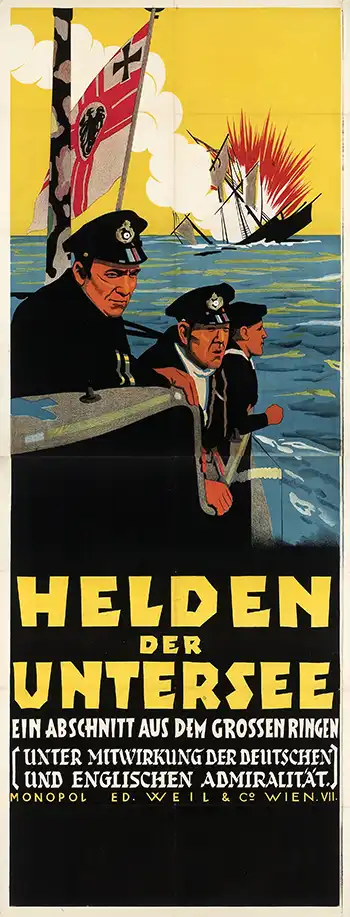
A definitive 6.6/10 rating for a film that redefined the boundaries of cult cinema. Q-Ships remains a cornerstone of transgressive art.
If you have a thing for grainy black-and-white footage of men in very high-waisted trousers staring through binoculars, Q-Ships is probably for you. If you need a movie to move faster than a literal 1920s cargo ship, you’re going to have a bad time. It’s worth a watch if you’re into the technical history of the Great War, mostly because it feels like it was made by people who actually remembered the terror of the U-boat blockades. Anyone else will probably find the pacing glacial and the acting a bit like watching a collection of statues try to emote.
The whole movie hinges on this 'war of nerves' between Admiral Sims and Captain Von Haag. It’s a great concept—the British hiding big guns behind fake wooden panels on a merchant ship, waiting for a submarine to surface so they can blast it. But in practice, the 'nerves' part involves a lot of shots of men standing very still on a bridge. Terence O’Brien plays Sims with such a rigid posture that I honestly wondered if he could actually turn his head without moving his whole torso. He has this one specific way of gripping his pipe that is supposed to signal 'intense calculation' but mostly just looks like he’s worried about dropping it.
There is a scene about twenty minutes in where the German U-boat is tracking the British ship. The editing here is surprisingly modern. You get these quick cuts between the periscope view—which is just a circular mask over the lens—and the oblivious-looking sailors on deck. It actually builds a decent amount of dread. You can see the water splashing against the lens, and it feels cold. It’s much more effective than the later scenes where they use miniatures. You can always tell when it’s a miniature in these old films; the way the water droplets scale just looks wrong. The 'explosions' look like someone tossed a handful of flour and a firecracker into a bathtub.
The German commander, Von Haag, is played by Philip Hewland. He’s doing a lot of heavy lifting with his eyebrows. There’s a moment where he’s watching the Q-ship through the periscope and he does this long, slow squint that goes on for about five seconds too long. It stops being menacing and starts looking like he’s trying to read a very small menu. It’s one of those silent film beats that feels totally disconnected from how humans actually behave, but in the context of a cramped submarine set, it kind of works.
I was struck by how empty the ships felt. I know they had a decent cast, but the wide shots of the decks often look like everyone went to lunch and forgot to tell the camera operator. It adds this weird, ghost-ship quality to the whole thing. It reminded me a bit of the naval vibes in The Glorious Adventure, though that was much more concerned with being a 'spectacle' than this is. Q-Ships is grittier, or at least it tries to be, despite the stagey acting.
The dialogue cards are... fine. They’re very 'Rule Britannia.' Lots of talk about duty and the 'scoundrelly Huns.' It’s interesting to see how soon after the war this was made; the bitterness is still right there on the surface. There’s no attempt at a 'both sides' perspective here. The Germans are predators and the British are the clever foxes. It’s simple, maybe too simple, but it keeps the stakes clear.
One thing that really annoyed me was the sound—or the lack of it, obviously, but the visual representation of sound. There’s a scene with a telegraph operator that feels like it lasts for an eternity. Tapping. Staring. Tapping. Staring. We get it, he’s sending a message. The movie has a habit of falling in love with its own process. It wants you to see every single step of the naval protocol. It’s like the director, Geoffrey Barkas, was so impressed by the technical details of the Q-ships that he forgot to keep the story moving.
The costumes are strangely pristine. Even the guys in the engine room, who are supposed to be covered in grease and coal dust, look like they just had their overalls pressed. It’s that weird 1920s artifice where everything is a bit too clean to be real. Except for the facial hair. The mustaches in this movie are world-class. Roy Travers has a mustache that deserves its own billing in the credits.
Does it hold up? Sort of. The final confrontation has a genuine 'gotcha' moment when the fake sides of the ship finally drop away to reveal the guns. It’s a great piece of mechanical practical effects. No CGI, just a bunch of guys pulling levers and heavy wood slamming down. You can feel the weight of it. For a few minutes, the movie stops being a stiff costume drama and becomes a legitimate thriller. Then it goes back to shots of men staring at the horizon, and the energy just evaporates.
It’s a lopsided experience. If you’re a maritime nerd, you’ll love the shots of the old vessels. If you’re looking for a gripping human drama, you’re better off looking elsewhere. It’s a movie that is more interested in the ships than the people on them, which, given the title, I guess is fair enough.

IMDb —
1919
Community
Log in to comment.