DbcultAccessing Vault...
6.5/10
Senior Film Conservator
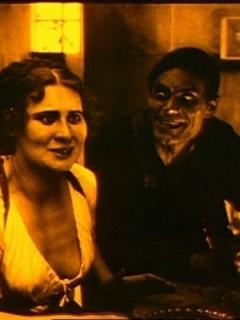
A definitive 6.5/10 rating for a film that redefined the boundaries of cult cinema. Die Teufelskirche remains a cornerstone of transgressive art.
From the shadowy depths of the Weimar Republic's burgeoning cinematic landscape emerges Die Teufelskirche, a silent film that, even a century later, retains an unsettling grip on the viewer's psyche. It's a testament to the raw, visceral power of early German cinema, a period often characterized by its audacious exploration of psychological torment and supernatural dread. Directed by an uncredited hand but undeniably shaped by Adolf Paul's compelling narrative, this film transcends its historical trappings to deliver a timeless fable of desire, despair, and diabolical intervention. Its narrative simplicity belies a profound philosophical undercurrent, probing the very essence of human vulnerability when confronted by forces beyond mortal comprehension.
At its core, Die Teufelskirche unfurls a classic Faustian narrative, yet with a distinctly rural, almost folkloric, sensibility. The Devil, a master of disguise and psychological manipulation, descends upon a quiet, unsuspecting community. His chosen form—that of a humble tinker—is a stroke of insidious genius, allowing him to infiltrate the fabric of everyday life, observing, calculating, and ultimately preying upon the unvarnished desires of ordinary people. This subtle infiltration, rather than overt display of power, makes his presence all the more chilling. He is not a roaring demon but a whispering tempter, his influence seeping in like a cold mist.
The object of his sinister attention is Frau Ane, portrayed with heartbreaking vulnerability by Vally Vera. Her performance is a masterclass in silent film acting, conveying volumes through subtle gestures, haunted eyes, and a posture that speaks of an enduring, internal ache. Frau Ane's torment is universal: the deep, biological imperative to bear a child, a longing that has remained tragically unfulfilled. In a society where a woman's worth was often intrinsically tied to her capacity for motherhood, this barrenness would have been a profound personal and social burden. The film expertly taps into this raw, primal yearning, making it the central pillar of its dramatic conflict. Her husband, Asmus, likely played with stoic resignation, serves as a counterpoint to her fervent desire, perhaps representing the grounded reality she so desperately wishes to escape.
Adolf Paul, the film's writer, demonstrates a profound understanding of human psychology, particularly the seductive power of despair. The Devil's approach is not one of coercion but of exploitation. He doesn't force Frau Ane into a pact; he merely offers a solution to her most profound sorrow, knowing that the desperate will often grasp at any straw, regardless of its origin. This nuanced portrayal of temptation elevates Die Teufelskirche beyond a simple morality play. It becomes a meditation on the choices we make when pushed to our limits, and the insidious ways in which our deepest desires can be weaponized against us. Paul's script, even in its silent manifestation, paints a vivid picture of a soul teetering on the precipice, a theme that resonates through cinematic history, perhaps even finding echoes in later works exploring moral compromise, albeit in different contexts, such as the tragic downfall depicted in Manon Lescaut.
The ensemble cast, a veritable who's who of early German cinema, brings a palpable authenticity to this chilling tale. Martin Knopf, Hans Mierendorff, and Vally Vera lead the charge, with Vera's portrayal of Frau Ane being particularly memorable. Her silent anguish is almost unbearable to witness, a testament to her acting prowess in an era before spoken dialogue. The Devil figure, likely embodied by an actor who understood the subtle nuances of malevolence, would have relied heavily on expressionistic gestures and piercing gazes to convey his infernal nature. Karl Etlinger, Leo Sloma, Otto Werther, and the rest of the supporting cast, including Agnes Straub and Paul Rehkopf, contribute to the atmospheric density, each face telling a story, each movement adding to the film's rich tapestry. The effectiveness of a silent film hinges entirely on its actors' ability to communicate complex emotions non-verbally, and Die Teufelskirche stands as a testament to their collective skill.
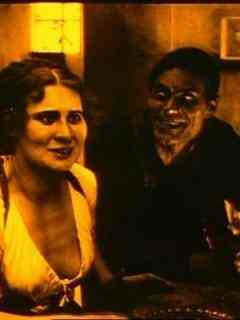
Cinematically, Die Teufelskirche would have leveraged the emerging techniques of silent film to create its pervasive sense of unease. While specific details of its visual style are difficult to ascertain without direct viewing, one can infer an aesthetic leaning towards the dramatic contrasts and evocative shadows characteristic of German Expressionism, a movement then gaining traction. The use of stark lighting, exaggerated sets, and symbolic imagery would have been crucial in conveying the supernatural elements and Frau Ane's internal turmoil. Imagine the Devil's entrance, perhaps framed by an ominous silhouette, or Frau Ane's despair rendered through close-ups emphasizing her strained features. Such visual metaphors were the language of silent cinema, and a film of this thematic weight would undoubtedly have employed them with considerable skill. The very title, 'The Devil's Church,' suggests a landscape where the sacred and profane are blurred, a visual concept ripe for expressionistic interpretation. This approach to visual storytelling, where atmosphere and emotion are paramount, distinguishes it from more straightforward adventure narratives like Pirate Haunts or historical epics such as De Voortrekkers, which often prioritized action and spectacle over psychological depth.
Beyond the immediate plot, Die Teufelskirche delves into universal themes that resonate irrespective of the era. The nature of good versus evil, the corrupting influence of unchecked desire, the moral compromises individuals are willing to make for their deepest longings, and the spiritual cost of such bargains are all explored with unflinching honesty. It examines the fragility of faith and the resilience of human spirit, even when faced with overwhelming temptation. The film poses uncomfortable questions about divine justice and the extent of free will when confronted by malevolent forces. This thematic richness places it in a lineage of profound dramatic works, not unlike the moral quandaries presented in the Hungarian tragedy Bánk bán, though their narrative structures and cultural contexts diverge significantly.
The silent era, particularly German cinema of the 1920s, was a crucible for such dark fables. Films like Die Teufelskirche were not merely entertainment; they were cultural reflections, grappling with the anxieties and existential questions that plagued a post-war society. The figure of the Devil, or malevolent supernatural entities, often served as a metaphor for societal ills, psychological trauma, or the inherent darkness within humanity itself. This film, therefore, stands as an important artifact of its time, showcasing how cinematic narratives were used to explore complex moral and spiritual landscapes. It reminds us that long before advanced special effects, filmmakers could evoke terror and profound emotion through masterful storytelling, nuanced performances, and innovative visual composition. The enduring power of these early films lies in their ability to strip away superficiality and expose the raw nerves of the human condition.
While perhaps not as widely known as some of its more famous expressionist contemporaries, Die Teufelskirche deserves a place in the pantheon of significant silent films. It offers a fascinating glimpse into the nascent stages of cinematic storytelling, demonstrating an acute awareness of character motivation, thematic depth, and atmospheric tension. For cinephiles and historians alike, it presents an opportunity to appreciate the artistry and innovation that defined this pivotal period in film history. The performances of Martin Knopf, Hans Mierendorff, Vally Vera, Karl Etlinger, Leo Sloma, Otto Werther, Max Wannokowski, Fritz Falkenberg, Agnes Straub, Helga Mjön, Paul Rehkopf, and Fred Immler, under Adolf Paul's compelling script, collectively weave a tapestry of human frailty and supernatural menace that continues to resonate. It is a potent reminder that the most profound horrors often stem not from external monsters, but from the desires and vulnerabilities within our own hearts, skillfully exploited by ancient, patient evils. To witness Die Teufelskirche is to experience a powerful, albeit silent, sermon on the perils of unchecked ambition and the enduring price of a soul's surrender.
In conclusion, Die Teufelskirche is far more than a historical curiosity; it is a meticulously crafted work of art that uses the elemental power of the silent screen to explore the eternal struggle between good and evil, hope and despair. Its narrative, though set in a specific time and place, speaks to universal human experiences, ensuring its continued relevance for those willing to delve into its dark, captivating world.

IMDb 7.5
1924
Community
Log in to comment.