DbcultAccessing Vault...
7.3/10
Senior Film Conservator
A definitive 7.3/10 rating for a film that redefined the boundaries of cult cinema. R-1 remains a cornerstone of transgressive art.
Is Oskar Fischinger’s R-1 worth your time today? Short answer: yes, but only if you are willing to trade narrative satisfaction for a pure sensory assault.
This film is for the art students, the motion designers, and the cinematic archeologists who want to see where the DNA of modern visual effects began. It is absolutely not for anyone looking for a Friday night popcorn flick or a story with a beginning, middle, and end.
This film works because it achieves a level of organic fluidity that modern digital tools often struggle to replicate through its unique wax-slicing technique.
This film fails because its lack of a synchronized, original soundtrack in many surviving versions makes the 'Visual Music' concept feel incomplete to the uninitiated viewer.
You should watch it if you want to witness the exact moment cinema stopped being just a recording of reality and started being an instrument for pure imagination.
In 1927, while most directors were obsessed with the transition to sound or the melodrama of films like The Girl of the Golden West, Oskar Fischinger was playing with wax. He wasn't interested in the faces of stars or the sweep of a landscape. He was interested in the pulse of the universe.
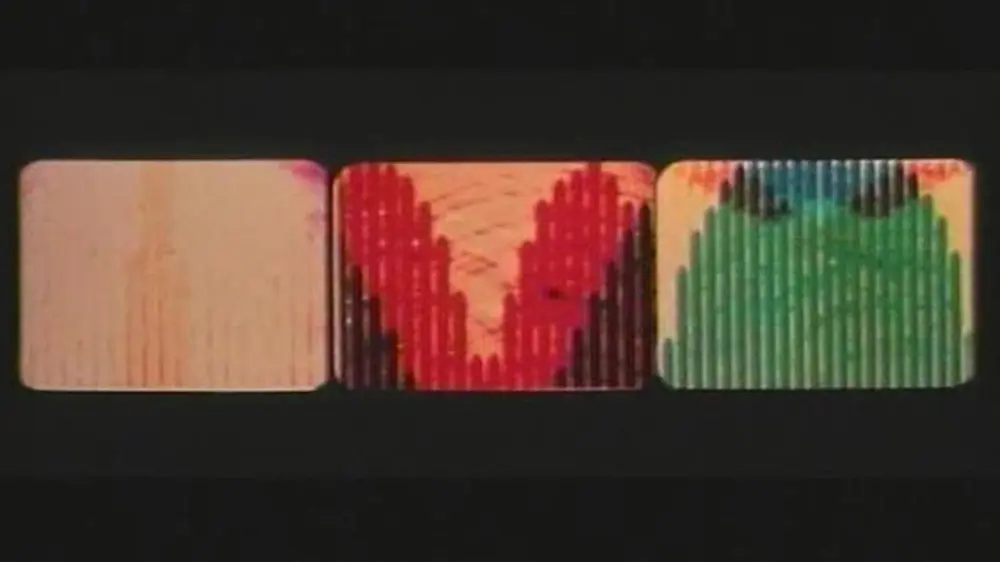
R-1 is the result of a machine Fischinger built himself—a wax slicer synchronized with a camera shutter. Every time the blade cut a thin layer of colored wax, the camera captured the cross-section. The result is a film that breathes. It doesn't just move; it evolves.
When you watch the circles in R-1 expand, they don't look like drawings. They look like cells dividing under a microscope or stars collapsing in a distant galaxy. There is a tactile, physical weight to the imagery that is missing from the sterile pixels of today’s CGI. It is raw. It is messy. It is perfect.
R-1 is a deliberate piece of structural engineering designed to evoke emotion through rhythm. It is not a screen saver because it demands an active eye to track the internal logic of its shifting patterns. While a screen saver is meant to be ignored, R-1 is meant to be studied.
Fischinger was a pioneer of 'Visual Music.' He believed that colors and shapes could have the same emotional impact as a minor chord or a soaring violin solo. When the shapes in R-1 accelerate, your pulse should quicken. When they dissolve into soft gradients, you should feel a sense of release.
Contrast this with a film like Stranded from the same year. While that film relies on the physical presence of actors to convey stakes, R-1 relies on the tension between a circle and a line. It is a much harder sell for a general audience, but the payoff is a deeper understanding of visual language.
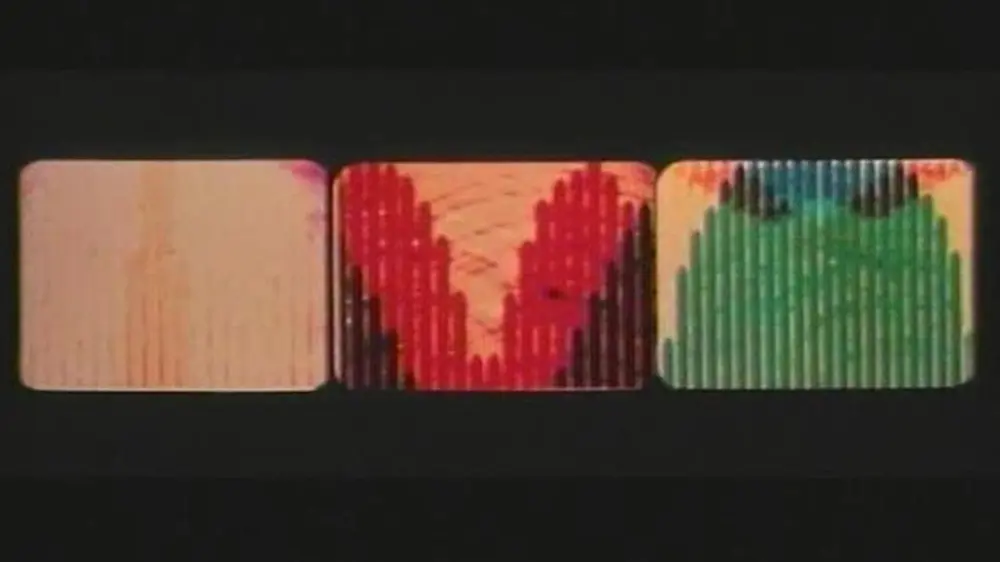
Let’s talk about the technical audacity of this project. Fischinger used a block of wax mixed with kaolin. As the machine sliced, the internal patterns of the wax block changed slightly. This created a natural 'tweening' effect that was far smoother than traditional hand-drawn animation of the era.
There is a specific moment halfway through the film where a series of concentric circles begin to warp into teardrop shapes. In a modern context, we would call this a 'morph' effect. In 1927, it was a miracle. It required a level of mathematical foresight that most directors of the time, working on narrative pieces like Adam's Rib, simply didn't need.
The pacing of R-1 is relentless. It doesn't give you time to breathe. It’s a rhythmic assault that forces you to acknowledge the frame as a flat surface rather than a window into a three-dimensional world. This was a radical stance. It was an anti-Hollywood stance.
Pros:
- A foundational text for experimental cinema.
- Stunningly unique textures that CGI cannot replicate.
- Short runtime makes it an easy historical 'read.'
- Influenced everything from Disney's Fantasia to 2001: A Space Odyssey.
Cons:
- Can feel cold and overly academic to some.
- The lack of synchronized sound in some prints hurts the 'Visual Music' intent.
- Extremely abstract nature will alienate 90% of modern audiences.
Here is a debatable opinion: R-1 is more visually interesting than the majority of modern Marvel movie climaxes. Why? Because it has 'jitter.' Because the wax has imperfections. There is a human hand behind the machine.
Modern digital effects are often too clean. They are mathematically perfect, which makes them feel dead. Fischinger’s work feels alive because it is the result of a physical process. When you see a flicker in the frame, that’s a real slice of wax that existed for a fraction of a second before being destroyed. There is a beautiful nihilism in that.
Most people will turn this off after sixty seconds. They are wrong to do so. If you stick with it, the repetition becomes a trance. You stop looking for shapes and start feeling the movement. It’s a primitive form of VR, pulling you into a world governed by laws of physics that Fischinger invented.
R-1 is a difficult, uncompromising piece of art. It doesn't care if you like it. It doesn't care if you're bored. It exists simply to explore the relationship between time and form. While it lacks the narrative punch of contemporaries like Wilhelm Tell, it offers something much rarer: a glimpse into the raw mechanics of creativity.
It works. But it’s flawed. It’s a sketch for a future that we are currently living in. Every time you see a music visualizer on Spotify or a motion graphic in a high-end commercial, you are seeing the ghost of Oskar Fischinger. For that alone, R-1 deserves your respect, if not your unconditional love.
"Fischinger didn't just film shapes; he gave geometry a soul. R-1 is the heartbeat of the avant-garde."

IMDb 5.8
1933
Community
Log in to comment.