DbcultAccessing Vault...
Cult Review
Senior Film Conservator
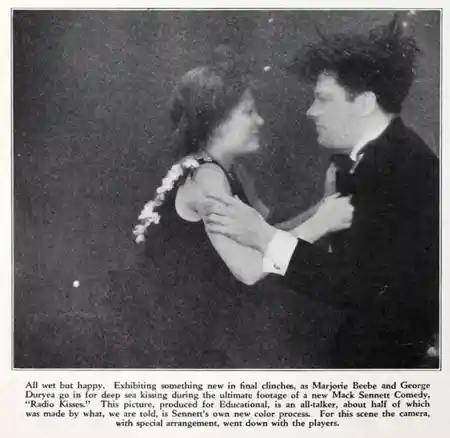
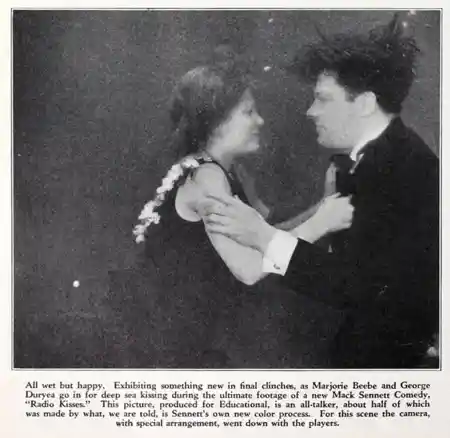
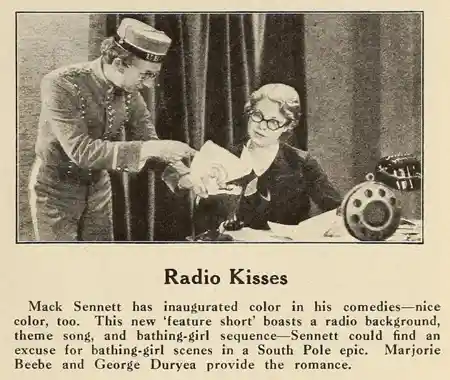
This little short, "Radio Kisses," might be worth a look if you're into those old-school pre-Code comedies, especially if you have a soft spot for silent-era slapstick stars trying to find their footing in talkies. It's not a must-see classic, no, but it’s a quick, harmless peek into 1930s humor.
Folks looking for something deep or polished will probably find it pretty forgettable.
The whole thing revolves around Marjorie Beebe, who plays a radio agony aunt, doling out love advice to strangers. Problem is, her own love life is a total mess.
She can fix everyone else's problems but can't quite land a man for herself. It’s a classic setup, really.
Marjorie Beebe, I gotta say, she’s got a presence. You know her from so many Hal Roach shorts. Here, she's trying to make the jump to talking roles, and it's... interesting.
Sometimes her expressions are just so big, like she's still playing to the back row of a silent movie house. It's endearing, honestly.
Her character is called "Miss Lonely Hearts" on the radio, but off-air, she's just Marjorie. And she's got this super fussy aunt, played by Dot Farley, who is just constantly on her case about finding a husband. That dynamic is pretty much the engine of the short.
The radio scenes are quite funny. You hear these ridiculously dramatic letters from listeners.
One woman is worried her boyfriend only loves her for her pickle recipe, and Marjorie has to deliver advice with a straight face. 🤣 It highlights how silly some of these radio advice shows could be, even back then.
Then there's the actual love interest, a guy played by Bud Jamison. He's one of those big, bumbling types often found in comedies of this era.
He’s trying to woo Marjorie, but everything he does seems to go wrong. There’s a scene where he tries to give her flowers, and they just fall apart. It's a very simple, almost childlike kind of humor.
What really stuck with me was this one moment where Marjorie is practicing her radio voice. She's in front of a mirror, trying to sound all soothing and wise.
But you can see the sheer panic in her eyes. It’s a tiny detail, but it makes her feel more real. Like, she doesn't even believe her own advice half the time.
The pacing feels a bit... off. Some scenes rush by, then suddenly there’s a long, lingering shot of someone just standing there, thinking.
It’s not jarring, but you can tell they were figuring things out, moving from silent film grammar to sound. It’s a fascinating historical artifact for that reason alone.
There’s this whole side bit with Sol Hoopii Jr., who plays a Hawaiian musician. He just pops up sometimes, strumming his ukulele, and it adds absolutely nothing to the plot.
But it does give the film a very specific, quirky 1930s vibe. You know, when they just threw in whatever they thought audiences might find novel. It’s a bit of a tangent, I know, but it’s memorable.
The ending is exactly what you'd expect from a romantic comedy short from this period. Everything ties up neatly, perhaps a little too neatly.
But then, these shorts weren't trying to reinvent the wheel. They just wanted to give audiences a few laughs before the main feature.
It's got that rough-around-the-edges charm. The sound quality isn't always great; sometimes the dialogue sounds a bit tinny.
But for a film that’s almost a century old, it holds up okay. You really get a sense of early talkies experimenting.
I actually found myself thinking about The First Television Picture with a Greyscale Image, not because it's similar, but because both are snapshots of media innovation. One showing early radio, the other early TV. Just interesting to see how they presented these new technologies.
So, yeah. "Radio Kisses." It's a quick diversion. If you like seeing old actors from silents adapting to sound, or just want a light, goofy laugh from a bygone era, it's there. Don’t go in expecting a masterpiece, but it’s certainly not the worst way to spend ten minutes. It’s kind of sweet, in its own clumsy way. 📻💕
IMDb 5.7
1930
Community
Log in to comment.