DbcultAccessing Vault...
5.1/10
Senior Film Conservator
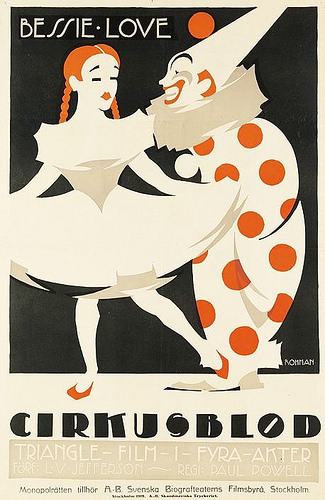
A definitive 5.1/10 rating for a film that redefined the boundaries of cult cinema. The Sawdust Ring remains a cornerstone of transgressive art.
The first time we glimpse Janet she is already mid-gallop, a monochrome blur against a horizon that refuses to settle. The 1923 one-reeler The Sawdust Ring—long buried in the shadow of more flamboyant circus sagas—re-emerges now like a half-remembered dream, equal parts soot and sequin. L.V. Jefferson’s screenplay, lean yet prismatic, distills an entire bildungsroman into a brisk twenty-eight minutes, trusting the viewer to read between the hoof-beats.
What follows is no mere quest for paternal reunion; it is a kinetic meditation on blood as performance. Janet’s mother—scarred by suspicion—has branded the ringmaster father a philanderer, exiling him to the nomadic fringes where greasepaint replaces respectability. Years later, the daughter, raised on half-truths and the acrid perfume of sawdust, vaults over maternal prohibition and into the Colonel’s itinerant cosmos.
Note the nomenclature: Colonel Simmonds, not father. The honorific erects a barrier of rank, allowing Jack Richardson to play the patriarch as both sovereign and stranger, his epaulettes glinting like the tinfoil stars children paste on scrapbooks. Richardson underplays magnificently; a twitch of gloved fingers conveys dynastic guilt more eloquently than intertitles ever could.
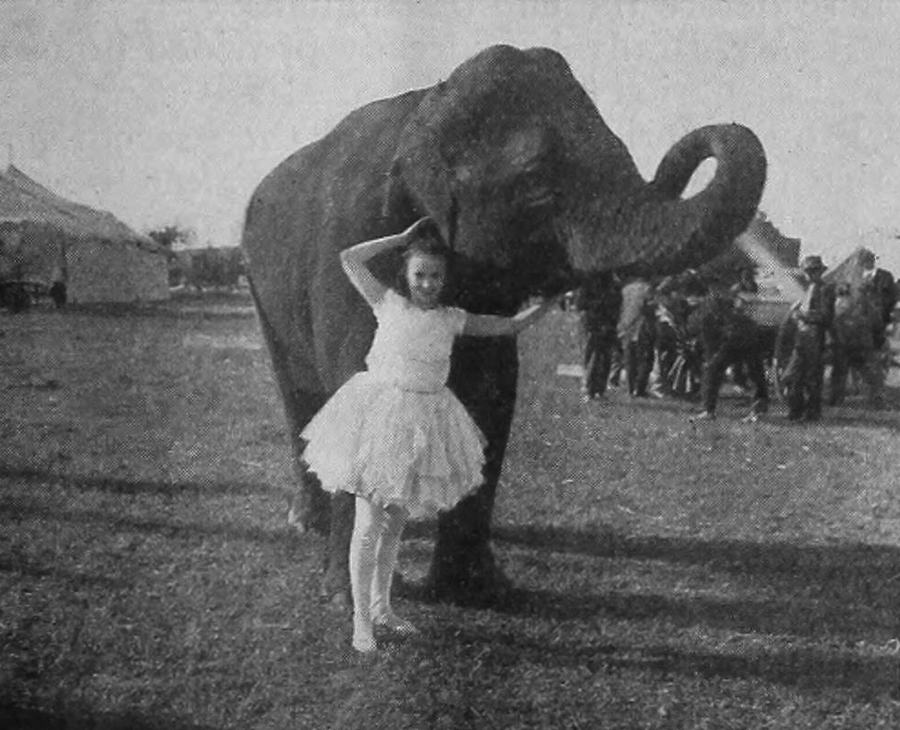
Bessie Love’s Janet, meanwhile, is all forward motion. Trick riding demands not equestrian grace but a willingness to surrender bodily sovereignty to centrifugal force. Love—barely five-foot-two—transforms the ring into a crucible where gendered expectation is spun off like excess sequins. Watch her vault from canter to shoulder-stand: the camera captures not spectacle but conviction, vertebrae aligned like exclamation points.
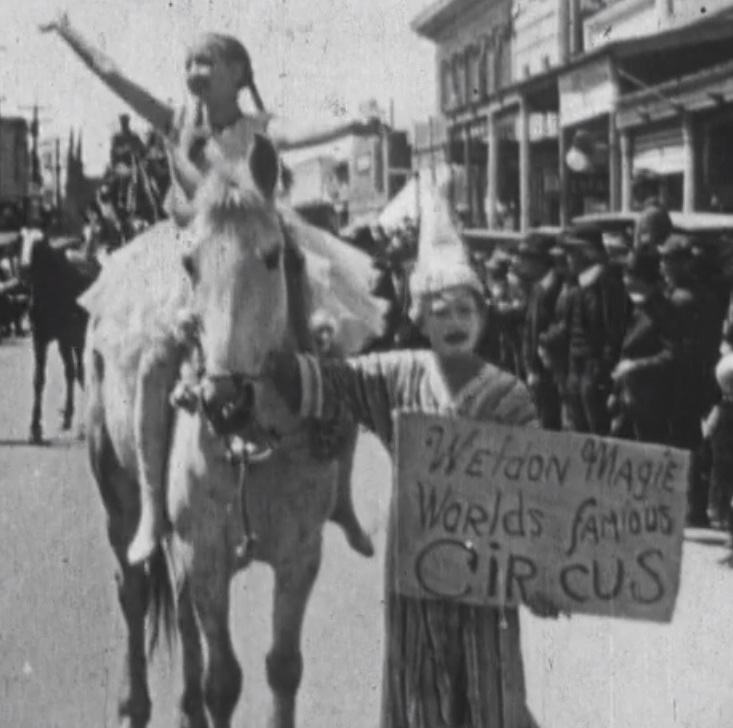
Enter Peter, essayed by Harold Goodwin with the laconic sweetness of a boy who has read the script of his own heart but refuses to recite it aloud. Peter’s clowning—whiteface cracked by ring-light—operates as counterpoint to Janet’s ferocity. Where she seeks origin, he embodies absurdity; together they form a diptych of post-war disillusionment, their silences more articulate than the film’s sparse intertitles.
Cinematographer Alfred Hollingsworth shoots the circus at twilight, exploiting nitrate’s mercurial latitude. Blacks swallow entire wagon wheels; highlights kiss sequins until they become miniature supernovas. The result is a Caravaggio beneath canvas, where every spotlight is a moral interrogation. Notice the sequence where Janet rehearses at dawn: mist rises from horsehide, and for a breath the arena transmutes into a cathedral nave, complete with incense of manure and kerosene.
Jefferson’s narrative architecture eschews the melodramatic crescendos of Pamela Congreve or the pastoral redemptions of He Fell in Love with His Wife. Instead, tension accrues through ellipses—a locket snapped shut, a name almost spoken, a horse that refuses to leap. These lacunae compel the viewer to collaborate, stitching meaning from glances rather than exposition.
Running under half an hour, the picture achieves the density of a novella. Compare it to contemporary spectacles like Through the Enemy’s Lines or Sins of Great Cities—both bloated with patriotic bombast—and you appreciate Jefferson’s thrift. Every foot of celluloid earns its keep; even the clown’s pratfall foreshadows the final reveal, a tumble that returns Janet to the very arms she sought.
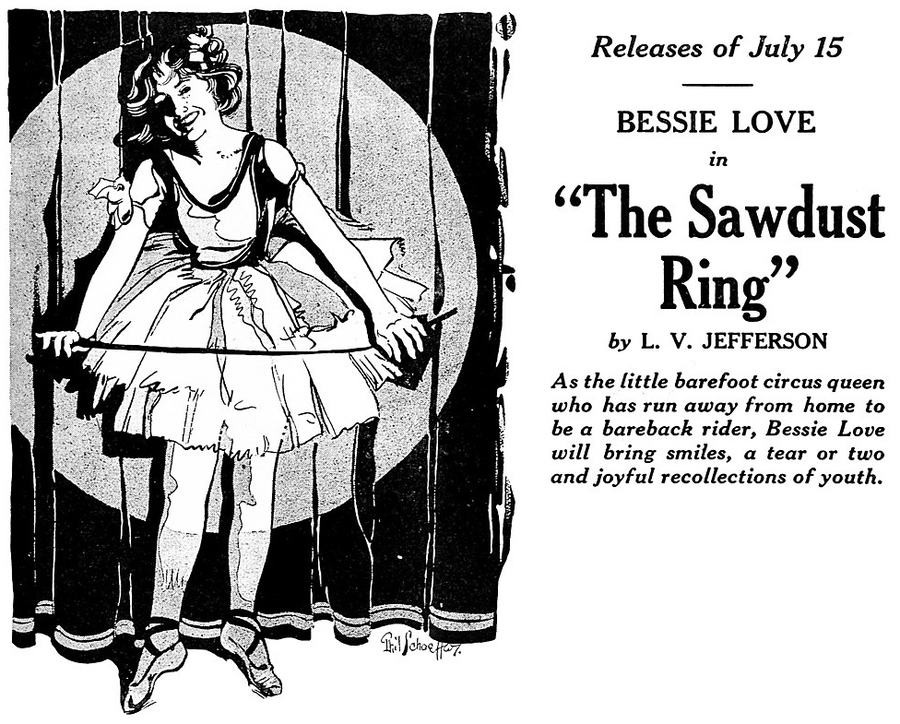
“A circus is a city that folds itself into a suitcase each dawn,” Simmonds mutters offhandedly, and the line reverberates like a manifesto for the entire silent era: impermanence as ontology.
Viewers weaned on talkies may scoff at the histrionic gestures customary in 1923. Resist the reflex. Note how Daisy Dean—playing the colonel’s clandestine consort—conveys erotic complicity merely by lifting her chin fifteen degrees when confronted. The absence of synchronized dialogue forces cinema back to its pantomimic marrow, where vertebra and iris carry rhetoric that words would only vulgarize.
Yet the film is not anti-verbal; it redistributes language. Costumes speak: Janet’s riding bodice—striped like the tent—declares her assimilation into the circus corpus long before she utters filial longing. Peter’s oversized shoes recite the absurdity of masculine posturing. Even the horses are loquacious; their ears pivot like semaphore flags, narrating subplots visible only to those who remember that every animal is an extra.
At the narrative epicenter lies a question both banal and biblical: What defines kinship? Biology? Proximity? The stories we agree to recite? The Colonel’s refusal to disclose paternity until the final reel reframes the circus as palimpsest, each performance a translucent layer over an older, more painful script. When Janet finally confronts him, Jefferson withholds thunderous embrace; instead, father and daughter stand equidistant from a kerosene lamp, their silhouettes overlapping like Venn diagrams of remorse.
This restraint distinguishes The Sawdust Ring from Kilmeny’s sentimental welter or The Straight Way’s moral didacticism. Jefferson trusts the spectator to intuit that recognition can devastate more thoroughly than rejection.
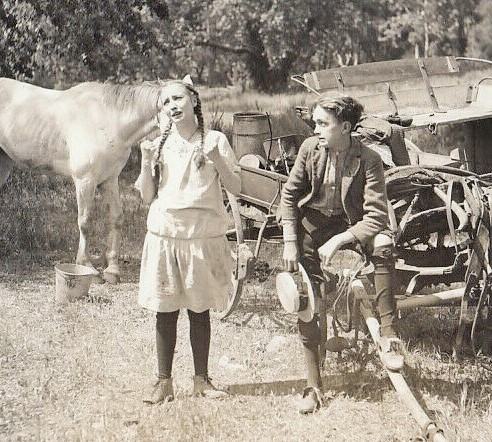
Historians often pigeonhole 1920s circus pictures as escapism for a nation nursing Prohibition ennui. Jefferson subverts the paradigm, weaponizing the ring as a theatre of gender flux. Janet’s athleticism is not decorative; it is argumentative, refuting the domestic incarceration proposed by her unseen mother. Each somersault insists that a woman can be both archivist of her own narrative and executor of physical daring.
Peter’s clowning, conversely, unmans him in the most public arena, smearing masculine authority into absurd glyphs. Yet his is not a nihilistic gesture; by liquefying ego into slapstick, he clears space for Janet’s ascendancy. Their partnership—tacit, unconsummated—resembles a trapeze act: trust without net.
Silent cinema lives in the archive of touch: gestures rather than utterances. Consider the moment Janet bandages Peter’s blistered palm after a pratfall rehearsal. Hollingsworth frames in medium-close, fingers grazing knuckles, the chiaroscuro carving negative space that throbs like an unspoken vow. No kiss follows; none is needed. The hush between skin and gauze articulates desire more fluently than pages of dialogue.
Upon its March 1923 release, The Sawdust Ring screened as a curtain-raiser for beefier fare, its review in Motion Picture News dismissing it as “pleasing but ephemeral.” Yet the trades misread their own metaphor: ephemera, after all, is what circulates, refusing burial. Decades later, a sole 35mm nitrate print—scented of smoke and camphor—surfaced in a Ljubljana attic, its Czech subtitles testifying to the film’s peripatetic afterlife.
Modern cinephiles weaned on Doc’s revisionist western candor or Skottet’s Nordic fatalism will find in Jefferson’s miniature a proto-feminist fable, one that anticipates the moral ambiguities of 1970s New Hollywood while retaining the Victorian conviction that family is both wound and bandage.
As of this month, the Library of Congress has uploaded a 2K restoration to their National Screening Room, accompanied by a newly commissioned score—accordion, muted trumpet, brushed snare—that limns the film’s nocturnal melancholy without drowning its silence. For purists, the Eastman Museum circulates a 16mm touring print, replete with a live musical trio versed in commedia dell’arte improvisation.
Great films imprint themselves not as marble monuments but as after-images: retinal ghosts that flare when you blink during mundane chores. The Sawdust Ring lingers precisely because it refuses monumentality. It is a portable carnival you can fold into a breast pocket, a reminder that identity—like canvas—creases, tears, yet retains the chromatic memory of every spotlight that ever kissed it.
Seek it out. Let its silence gallop through you. And when the final title card fades, notice how the darkness retains the shape of a girl mid-leap, forever suspended between the mother who fled and the father who mastered the art of vanishing while remaining.
IMDb 6.4
1935
Community
Log in to comment.