DbcultAccessing Vault...
Cult Review
Senior Film Conservator
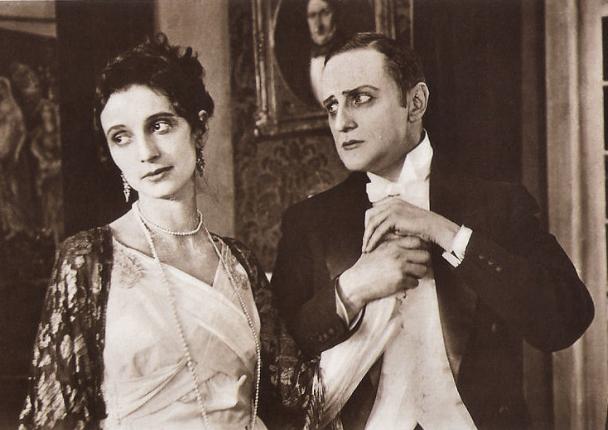
There is a moment—halfway through Rafaela—when Gertrude Welcker’s enigmatic heroine lifts her veil in a carriage window and the streetlamps carve her face into a cameo of pale fire. The image lasts perhaps three seconds, yet it detonates in the mind like a magnesium flare: here is beauty so absolute it becomes annihilation, here is loneliness so articulate it needs no intertitle. Few silents dare to stage erotic despair with such surgical minimalism; even Forbidden Paths, that other hymn to Weimar alienation, flinches into melodrama where Rafaela remains glacial.
Director Willy Achsel—barely remembered outside nitrate-archivist circles—constructs the picture as a diptych of surfaces. Act I revels in café-society glitter: champagne cascades over crystal, violinists saw Tchaikovskian ecstasy, tuxedoed predators circle Welcker’s Rafaela like sharks tracing a luminous lure. Achsel’s camera glides through ballrooms on invisible rails, its movements so sinuous they feel lubricated by gossip. Yet every gilded frame is mortgaged by foreboding. Note how the chandeliers hang just an inch too low, how shadows pool like spilled ink beneath dancers’ patent shoes. The opulence is cadaverous, a mausoleum of merriment.
Act II detonates that façade. Rafaela, having abdicated her own identity to the voracious gaze of others, retreats into a monochrome void: stairwells the color of nicotine, attic rooms where wallpaper peels like diseased skin, a mirror fractured into a spiderweb of incompatible selves. Achsel cuts from the earlier wide tracking shots to staccato close-ups—eyes, hands, a trembling lower lip—until the viewer becomes complicit in the act of spectatorship that is killing her. The film’s most harrowing sequence unfolds in total silence: Rafaela sits at a dressing table daubing her mouth with carmine, then methodically wipes it off again, repeating the gesture in a loop that feels like watching heartbeats drain into a sink. No subtitle card intrudes; the absence of explanation is crueller than any condemnation.
Comparisons to Purity are inevitable—both films feature heroines commodified by masculine appetite—but whereas that American morality tale ultimately salvages its protagonist through marriage, Rafaela offers no such sop. Its final reel is an ode to evaporative identity: our heroine boards a night train whose destination sign reads simply ‘OW’ (East/West? Overture to Wanderlust? Or merely the sound of breath leaving lungs?). The last image freezes on her profile dissolving into locomotive vapor, a specter of selfhood too diffuse to be mourned.
Gertrude Welcker—best known abroad for The River of Romance—delivers here a masterclass in negative space acting. Watch how she lets her arms dangle a fraction too long after accepting a dance, suggesting a marionette whose strings have been half-severed. Or the way her smile lands a millisecond late when complimented, as though wired to a faulty telegraph cable. It is a performance that trusts the audience to read the gap between stimulus and response, the tiny fissure where identity leaks out.
Magnus Stifter, essaying the part of Rafaela’s most ardent suitor, counterbalances with bullish opacity. His character—a war profiteer turned art collector—embodies the Weimar nouveau riche: cultured yet carnivorous. Stifter plays him like a man forever sniffing his own cologne, convinced the world shares his appetite. When he finally proposes, thrusting a diamond the size of a quail’s egg toward Rafaela, Achsel frames the gem in extreme close-up so it fills the screen like a cold star. The symbolism is unmistakable: here is love as astronomical debt, a bauble whose weight will crater the recipient.
Erna Morena, cameoing as a faded chanteuse who once occupied Rafaela’s pedestal, contributes the film’s single spoken intertitle: ‘To be adored is to be eaten one sliver at a time, until only the echo of chewing remains.’ The line, deliciously overwrought on paper, acquires mortal gravitas when delivered by Morena’s whisky contralto face—eyes hooded by years of encores, mouth twisted into a smile that knows its own obsolescence.
Cinematographer Hans Androschin (who later shot the alpine phantasmagoria Glacier National Park) renders Weimar Berlin as a chiaroscuro fever dream. Ballroom sequences bathe in topaz Key light, but Androschin underexposes the shadows until they swallow detail, implying predators behind every pilaster. Conversely, Rafaela’s garret scenes are lit by single practicals whose bulbs flicker between 2800 K and 3200 K, a temperature pulse that mimics failing will. The camera occasionally tilts 7° off-axis—barely perceptible yet sufficient to induce vertigo—mirroring the heroine’s loosening grip on plumb reality.
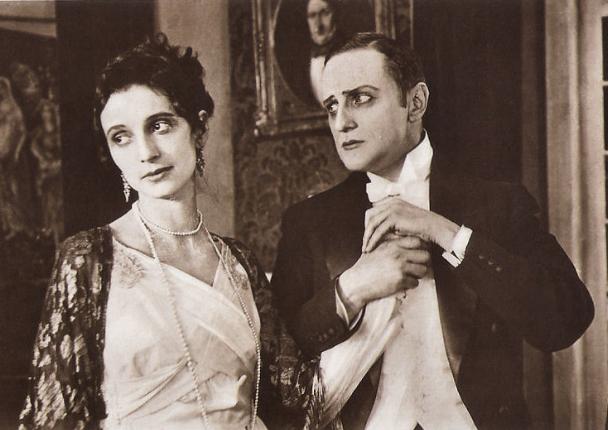
Production designer Albin Vesely devises sets that metastasize claustrophobia. In one sequence, Rafaela wanders a corridor whose wallpaper motif repeats her own silhouette—an Escherian nightmare of infinite regression. The pattern is achieved by block-printing directly onto celluloïd, then superimposing the negative upon live action, a proto-optical-printing trick that predates even Queen of Spades’ Expressionist gambits.
Though released without official score, contemporary exhibitors often commissioned bespoke accompaniments. The Kino-Varieté am Nollendorfplatz reportedly engaged a Hungarian quartet to weave Bartókian dissonance beneath the images—violins screeching like tram brakes during the ballroom scenes, cello sinking to sub-audible growls during Rafaela’s attic exile. Surviving program notes describe audiences exiting in ‘religious hush,’ unsure whether they had witnessed cinema or séance. Modern restorations frequently pair the film with compositions by the Austrian spectralist Margarethe Wöss, whose glissandi seem to peel the emulsion from the frame itself.
At its marrow, Rafaela interrogates scopophilia—the pleasure of looking—as slow-motion murder. Each ogle, each flattery, each portrait sketched by smitten artists strips a filament of Rafaela’s being until she exists purely as reflection. The film anticipates Laura Mulvey’s theory by five decades, yet sidesteps voyeuristic titillation by aligning our perspective with the victim rather than the consumers. Achsel repeatedly frames Rafaela in mirrors whose edges are cropped by the lens, implying that even the audience cannot apprehend her entirety. We become voyeurs of our own inadequacy.
The narrative also functions as allegory for Weimar’s vertiginous economy: a society drunk on paper millions overnight, bargaining identity for currency that will burn by breakfast. Rafaela’s diamond necklace, her Persian lamé gowns, her apartment stuffed with Persian-rug opulence—all are currencies of soul-mortgage, accruing interest in self-annihilation.
Premiering in October 1923—weeks before the Rentenmark stabilized hyperinflation—Rafaela was hailed by Der Kinematograph as ‘a requiem for a generation that sold its reflection for the price of a cocktail.’ Abroad, censorship boards trimmed four minutes, excising the mannequin-toppling scene for ‘moral abjection.’ The film vanished in the late ’30s, presumed lost until a 1987 discovery in a Montenegrin monastery yielded a severely red-tinted nitrate. Digital restoration in 2016 restored the amber chiaroscuro, though some purists lament the loss of that hellish crimson patina which, they argue, better conveyed Berlin’s feverish twilight.
Contemporary critics compare its austere despair to The Stubbornness of Geraldine, yet where that film tempers melancholia with pastoral respite, Rafaela offers none. Even The Sins of the Mothers grants its fallen woman maternal redemption; Achsel refuses such sop.
To watch Rafaela is to confront the abyss of not-being-seen. It is cinema as séance, glamour as gangrene, beauty as both currency and debt. Ninety-six minutes of grayscale hypnosis that leave you ashamed of your own pupils for participating in the feast. Yet the film is not nihilistic; in its final evaporative image lies a perverse emancipation: if the world devours reflections, perhaps vanishing is the last act of authorship.
Seek it out in the best 4-K restoration you can find. Turn off the lamps, pour something amber, and prepare to feel the temperature drop behind your sternum. When the lights come up, you may find yourself staring into the middle distance, unsure whether the loneliness onscreen was Rafaela’s—or your own—gazing back.
IMDb 4.8
1928
Community
Log in to comment.