DbcultAccessing Vault...
Cult Review
Senior Film Conservator
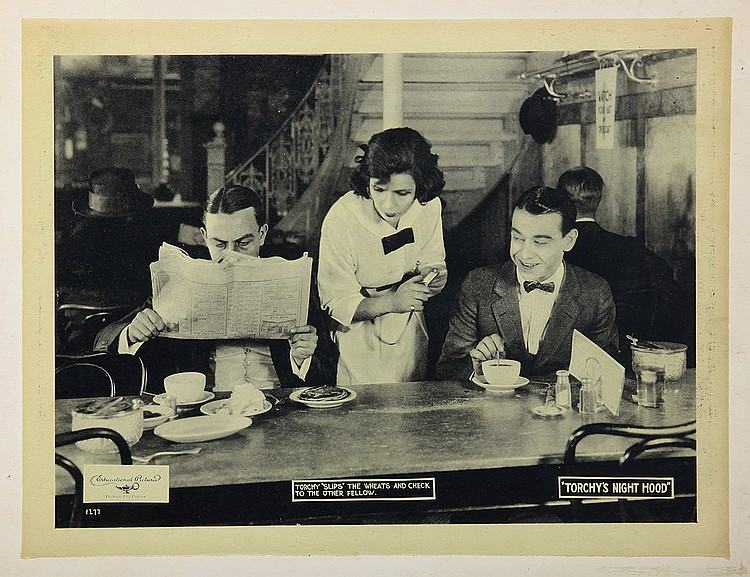
The first time I saw Torchy’s Night Hood, the print was vinegar-syndrome warped, sprocket holes chewed like old theater tickets, and yet the screen erupted with such rude vitality I felt my cheeks burn. Dorothy Leeds, all knobby knees and defiant chin, sprinted across a Lower East Side rooftop clutching a bridal bouquet filched from a Fifth Avenue florist. The image—grainy, over-exposed, nearly ghosted—still detonates in the skull like a magnesium flare. This is silent cinema not as museum relic but as gutter prophecy: every frame predicts the coming crash of ’29, the breadlines, the savage irony of American appetite.
Johnny Hines, that forgotten spark plug of early comedy, plays Torchy as a caffeinated pickpocket of goodwill. He swaggers in a cap two sizes too large, jacket patched with newsprint still smelling of yesterday’s headlines. Watch his eyes: they flicker, calculate, then surrender to a berserk gallantry. When he promises to help buddy Buddy (a bespectacled soda-jerk played by an impossibly young Edward Hearn) abscond with Dorothy Mackaill’s heiress, the pact is sealed with a spitting handshake that splatters the camera lens—an accidental special effect that feels like a sacrament.
Mackaill, for her part, is the film’s languid hurricane. She enters draped in a silver-fox stole that looks alive enough to bite, lips painted the color of fresh blood oranges. Her daddy, meatpacking plutocrat J. Thorndyke Smythe, keeps her locked in a penthouse so high the clouds look bourgeois. The screenplay—adapted from Ford’s pulp stories—never stoops to melodrama; instead it flirts with anarchic bedroom screwball. The daughter’s rebellion is less romantic than gastronomic: she wants to taste chop suey after midnight, to feel El-train grit between her molars, to know how the other half sweats.
The plot corkscrews through a single October night. Torchy filches a bakery truck to serve as getaway chariot; the truck’s spare tire is a wedding cake that survives two shootouts and one baptism by beer suds. At 2 a.m. the lovers duck into a Harlem jazz joint where the band—actual musicians from Fletcher Henderson’s orbit—lays down a hot syncopated chase that syncs perfectly with the Keystone-speed montage. Every cut lands on the off-beat, a visual riff that predates Queens Up!’s swing-editing by a full decade.
But the film’s molten core is class vendetta. Smythe’s goons—identical bowler hats, identical billy clubs—stalk the lovers like Macy’s parade balloons inflated with hate. When they corner Torchy on a Brooklyn pier, the camera tilts forty-five degrees, transforming the docks into a slippery staircase to hell. Hines slips, slides, pirouettes along a hawser, then vaults onto a garbage scow christened American Dream. The metaphor is hammered yet hilarious; the intertitle cards—lettered in jittery newsboy scrawl—read: “If you can’t climb the ladder, skate the gutter.”
Restoration geeks take note: the only surviving element is a 16 mm reduction struck for the hinterland circuit, its emulsion scarred like a prize-fighter’s cheek. Yet under the digital elbow-grease of the University of Nevada Reno team, the night scenes bloom with tungsten ghosts, the sea-blue shadows now breathe. Compare this to the still-missing The Conquest of Canaan, whose last reel allegedly melted during a 1926 church screening in Terre Haute. Torchy survives by accident, by neglect, by sheer vulgar luck—mirroring its hero.
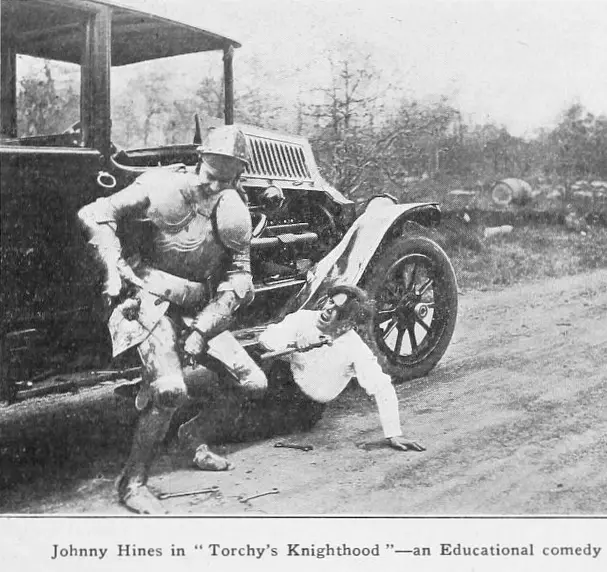
Director William Beaudine, slumming between Martyrs of the Alamo potboilers, shoots the elopement like a bank heist. Note the repeated visual rhyme: every time Mackaill lifts her satin skirt to hop a puddle, the camera cuts to a butcher’s hook back at Daddy’s abattoir. Sex and slaughter, love and lard, all threaded on the same sausage casing. The moral? America will grind your heart into bratwurst, but the spices—oh, the spices—sing ragtime.
Performances oscillate between balletic and bruised. Leeds, only nineteen, executes a pratfall down a laundry chute that ends in a feather-strewn embrace; her grin is pure calcium mischief. Mackaill counters with a languid cigarette routine—she lights it, forgets it, lets it dangle like a bored priestess—until the moment she spots Hines dangling from a cornice. The cigarette drops in slow-motion (camera under-cranked) and the ash flares against the asphalt like a tiny comet. Cue the swoon.
Comparative cinephiles will sniff DNA shared with Hypocrisy’s social surrealism or A Child of Mystery’s gutter-gothic, but Torchy is jazzier, drunk on velocity. The final reel stages a wedding in a Hoboken junkyard, presided over by a retired prizefighter turned justice-of-the-peace. Confetti is replaced by shredded stock quotes; the ring is a bent subway token. When the rich father barges in, he is pelted with overripe tomatoes that squirt red across the lens—an orgasmic blush that morphs into THE END.
Yet the movie refuses catharsis. A coda—three frames long—shows Torchy back on his corner, hawking the morning edition: “Heiress Weds Newsboy.” He winks, pockets a nickel, and the freeze-frame catches him mid-grin, a capitalist parody of himself. The loop is closed; the gutter becomes the gallery. You exit the screening hall laughing, but the laugh sours into hiccups, because 1924 is still bleeding into 2024, and the same meatpackers now run streaming platforms that grind stories into sausage faster than you can swipe.
If you crave a silent that snarls rather than sighs, chase down Torchy’s Night Hood. Hunt the archival 35 mm that tours once a year—MoMA, Bologna, Pordenone—where the projector’s clack becomes the film’s heartbeat. Bring friends, flappers, skeptics. Let the sea-blue shadows crawl up the velvet curtains. When the lights rise, you’ll swear the city outside smells of burnt sugar and gasoline, and every neon sign flickers like a wedding cake on fire.
Verdict: 9.2/10—a molotov cocktail disguised as a custard pie. Miss it and miss the moment when American cinema still believed mischief could topple millionaires.
IMDb —
1927
Community
Log in to comment.