DbcultAccessing Vault...
4.8/10
Senior Film Conservator
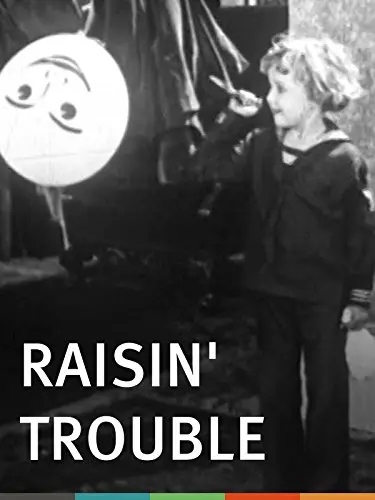
A definitive 4.8/10 rating for a film that redefined the boundaries of cult cinema. Raisin' Trouble remains a cornerstone of transgressive art.
So, is Raisin' Trouble, a 1926 Mirthquake Comedy, worth watching today? Short answer: yes, but with significant caveats that demand a specific kind of viewer and a healthy dose of historical appreciation.
This film is for those who cherish early cinema, silent comedy aficionados, and anyone curious about the foundational elements of slapstick that influenced generations. It is emphatically NOT for viewers seeking modern pacing, complex narratives, or dialogue-driven humor.
This film works because it provides a direct, unvarnished window into the comedic sensibilities of the 1920s, showcasing the pure, physical artistry of its performers. It fails because its rudimentary narrative and reliance on period-specific gags can feel alienating to a contemporary audience without proper context. You should watch it if you are prepared to engage with history, appreciate the craft of silent-era performance, and aren't afraid of a slower, more visually-driven comedic experience.
To review a film like Raisin' Trouble is to engage in an act of cinematic archaeology. This 1926 Mirthquake Comedy, produced by Billy West—himself a renowned Charlie Chaplin imitator—stands as a fascinating artifact of its time. It’s not merely a film; it’s a cultural touchstone, reflecting the comedic zeitgeist of the Roaring Twenties. The very name “Mirthquake Comedy” promises a seismic event of laughter, a bold declaration of intent that speaks volumes about its creators’ aspirations.
The film features the Mirthquake Players: Jack Cooper, Lillian Worth, and Charley King. These names, while perhaps not household staples today, were part of the vibrant tapestry of early Hollywood, contributing to a burgeoning industry built on innovation and raw talent. Their performances in a film produced by a Chaplin imitator immediately set certain expectations: physical prowess, exaggerated expressions, and a knack for turning everyday situations into uproarious spectacle.
My initial observation, and perhaps a controversial one, is that judging these films solely by modern standards of humor is a disservice. We must approach them not as competitors to contemporary blockbusters, but as foundational texts. The “trouble” in Raisin’ Trouble is almost certainly of the farcical variety, likely involving mistaken identities, escalating mishaps, or a relentless pursuit of some elusive object or goal, all executed with vigorous physical comedy. It’s less about a finely tuned plot and more about the immediate, visceral reaction to a well-timed pratfall or a perfectly exaggerated double-take.
Billy West’s involvement as producer is particularly telling. Known for his uncanny ability to mimic Chaplin, West brought a specific comedic sensibility to his projects. This isn't just a silent comedy; it’s a silent comedy steeped in the Chaplinesque tradition. Expect a blend of pathos and slapstick, moments of delicate charm juxtaposed with chaotic absurdity. While it might not possess the depth of Chaplin's own work, it certainly aims for the same kind of universal, visual humor that transcended language barriers.
In silent cinema, performance is everything. Without dialogue, actors must convey emotion, intent, and comedic timing through gesture, facial expression, and bodily movement alone. Jack Cooper, Lillian Worth, and Charley King, as the Mirthquake Players, would have been masters of this craft. Their acting isn’t subtle; it’s bold, declarative, designed to be understood even from the back rows of a cavernous picture palace.
Consider the typical comedic structure of the era. A scene might begin with a simple premise—say, Charley King attempting to fix a leaky faucet. This seemingly mundane task would quickly devolve into a cascade of failures: a pipe bursting, water spraying Lillian Worth, and Jack Cooper accidentally slipping on the soapy floor. Each beat of this sequence relies entirely on the actors’ ability to sell the physical comedy with conviction and precision. It’s a delicate dance between chaos and control.
Lillian Worth, in particular, would have been crucial for grounding the male-centric chaos. Often, the female lead in these comedies serves as the anchor, either as the object of affection, the voice of reason, or the unwitting victim of the male protagonists’ antics. Her reactions would guide the audience’s emotional response, contrasting the exaggerated silliness with relatable exasperation or delight.
Direction in a Mirthquake Comedy, especially one from 1926, would prioritize clear sightlines and broad staging. Directors Bob Hopkins and Scott Pembroke, working under West’s production, would have meticulously choreographed each gag. The camera, often static, would capture the full scope of the physical action. Close-ups would be used sparingly, primarily for emotional emphasis or to highlight a crucial prop. For example, a reaction shot of Cooper's wide-eyed surprise after a pie in the face would be a rare, impactful moment, cutting through the broader comedic chaos.
The cinematography of Raisin' Trouble, like most films of its vintage, would have been functional and direct. Expect well-lit sets, often featuring painted backdrops for exterior scenes, and a relatively flat depth of field. The beauty of these films isn't in their visual complexity, but in their clarity. Every punch, every chase, every comedic misstep needs to be perfectly visible. The goal isn't realism; it’s comedic effect.
Pacing is where modern audiences often stumble with silent films. They are, by today's standards, often slower in their setup, allowing gags to build and characters to establish their personas without the rapid-fire editing we’re accustomed to. However, once a comedic sequence is in full swing, the pacing can become surprisingly frantic, a whirlwind of motion and reaction. A typical chase scene, for instance, might start with a leisurely pursuit and then accelerate into a dizzying montage of quick cuts and increasingly absurd obstacles, pushing the boundaries of physical possibility.
The film’s reliance on intertitles also dictates its rhythm. These text cards, inserted between scenes, provide exposition, dialogue, or comedic asides. They force a momentary pause, allowing the audience to absorb information before the action resumes. While this can feel disruptive to modern viewers, it was an integral part of the silent film experience, acting as a narrator and a conversational partner for the audience. The quality of writing in these intertitles, penned by Bob Hopkins and Scott Pembroke, would have been crucial for enhancing the comedic impact, adding witty remarks or setting up the next visual gag.
The tone of Raisin' Trouble is unequivocally lighthearted. It's a film designed solely to entertain, to provide an escape through unadulterated laughter. There’s little room for cynicism or deep social commentary, unlike some of Chaplin's more profound works. This is pure, unadulterated mirth. The 'Mirthquake' isn't just a label; it's a promise of a world where problems are solved not through logic, but through comedic chaos, where every setback is an opportunity for a new gag.
The prevailing theme is likely resilience through absurdity. The characters, whether they are the instigators or the victims of the comedic 'trouble,' invariably bounce back, ready for the next predicament. It’s a fundamentally optimistic worldview, a belief in the power of laughter to overcome any obstacle, no matter how outlandish. This is a common thread in many early comedies, providing audiences with a much-needed dose of joy in often challenging times.
One surprising observation is how timeless some of these basic comedic principles remain. While the execution might be dated, the core mechanics of slapstick—the banana peel, the mistaken identity, the escalating misunderstanding—are still effective. Watching Raisin’ Trouble, one can trace the lineage of modern physical comedy, seeing the embryonic forms of gags that would later be refined by everyone from The Three Stooges to Jackie Chan.
While Raisin' Trouble exists as a standalone comedy, it doesn't exist in a vacuum. It shares DNA with countless other films of its era. For example, it likely echoes the boisterous energy found in other period comedies like The Fable of the Traveling Salesman, which similarly relied on situational humor and broad characterizations. The influence of Billy West's idol, Charlie Chaplin, is undeniable, placing it in a long tradition of tramp-like figures and underdog protagonists.
One could also draw parallels to the early episodic adventures, such as Perils of the Coast Guard, in its construction of escalating scenarios, even if the tone is vastly different. Both genres understood the power of sequential, often exaggerated, events to keep audiences engaged. The reliance on visual storytelling also links it to more dramatic silent films like The Burning Soil, demonstrating the universal language of the moving image before sound took over.
It’s a foundational piece, a stepping stone in the evolution of cinematic comedy. Without these early experiments, the sophisticated comedies of later decades would simply not exist. It works. But it’s flawed.
Raisin' Trouble isn't a film you'll stumble upon by accident, nor is it one that will instantly captivate every viewer. It is a niche experience, a time capsule of early cinematic comedy that demands a specific kind of engagement. For those willing to adjust their expectations, to appreciate the artistry of silent performance, and to understand the historical context, it offers a delightful, if somewhat quaint, journey back to the foundations of slapstick.
Its value lies not in its ability to compete with modern blockbusters, but in its unwavering commitment to pure, unadulterated mirth. It’s a testament to the ingenuity of early filmmakers and the enduring appeal of physical comedy. While it might not deliver a 'mirthquake' in the literal sense for today’s jaded audiences, it certainly offers a significant tremor of historical charm and a quiet nod to the giants upon whose shoulders all subsequent comedies stand. Seek it out if you’re a purist, a historian, or simply someone looking for a genuine, no-frills laugh from a bygone era.
IMDb —
1933
Community
Log in to comment.