DbcultAccessing Vault...
Cult Review
Senior Film Conservator
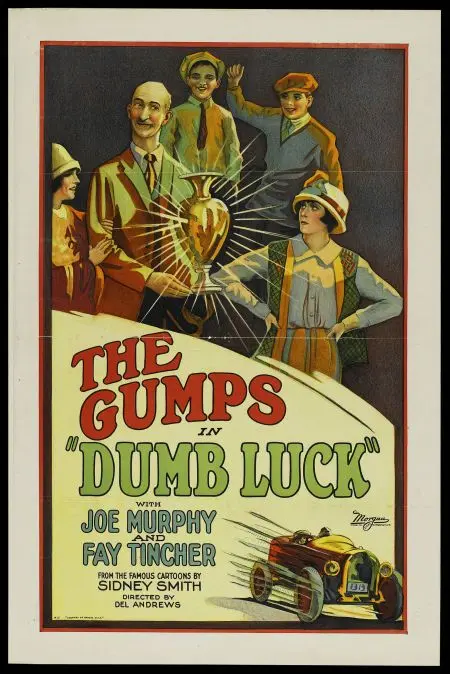
Does Dumb Luck offer a rewarding experience for the modern cinephile? Short answer: No, unless you are a dedicated historian of early 20th-century comic strip adaptations or a glutton for primitive slapstick.
This film is specifically for those who want to trace the genealogy of the 'bumbling sitcom dad' back to its silent roots. It is decidedly not for anyone seeking the poetic athleticism of Buster Keaton or the sophisticated pathos of Charlie Chaplin.
Before we dissect the historical bones of this production, let us be clear about where it stands in the pantheon of silent cinema.
In a word: barely. While many films from this era, such as The Ropin' Fool, offer a display of specialized skill, Dumb Luck relies almost entirely on the novelty of its character design. The primary draw is Joe Murphy’s prosthetic chin—or lack thereof—which creates a silhouette that is more unsettling than humorous by today's standards. If you are looking for a cohesive narrative, you will find it lacking. However, as a 20-minute curiosity, it provides a window into what the average American theater-goer considered 'family entertainment' a century ago.
The transition from newsprint to celluloid is rarely seamless. In the case of Dumb Luck, writer-director Sidney Smith attempted to bring the static irony of his comic strip into a three-dimensional space. The result is a film that feels strangely stiff. Unlike the fluidity found in The Midnight Alarm, which used the camera to build tension, Dumb Luck treats the frame like a proscenium arch. The camera rarely moves, and the actors are forced to over-compensate with broad, sweeping gestures.
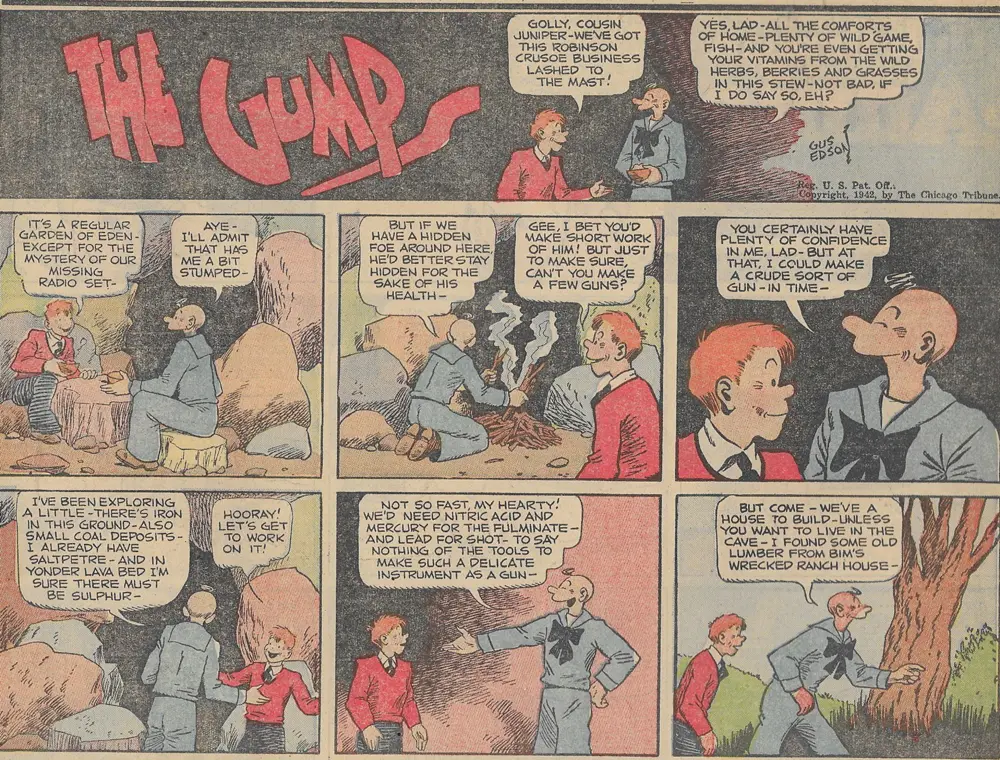
Joe Murphy’s portrayal of Andy Gump is a fascinating failure. He captures the look perfectly, but the character’s internal life is non-existent. Andy is a vessel for bad ideas. In one sequence, his attempt to manage a simple household task spirals into a disaster that feels more mean-spirited than funny. There is a specific moment where Andy looks directly at the camera, and instead of the conspiratorial wink we might get from a modern sitcom lead, we get a blank, glassy stare that highlights the limitations of the medium at the time.
Contrast this with Fay Tincher’s Min. Tincher was a seasoned comedic actress, and it shows. She understands that comedy requires a 'straight man' to function. Her sighs, her eye rolls, and the way she handles a broom all communicate more about the Gump marriage than any of the intertitles. She is the only reason the film doesn't drift entirely into the realm of the grotesque.
From a technical standpoint, Dumb Luck is functional but uninspired. The lighting is flat, typical of the 'high-key' style used in early comedies to ensure every gag was visible. This lacks the atmospheric depth seen in contemporary dramas like The White Dove. The sets feel like sets—thin walls and painted backdrops that shake when a door is slammed. This isn't necessarily a flaw for 1921, but when viewed alongside the innovations occurring in German Expressionism or even the more polished American shorts of the same year, it feels archaic.
The pacing is the film's greatest enemy. Slapstick relies on a 'build and release' rhythm. Dumb Luck often builds, builds, and then simply stops. A scene involving a malfunctioning piece of furniture goes on for three minutes when it only has enough comedic fuel for thirty seconds. It is mechanical. It is repetitive. It lacks the 'spark' that makes silent comedy transcendent.
"Dumb Luck is a cinematic fossil that proves not every piece of nostalgia deserves a revival. It is a series of movements without a soul."
To understand why Dumb Luck feels so stagnant, one must look at what else was happening in 1921. While Sidney Smith was leaning on the crutch of a popular comic strip, other directors were pushing the boundaries of visual storytelling. For instance, the use of space in Whirligigs shows a much more sophisticated understanding of ensemble comedy. Dumb Luck feels isolated, as if it exists in a vacuum where the only thing that matters is the lead actor's silhouette.
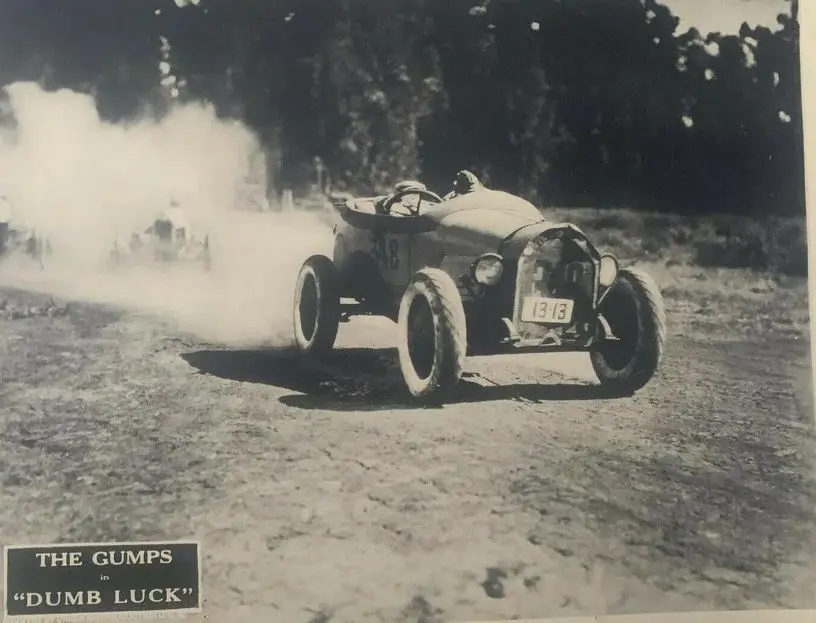
Even the shorter, more experimental pieces like Light Hearts and Leaking Pipes managed to find a sense of charm that is missing here. The Gumps, by design, are not particularly likable people. Andy is a blowhard and Min is long-suffering. Without the daily rhythm of a newspaper strip to build rapport with the audience, these characters come across as grating in a concentrated film format.
Pros:
- Accurate recreation of the comic strip's visual style.
- Historical value as an early example of IP-driven content.
- Short runtime prevents it from becoming truly unbearable.
Cons:
- The prosthetic makeup is distracting and poorly integrated.
- The humor has aged poorly, relying on tropes that have been done better elsewhere.
- Lack of cinematic innovation in terms of camera work or editing.
There is something deeply existential about Joe Murphy’s Andy Gump. His lack of a chin isn't just a physical trait; it represents a fundamental lack of 'spine' or character. He is a man who is physically incomplete, much like the film itself. The film is a void. It tries to fill the space with movement, but there is no substance behind the motion. It is a ghost of a comedy, haunting the archives of a bygone era.
I would argue that Dumb Luck is actually a proto-horror film. There is a scene where Andy attempts to smile at a child, and the combination of the makeup and the flickering frame rate creates a moment of pure nightmare fuel. It’s accidental, of course, but it’s the most visceral reaction the film produces.
Dumb Luck is a fascinating artifact but a mediocre movie. It works. But it’s flawed. It serves as a reminder that being popular in the funny papers doesn't always translate to being effective on the big screen. If you find yourself with twenty minutes to kill and a deep-seated need to see a man with no chin fall over a chair, then by all means, seek it out. For everyone else, your time is better spent elsewhere. This is a film that was built for a moment that passed a century ago, and it has nothing new to say to us today.
IMDb —
1928
Community
Log in to comment.