DbcultAccessing Vault...
Cult Review
Senior Film Conservator
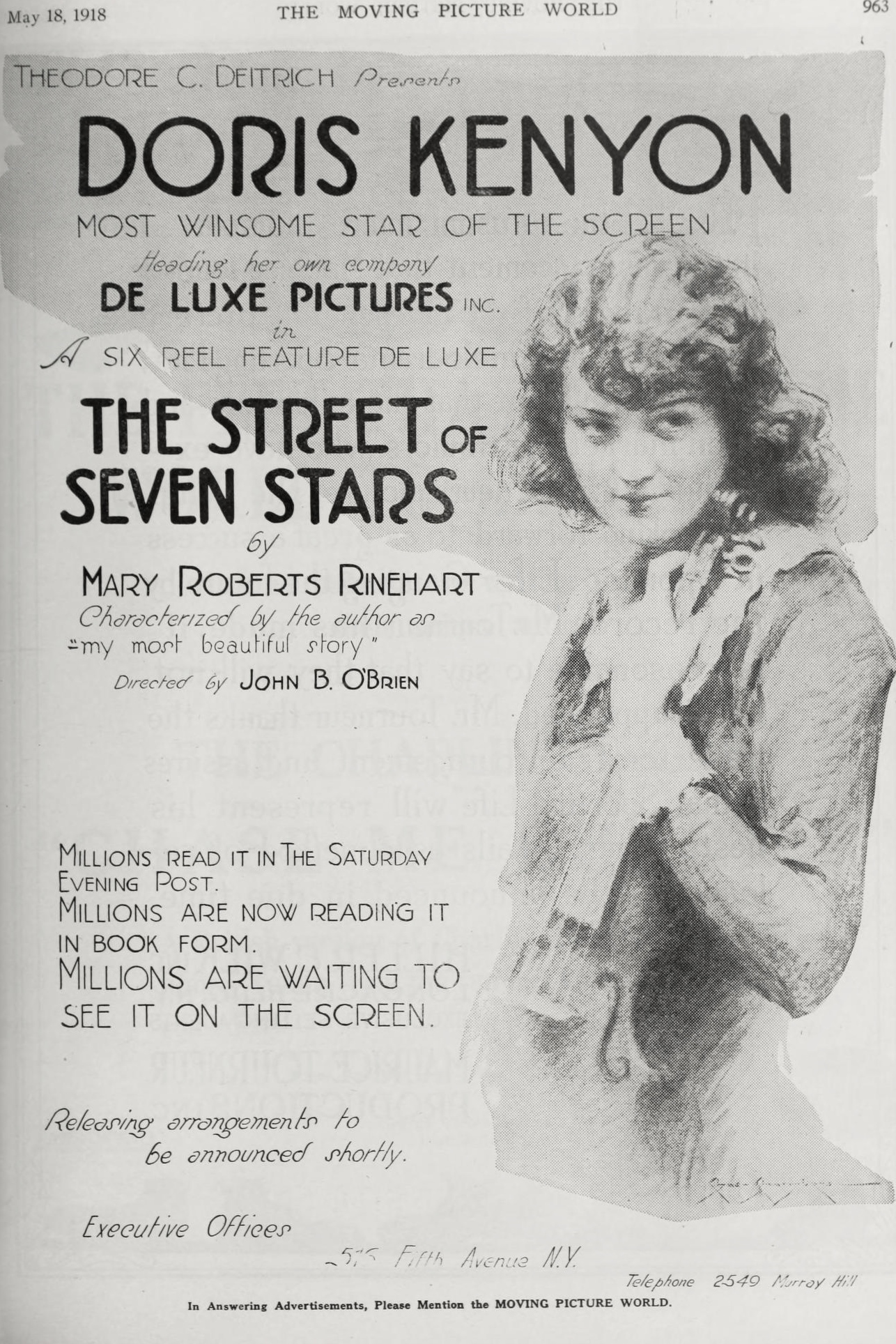
Stepping back into the annals of early cinema, one often encounters narratives that, despite their age, resonate with an astonishing contemporaneity. Such is the case with The Street of Seven Stars, a film that, while rooted firmly in the silent era, grapples with dilemmas as old as ambition itself and as fresh as the latest career versus family debate. Based on Mary Roberts Rinehart’s celebrated novel, this cinematic adaptation plunges us into a Parisian milieu where artistic dreams clash with the profound yearnings of the human heart, all brought to vivid, if silent, life by a dedicated cast led by the luminous Doris Kenyon.
The film introduces us to Harmony Wells, portrayed with exquisite sensitivity by Kenyon, a violinist of prodigious talent who arrives in Paris with the singular purpose of perfecting her craft. The City of Lights, often romanticized as a haven for artistic pursuits, quickly reveals its less glamorous side. Financial constraints soon erode her meager funds, forcing her into the spartan existence of a pension house. This humble dwelling, far from the grand concert halls she aspires to, becomes the unlikely crucible where her destiny begins to take a dramatically different shape. Here, she encounters Dr. Peter Byrne, an earnest American surgeon, played by Hugh Thompson, equally dedicated to his studies. Their meeting is less a whirlwind romance and more a gradual, tender unfolding of mutual respect and burgeoning affection, a testament to the film's nuanced approach to human connection.
The core conflict of The Street of Seven Stars lies in Harmony’s internal struggle. Peter's proposal, born of genuine love and admiration, represents a path of domesticity and shared life. Harmony, however, is a woman possessed by her art, her violin not merely an instrument but an extension of her very soul. Her refusal, though painful for both, isn't born of indifference but a fierce, almost ascetic, dedication to her musical career. This thematic tension – the siren call of personal fulfillment through art versus the profound comfort of companionship – is handled with a delicate touch, avoiding simplistic moralizing. It’s a portrayal that feels remarkably progressive for its time, acknowledging a woman's right to choose her path, even if that choice seems to defy conventional expectations of romance.
This struggle is not unique to Harmony; many narratives of the era explored similar themes. One might draw parallels to characters in The Return of Helen Redmond, where protagonists also grapple with societal pressures and personal aspirations. However, The Street of Seven Stars elevates this common trope by grounding it in a deeply emotional and personal context, rather than a purely societal one. Harmony’s internal conflict feels authentic, a genuine battle between two equally compelling desires.
The narrative takes a profound turn with the introduction of Jimmy, a critically ill, crippled child under Peter’s care. Jimmy’s plight is not merely a plot device; he becomes the emotional fulcrum around which Harmony's rigid resolve begins to soften. His simple request for her to play for him is a moment of pure, unadulterated pathos. Harmony’s music, once solely a vehicle for her ambition, transforms into an act of profound compassion, a balm for a suffering soul. This shift is subtly yet powerfully conveyed through Kenyon’s expressions and gestures, showcasing the silent film's ability to communicate deep emotion without dialogue.
The film then delves into a subplot that, while seemingly secondary, is crucial to Harmony’s ultimate epiphany. Realizing the boy's imminent demise, Harmony embarks on a quest to locate his estranged mother, a dancer who abandoned him for the glittering, yet ultimately hollow, promises of the vaudeville stage. This desperate search, a race against time, culminates in tragedy: the mother arrives too late, a stark reminder of life's unforgiving impermanence. The scene at Jimmy's bedside, though silent, is imbued with an almost unbearable weight of regret and loss, a testament to the film’s emotional depth. It's a moment that resonates with the raw, heartfelt intensity one might find in The Heart of a Lion, where human frailty and the consequences of choices are laid bare.
The culmination of Harmony's journey occurs not on a grand stage, but in the quiet solemnity of Jimmy’s grave. On the eve of her much-anticipated debut, a moment that should symbolize the pinnacle of her artistic aspirations, she finds herself drawn to the child's resting place. There, she encounters the grief-stricken mother, whose profound sorrow has stripped away the superficiality of her former life. The mother’s advice, delivered with the piercing clarity of lived regret – "play for your own children as you played for my little boy" – acts as a potent revelation for Harmony. It’s a moment of profound intergenerational wisdom, a transfer of insight born from the crucible of loss. This isn't just a simple moral; it’s a reorientation of values, a realization that the most profound music might not be found in public acclaim, but in the intimate symphony of family life.
This pivotal scene is a masterclass in silent storytelling, where the weight of the mother’s words, conveyed through intertitles and powerful acting, transforms Harmony’s entire perspective. It’s a moment of clarity that, while perhaps appearing abrupt to a modern audience accustomed to more drawn-out character arcs, feels earned within the narrative’s emotional framework. Her immediate rush back to Peter to accept his proposal is not a surrender of her talent, but a redefinition of its purpose. It suggests that true artistry can be found in the everyday, in nurturing life and love, rather than solely in the pursuit of external validation.
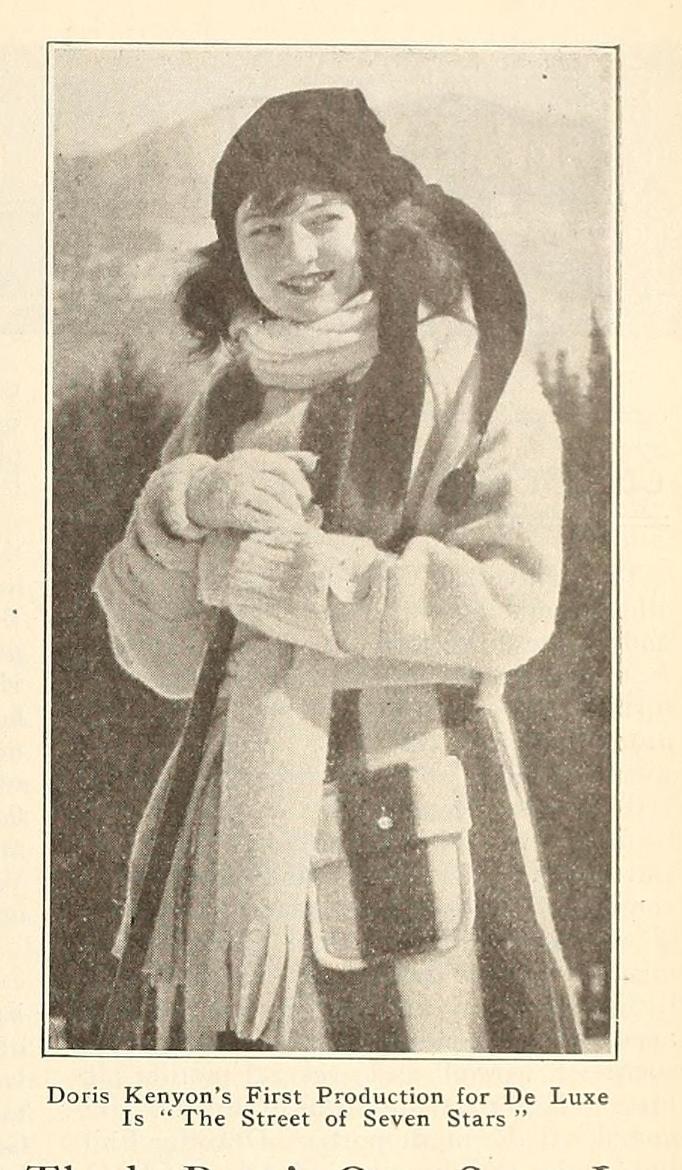
Doris Kenyon’s portrayal of Harmony Wells is undoubtedly the film’s anchor. Her expressive face and nuanced gestures convey a complex inner life, allowing the audience to empathize with her ambition and her eventual transformation. She avoids caricature, presenting Harmony as a woman of depth and conviction. Hugh Thompson, as Dr. Peter Byrne, provides a steady, earnest counterpoint, his quiet strength and unwavering love providing the emotional bedrock for Harmony’s journey. The chemistry between them, though subtle, is palpable, a believable foundation for their eventual union.
The supporting cast, including Frank Crayne, Raphael De Mise, and Carey L. Hastings, contribute effectively to the Parisian tapestry, each adding texture to the world Harmony inhabits. Cesare Gravina, in particular, often brought a compelling gravitas to silent films, and his presence, however brief, typically elevates the scene. The pacing of the film, characteristic of its era, allows moments of quiet contemplation to breathe, punctuated by bursts of dramatic intensity. Unlike some of its contemporaries, which could sometimes feel overly theatrical or melodramatic, The Street of Seven Stars maintains a degree of restraint that lends it an enduring dignity. This measured rhythm allows the audience to fully absorb the emotional weight of each revelation, building towards the poignant climax.
Mary Roberts Rinehart was a prolific and highly popular writer of her time, known for her blend of mystery, romance, and social commentary. Her ability to craft compelling narratives with strong female characters translated well to the screen. The Street of Seven Stars exemplifies her thematic interests: the challenges faced by women in an evolving society, the search for meaning beyond conventional roles, and the often unexpected paths to personal fulfillment. The adaptation maintains the novel's emotional integrity, translating its prose into a visual language that, even without spoken dialogue, conveys the richness of Rinehart’s storytelling. It stands as a testament to the power of a well-crafted story to transcend medium.
Comparing it to other adaptations of the period, one can see how different writers approached the cinematic translation of literature. While a film like A Son of the Immortals might focus more on grand adventure and spectacle, Rinehart’s work, as seen here, prioritizes the interior landscape of its characters. This makes The Street of Seven Stars a more intimate and psychologically resonant experience, a quiet drama that builds its power through emotional truths rather than external theatrics.
The cinematography, while perhaps not groundbreaking by today’s standards, effectively captures the atmosphere of early 20th-century Paris, from the bustling streets to the austere interiors of the pension. The use of close-ups to convey emotion, a burgeoning technique in silent cinema, is employed judiciously, allowing the audience to connect directly with the characters' inner turmoil. The visual language of the film, relying heavily on symbolic gestures and expressive acting, is a powerful reminder of the artistry required to communicate complex ideas without the aid of dialogue.
The themes explored – ambition, sacrifice, the nature of love, and the often-harsh lessons learned from life’s tragedies – are universal and timeless. Harmony’s journey from single-minded artistic pursuit to embracing a more holistic vision of life, one that includes love and family, remains relevant. It challenges the notion that personal fulfillment must come at the expense of human connection, suggesting instead that the deepest joys are often found in the intertwining of both. This isn't to say that all women must choose family over career, but rather that the film explores the validity of such a choice for its protagonist, offering a different kind of triumph.
In an era where films like Northern Lights might explore vast landscapes and human endurance against nature, The Street of Seven Stars turns its gaze inward, focusing on the intricate landscapes of the human heart. It’s a quieter, more reflective piece, yet its emotional impact is no less profound. The film serves as a compelling artifact of its time, showcasing the evolving artistry of cinema and the persistent power of human stories.
Ultimately, The Street of Seven Stars is more than just a historical curiosity; it’s a beautifully crafted drama that speaks to the enduring questions of what constitutes a well-lived life. Harmony Wells's journey is a microcosm of countless individual struggles, a delicate dance between personal aspiration and the profound call of human connection. The film’s resolution, far from being a simplistic 'happily ever after,' feels like a mature acceptance of life’s complexities, a choice made with newfound wisdom and a deeper understanding of love’s true value.
It reminds us that sometimes, the most resonant music isn't played in grand concert halls but in the quiet moments of care, compassion, and shared existence. For anyone interested in the evolution of cinematic storytelling, the nuanced performances of early film actors, or simply a deeply moving human drama, The Street of Seven Stars offers a rich and rewarding experience. It’s a testament to the fact that even without spoken words, a film can articulate the most profound truths of the human condition with eloquence and grace. Its legacy is not just in its historical place, but in its timeless message about the choices that truly define us.

IMDb 4.4
1920
Community
Log in to comment.