DbcultAccessing Vault...
Cult Review
Senior Film Conservator
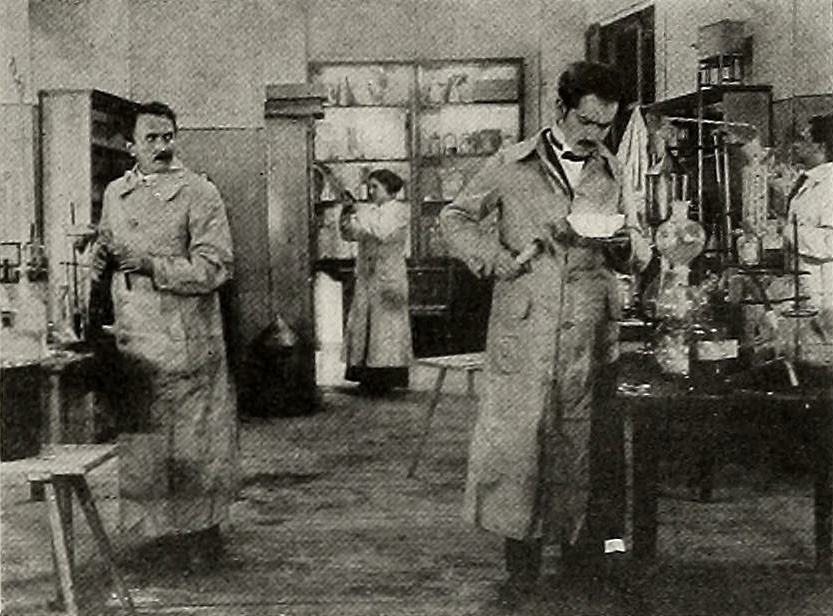
Joseph Delmont’s Red Powder is not merely a film; it is a nitrate-preserved panic attack, a soot-black parable of innovation cannibalised by vanity. Shot in 1913, when Europe’s lungs were already filling with the cordite scent of a war still unnamed, the picture arrives like a sulfurous premonition: progress, once weaponised, will blow back into the faces of its swaggering midwives.
Charles Keil—played with stooped, myopic intensity by an actor whose name celluloid forgot—moves through his glass-walled kingdom like a priest preparing transubstantiation. Every retort, every mercury-globuled drip, is lit as if Caravaggio had been handed a klieg light. Delmont inverts the scientist-as-savior trope: Keil’s brilliance is a fuse, not a beacon. The first time we see the vermilion dust hiss across a porcelain dish, the close-up is so tactile you can almost smell scorched sulfur. It’s cinema as olfactory hallucination.
Enter Reimer—mustache waxed to knife-points, eyes flicking like houseflies over every page of Keil’s notebook. The theft is filmed in one brazen tableau: a shadow elongates across the lab wall, swallowing Keil’s hunched silhouette. The moment is silent yet deafening; intertitles are unnecessary when light itself commits the crime in real time.
Lucy, played by Alice Hechy with the brittle poise of a mourning Valerie, is the film’s moral Geiger counter. Her grief is not decorative; it’s radioactive. When she confronts the bank’s board—wood-paneled panjandrums puffing cigars the size of artillery shells—her voice is intertitled yet sears the frame: “You crown a thief because he wears a wedding ring your chairman forged.” The line, deliciously baroque, detonates among the directors like a stink bomb. They label her hysterical, the 1913 euphemism for “woman who endangers our dividends.”
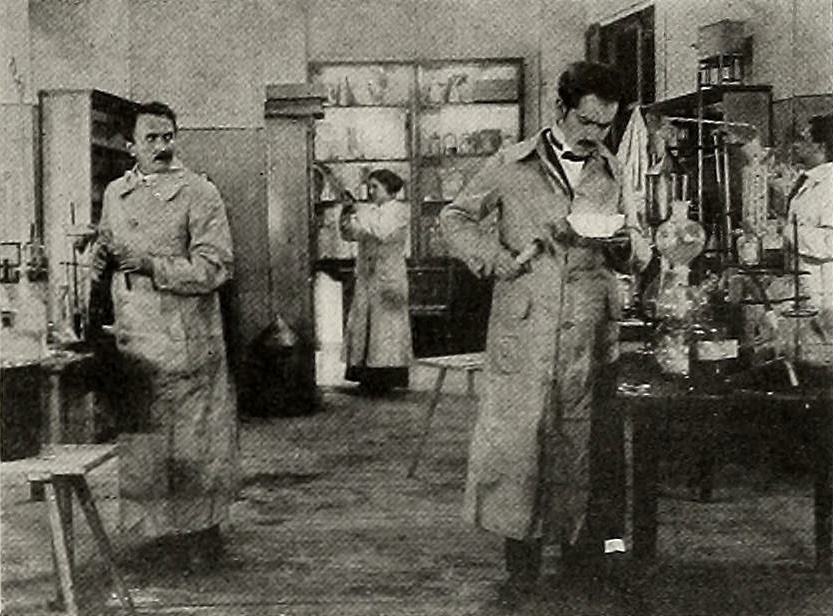
Delmont stages her humiliation in a single, unbroken shot: the camera dollies backward as Lucy advances, a boxing referee in reverse. The boardroom’s chandeliers recede until they resemble celestial calculators, tallying her supposed madness. It’s a visual sneer, and it aches.
Once Reimer’s counterfeit batches sputter, the narrative metastasizes into urban apocalypse. Stockbrokers fling themselves across tickertape-strewn floors like extras in a secular passion play; factory gates clang shut, turning thousands of workers into an army of overcoats without coins for bread. Delmont cross-cuts between Reimer’s sterile lab—where beakers sweat with impotence—and the city’s arteries clogging with rage. The montage predates Eisenstein’s Strike by a dozen years, yet bristles with the same proletarian snarl.
Watch for the shot of a child’s marble rolling into a gutter, followed by a cut to Reimer’s idle centrifuge spinning to silence. The marble is cobalt; the centrifuge, chrome. Colour symbolism in monochrome—a paradox only silent film can dangle before your eyes.
The detective—nameless, trench-coated, face like a cancelled stamp—slides into Reimer’s workspace as a janitor whose broom sweeps more than dust. His mirror trick deserves film-school immortality: a shard angled toward the safe, reflecting pages Reimer believes unseen. The camera assumes the mirror’s POV; we watch Reimer’s pupils dilate each time the formula fails, his reflection fracturing into cubist guilt. It’s a proto-noir visual grammar, taught before the term existed.
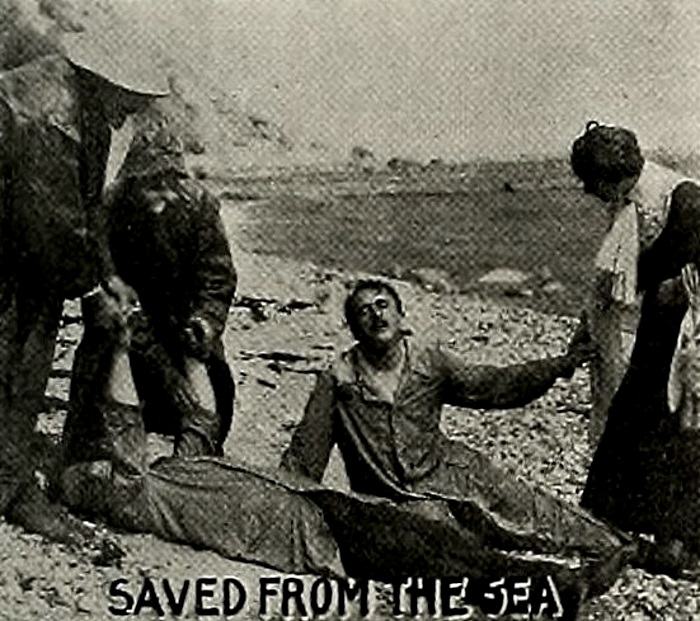
When the populace learns the name of their ruin, Delmont unleashes a set piece worthy of Hieronymus Bosch on amphetamines. Reimer’s mansion—Tudor gables, stained-glass cupolas—becomes a stone magnet. Note the detail of a rioter hurling a child’s rocking horse through a bay window; the horse’s painted eyes remain unblinking as it cartwheels into flames. Surrealist critics claim Buñuel must have screened this before shooting Un Chien Andalou; no archive confirms it, but the rocking horse haunts my dreams like a mahogany omen.
The family’s escape via derrick is cinema’s first crane-shot deus ex machina. As they swing above the conflagration, the camera drops ninety degrees, turning spectators into vertiginous accomplices. For eight seconds we hover between salvation and barbarism, a moral pendulum. Then the rope snaps taut—safety, but branded forever with the stench of kerosene and shame.
Reimer’s deathbed is framed like a chapel: white sheets become altar cloths, the heart monitor’s needle a metronome for contrition. When Lucy enters, the camera refuses close-ups; instead it respects the chasm between them. His whispered plea—“Tell them I was afraid of being ordinary”—is intercut with flash-images of Keil’s casket lowering into winter clay. The editing equates two burials: one of flesh, one of potential. I dare you not to shiver.
Though monochromatic, the film bleeds colour through suggestion. The red powder itself is never tinted; Delmont trusts our synapses to paint the screen carmine. Each explosion is preceded by a single amber frame—so brief you question your optic nerve—like a subliminal match strike. Scholars call it proto-Technicolor; I call it witchcraft.
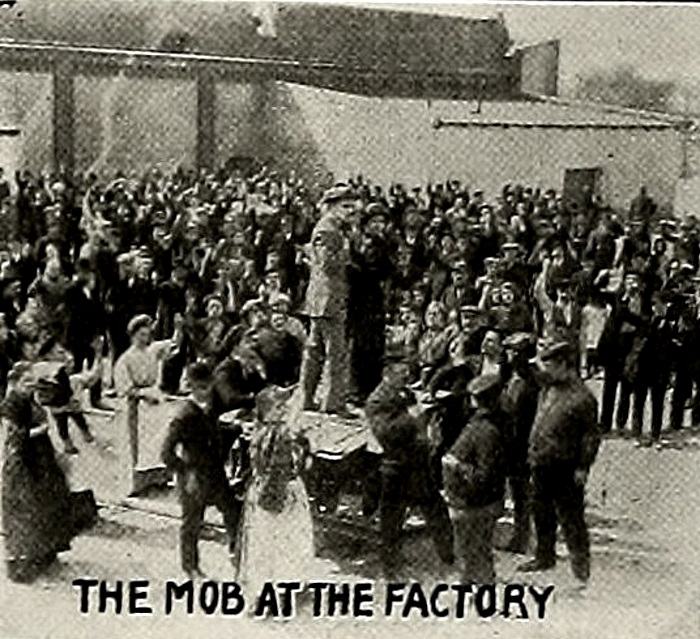
Archival notes indicate the original tour included a live quartet hammering out a pastiche of Wagner’s “Ride of the Valkyries” and Tchaikovsky’s “1812.” Modern restorations often opt for industrial drones or glitch-hop. My advice: watch it with headphones piping in the crackle of Tesla coils and distant factory whistles. The marriage turns your living room into a forge.
If you hunger for more tales where chemistry courts catastrophe, follow these breadcrumbs through cinema’s catacombs:
We live in an age where patents are harvested by algorithm, where a single line of code can vaporise a pension fund. Red Powder whispers across a century: the deadliest explosive is not the molecule but the moral vacuum that pockets it. Delmont’s film may be a relic, yet its fuse sizzles on, waiting for the next hand reckless enough to strike the match.
Verdict: 9.5/10 – a nitrate prophecy that detonates in the mind long after the projector’s click fades to black.

IMDb 6.4
1928
Community
Log in to comment.