DbcultAccessing Vault...
Cult Review
Senior Film Conservator
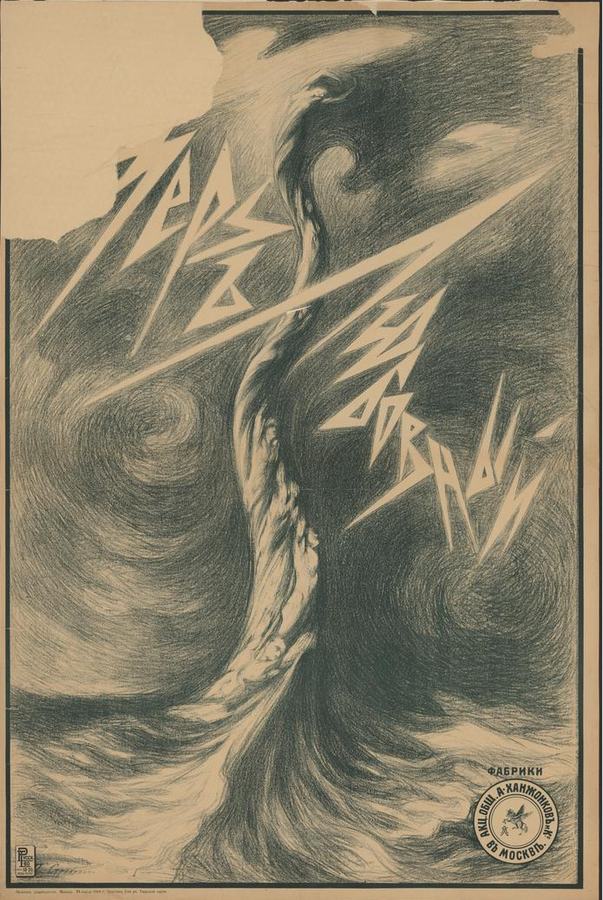
Step back in time, dear reader, to an era when stories unfolded not through spoken dialogue but through the eloquent language of gesture, expression, and the sweeping grandeur of cinematography. We find ourselves in the hallowed halls of early Russian cinema, where a film like Smerch lyubovnyy — a title that translates to 'Love Whirlwind' or 'Love Vortex' — stands as a monumental testament to the era's dramatic prowess and its unflinching gaze into the human heart. This is not merely a film; it is a meticulously crafted emotional tapestry, woven with threads of fervent passion, societal constraint, and the crushing weight of impossible choices. Its narrative, while perhaps seemingly familiar in its melodramatic contours, is elevated by performances of startling intensity and a directorial vision that understood the very soul of tragic romance.
At the pulsating core of this cinematic maelstrom is Vera, brought to breathtaking life by the incomparable Vera Karalli. Karalli, a name synonymous with the grace and expressive power of the silent screen, embodies Vera not just as a character but as an archetype: the artist whose spirit soars but whose feet remain tragically tethered to the earthly demands of survival. Her Vera is a ballerina, a creature of exquisite beauty and profound artistic integrity, whose every movement on stage is a poem, a testament to her dedication. But off stage, her world is far from the ethereal realm of dance. She grapples with the gnawing anxiety of an ailing family, a burden that presses down upon her delicate shoulders with an almost unbearable weight. This dual existence – the sublime artist and the struggling daughter – forms the bedrock of her character, making her ultimate predicament all the more agonizingly poignant.
Vera's heart, pure and unwavering, belongs to Alexei, portrayed with raw, sympathetic intensity by Vjacheslav Svoboda. Alexei is the quintessential struggling artist, his hands stained with paint, his soul aflame with a love that transcends the material. His canvases are not mere pictures; they are confessions, prayers, silent declarations of his boundless adoration for Vera. He sees her not just with his eyes but with his very essence, capturing her ephemeral beauty and her internal struggle with a fidelity that borders on the sacred. Their love is a quiet, profound force, a sanctuary against the harsh realities of their world. It is the kind of love that forms the bedrock of dreams, a love that promises solace and understanding in a world often devoid of both.
However, into this tender idyll strides Prince Dmitri, a character brought to chilling, charismatic life by Vitold Polonsky. Polonsky, a master of nuanced villainy and sophisticated charm in the silent era, imbues Dmitri with a predatory elegance. He is not merely wealthy; he is powerful, a force of nature in the social hierarchy, accustomed to acquiring whatever—or whoever—catches his discerning eye. Dmitri recognizes Vera's talent, yes, but he covets her spirit, her beauty, her very being as a possession. His offer of patronage is not an act of generosity but a calculated maneuver, a golden leash disguised as a lifeline. He promises Vera not just artistic freedom but also the financial security her family so desperately needs, cleverly exploiting her deepest vulnerability. This Faustian bargain, presented with such beguiling allure, sets the stage for the film's central tragedy. The choice, for Vera, is not one of love versus indifference, but of love versus duty, a crucible in which her spirit is tested to its absolute limits.
Vera's decision, born of a mother's love and a daughter's responsibility, is a dagger to Alexei's heart. His world, once vibrant with the promise of shared dreams, collapses into a desolate landscape of despair. Yet, like any true artist, he transmutes this agony into creation. His masterpiece, a portrait of Vera, becomes a visual elegy to their lost love, a searing indictment of the societal forces that tore them apart. It is a painting that does more than depict; it screams, it weeps, it confesses. The canvas, imbued with his very essence, captures Vera's torn soul, her eyes reflecting the impossible choice she was forced to make, the internal chasm between her heart's desire and her family's needs. This painting, when unveiled, is not merely a work of art; it is a public scandal, a raw nerve exposed to the judgmental gaze of society.
The critical acclaim it garners, far from being a balm, becomes a fresh wound, particularly for Prince Dmitri. Polonsky's portrayal of Dmitri's escalating fury is masterful. He moves from suave manipulator to vengeful tyrant, his pride wounded by the public's understanding of Vera's true affections, so vividly captured by Alexei's brush. Dmitri's subsequent actions are chillingly precise: he orchestrates Alexei's ruin, systematically dismantling his career, his reputation, and his very means of livelihood. This is where Smerch lyubovnyy truly excels in its portrayal of power dynamics; it's not just about a love triangle, but about the crushing weight of aristocratic privilege against individual passion and artistic integrity. The film doesn't shy away from depicting the brutal consequences of defying such power, a theme that resonates with other silent era explorations of social disparity, perhaps even echoing the struggles seen in films like The Pride of the Firm, though with a distinctly Russian, more fatalistic flavor.
Vera, initially blinded by the pragmatic necessity of her choice and perhaps by the superficial glamour of Dmitri's world, eventually awakens to the full horror of his treachery. The slow dawning of this realization on Karalli's face is a masterclass in silent acting; a subtle shift from veiled sadness to dawning horror, culminating in a profound despair. She sees not only Alexei's ruin but also the true, monstrous cost of her own choices. The gilded cage reveals its true bars, and the promises of freedom turn to dust. Her attempts at reconciliation with Alexei are fraught with a desperate urgency, a race against time and fate. This segment of the film is a tour de force of emotional storytelling, where every gesture, every tear, every longing glance speaks volumes more than any dialogue ever could. It's a raw exploration of guilt, regret, and the futile longing for what might have been.
The climax of Smerch lyubovnyy is not a grand, explosive confrontation in the traditional sense, but a more insidious, heart-wrenching unraveling. The vortex of love, betrayal, and societal pressure ultimately pulls its protagonists apart, not with a sudden snap but with a slow, agonizing tear. Their separation is irreversible, a testament to the unforgiving nature of fate and the unyielding grip of social stratification. Vera is left to dance out a life imbued with the ghost of a love lost, her artistry now carrying a deeper, more profound melancholy. Her performances become silent tributes to Alexei's memory, each movement a lament, each leap a yearning for a love that could never truly be. It’s a tragic, yet deeply resonant conclusion, leaving the viewer with a lingering sense of pathos and the enduring question of what constitutes true happiness versus mere survival.
The film’s power is amplified by its historical context. Made in an era preceding the Russian Revolution, Smerch lyubovnyy inadvertently captures the simmering tensions of a society on the brink. The stark contrast between the impoverished artist and the opulent prince, the power wielded by the aristocracy, and the lack of agency for individuals caught in their web, all speak to the social inequities that would soon explode. It’s a microcosm of a larger societal drama, where individual lives are crushed under the weight of an inflexible system. In this regard, it shares a thematic thread with other films of its time that explored societal pressures, albeit from different cultural lenses. One might draw parallels to the struggles faced by protagonists in films like Divorce and the Daughter, which also grappled with the constraints placed upon women by societal expectations, though perhaps without the same overt sense of fatalistic doom that pervades the Russian melodrama.
The performances, particularly those of Karalli and Polonsky, are exemplary of silent film acting at its peak. Karalli's face, a canvas of emotion, conveys volumes with a subtle tilt of the head or a fleeting glance. Her physical grace as a ballerina translates seamlessly into her dramatic portrayal, making her character's internal turmoil palpable. Polonsky, on the other hand, masterfully balances charm with menace, creating a villain who is both alluring and utterly detestable. His portrayal of Prince Dmitri is a testament to the power of non-verbal communication, where a smirk or a narrowed eye can convey more insidious intent than pages of dialogue. This kind of sophisticated character work is what sets films like Smerch lyubovnyy apart, allowing them to transcend the limitations of their medium and speak directly to the audience's emotions.
Beyond the compelling narrative and stellar performances, the film's directorial style and cinematography deserve significant praise. The use of dramatic lighting, carefully composed frames, and the innovative deployment of close-ups serve to heighten the emotional stakes, drawing the viewer deeply into the characters' inner worlds. The visual storytelling is rich and evocative, utilizing symbolism – perhaps the contrast between the dark, intimate spaces of Alexei's studio and the brightly lit, yet cold, grandeur of Dmitri's palace – to underscore thematic conflicts. The pacing, though deliberate, builds inexorably towards its tragic conclusion, maintaining a grip on the audience's attention through sheer emotional force. While we may not have specific directorial credits, the collective artistry behind this production is undeniable, reflecting the burgeoning sophistication of Russian cinema in that era. One might consider it alongside other emotionally charged silent narratives like Bogdan Stimoff, if that film also delved into the profound personal sacrifices demanded by love and societal pressures.
The themes explored in Smerch lyubovnyy are timeless: the clash between love and duty, the corrupting influence of power, the resilience of the human spirit in the face of adversity, and the profound sorrow of unfulfilled dreams. It is a film that asks uncomfortable questions about the price of survival and the true nature of sacrifice. Does one choose personal happiness at the cost of family well-being? Can true love survive the brutal machinations of a class-bound society? The film offers no easy answers, instead opting for a poignant, almost elegiac conclusion that resonates long after the final frame fades to black. Its enduring legacy lies not just in its historical significance as a piece of Russian silent cinema but in its universal appeal as a deeply felt human drama. It reminds us that even without spoken words, the deepest emotions can be conveyed with startling clarity and power, leaving an indelible mark on the soul.
In an age saturated with sound and fury, revisiting a film like Smerch lyubovnyy is a profound experience. It forces us to engage with cinema on a different level, to read expressions, to interpret gestures, and to feel the weight of unspoken words. It is a testament to the artistry of its cast and crew, who, armed with little more than light, shadow, and their own immense talent, crafted a narrative of such emotional depth and enduring power. This 'Love Whirlwind' may be silent, but its emotional roar echoes across the decades, a timeless reminder of the human heart's capacity for both immense love and profound sorrow. It stands as a vital piece of cinematic history, deserving of renewed appreciation and study for its brilliant portrayal of the human condition under the crushing weight of fate.

IMDb —
1915
Community
Log in to comment.