DbcultAccessing Vault...
Cult Review
Senior Film Conservator
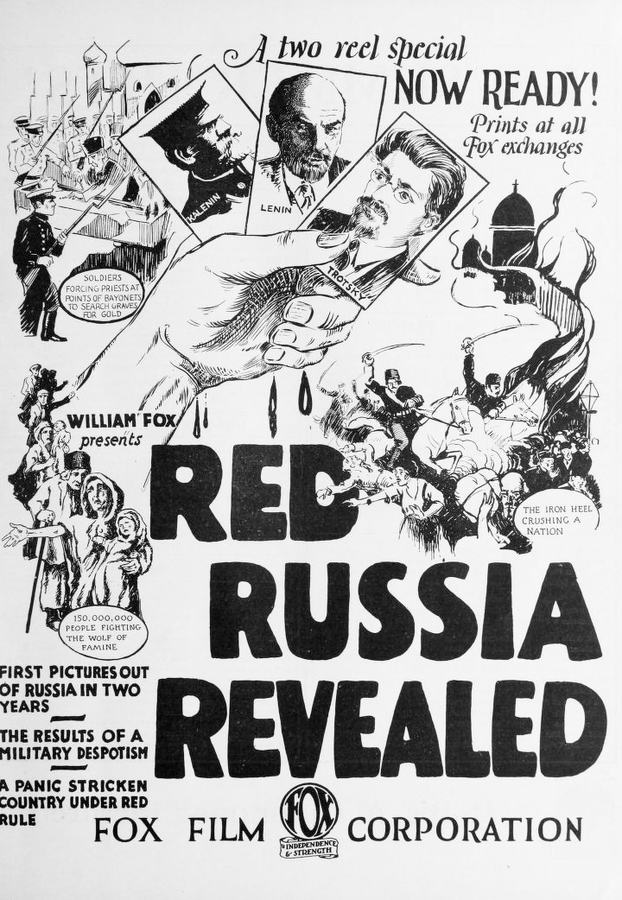
To witness Red Russia Revealed is to step through a tear in the fabric of time, emerging into a landscape defined by its haunting austerity and its terrifying proximity to the void. This is not the Russia of romanticized literature or the grandiosity of Eisenstein’s later choreographed uprisings. Instead, we are presented with a nation in the throes of an existential spasm, a raw ethnographic document that captures the immediate, dust-choked aftermath of the Russian Revolution and the ensuing Civil War. As a film critic, one often grapples with the concept of the 'gaze,' but here, the camera’s gaze feels less like an artistic choice and more like a desperate act of preservation. The celluloid itself feels heavy with the weight of the bodies and the ideologies it depicts, a silent witness to the birth pangs of a century that would be defined by the very tensions captured in these grainy, flickering frames.
The visual language of the film is one of profound contrast. We see the crumbling opulence of the old world—statues of Tsars toppled, their stone faces staring blankly into the mud—juxtaposed against the skeletal frames of the peasantry. Unlike the structured narrative of The Stolen Treaty, which utilizes political intrigue as a vessel for entertainment, Red Russia Revealed offers no such comfort. There are no spies in trench coats here, only the hollow eyes of children and the stoic, weathered faces of workers who have seen the world end and are now tasked with building a new one from the ashes. The cinematography, though primitive by modern standards, possesses a visceral quality that high-definition digital formats can never replicate. The grain of the film acts as a metaphorical fog, through which the specters of the past emerge with startling clarity.
In many ways, the film shares a thematic kinship with the desolation found in The Shepherd of the Hills, yet it lacks that film's pastoral redemption. In the Russian landscape, the hills offer no sanctuary; they are merely repositories for the hungry and the displaced. The documentary captures the sheer scale of the Volga famine with a clinical detachment that somehow makes the imagery more devastating. We see bread lines that stretch into infinity, a stark reminder that while the Bolsheviks promised bread, peace, and land, the reality was a brutal struggle for the most basic of these necessities. The film’s pacing is deliberate, almost funereal, forcing the viewer to sit with the discomfort of the imagery, a technique that predates the slow cinema movement by decades.
There is a fascinating absence of the performative in this footage. While a film like My Lady's Garter revels in the artifice of social standing and the lighthearted scandals of the elite, Red Russia Revealed shows us a society where such trivialities have been incinerated. The 'garter' of the old Russian aristocracy has not just been slipped; it has been torn away, along with the skin. The film meticulously documents the repurposing of aristocratic spaces—palaces turned into communal kitchens, ballrooms serving as makeshift barracks. It is a study in the desecration of the sacred and the sanctification of the mundane. The camera lingers on the hands of the workers—calloused, dirty, and relentless—as they attempt to forge a future out of industrial wreckage.
The editorial choices within the film suggest a narrative of progress, yet the visual evidence often contradicts this didactic intent. We see the 'New Russia' in its infancy, characterized by a frantic, almost desperate energy. This is a far cry from the domestic complications of Nearly Married or the lighthearted antics of Father and the Boys. In the Soviet Union of 1923, the family unit is not a source of comedy but a fragile vessel for survival. The film captures the communalization of life, where the individual is subsumed by the collective, a transformation that is both awe-inspiring and deeply unsettling. The sheer logistical nightmare of feeding and housing millions of people is laid bare, providing a sobering look at the practicalities of revolution.
One cannot discuss this film without acknowledging its role as a precursor to the great Soviet montage movement. While it lacks the frenetic cutting of Vertov or the intellectual montage of Eisenstein, it possesses a proto-documentary sensibility that values the 'life caught unawares.' There is a sequence involving a train journey across the Siberian wastes that rivals the atmospheric tension of The Broken Trestle. The train becomes a microcosm of the state—clanking, steam-driven, and perpetually on the verge of derailment, yet moving forward with an inexorable, mechanical will. The vastness of the Russian geography is used to emphasize the isolation of the human experience within the vast Soviet experiment.
In comparing the film to more traditional narratives like A Misfit Earl, the contrast in stakes is jarring. Where the 'misfit' in British drama might struggle with inheritance or social faux pas, the 'misfits' in Red Russia Revealed are the remnants of a class that has been marked for liquidation. The film captures the quiet terror of the former bourgeois, now blending into the grey masses, their refined features a dangerous liability in the new world order. This sense of pervasive dread, though silent, is more evocative than the overt melodrama found in Secret Sorrow. The sorrow here is not secret; it is public, systemic, and etched into the very soil of the country.
Technically, the film is a fascinating relic. The hand-cranked cameras of the era imbue the footage with a rhythmic pulse, a heartbeat that seems to sync with the labor of the subjects. There is a scene involving a fire brigade that, while perhaps intended to show the efficiency of the new regime, reminds one of the chaotic energy in The Fire Chief, though stripped of its slapstick humor. Here, the fire is not a gag; it is a literal threat to the meager resources of a starving city. The smoke billows in thick, suffocating clouds, and the firefighters move with a grim desperation that is profoundly moving. It is a reminder that in the face of catastrophe, human courage remains a constant, regardless of the political flag flying overhead.
The film also touches upon the role of the messenger in a revolutionary society. Unlike the fictionalized protagonist in The Messenger, the messengers in Red Russia Revealed are the propagandists, the agitprop trains, and the filmmakers themselves. They are the conduits through which the state speaks to the people, and the people speak—however tentatively—to the world. The film is as much about the act of seeing as it is about what is seen. It asks the viewer to consider the ethics of documenting suffering: is the camera a tool of liberation or a voyeuristic intruder? This ambiguity is never resolved, making the film a complex, layered experience that rewards multiple viewings.
As we navigate the 'birthday tangle' of the Soviet Union's early years—a knot of conflicting reports, censored truths, and idealistic dreams—this film stands as a singular, if biased, anchor. While it doesn't have the whimsical complexity of A Birthday Tangle, it presents its own labyrinth of human experience. We see the 'Master Thief' of history—time and revolution—stealing away the familiar world and replacing it with something unrecognizable. The film captures the 'Master Thief' (Mästertjuven) at work, not in a heist of jewels, but in the heist of an entire civilization's identity.
In the quieter moments, the film allows for a degree of introspection that is rare for the era. We see a young woman looking into the camera, her expression a mix of curiosity and exhaustion. In her eyes, we see the 'Secret Sorrow' of a generation that has lost everything and is being told that their loss is the price of a better future. It is a haunting image that lingers long after the screen goes black. It reminds us that while governments fall and borders are redrawn, the individual remains the primary site of historical impact. The film, in its silent eloquence, screams for the recognition of this human element.
Ultimately, Red Russia Revealed is an essential piece of cinematic archaeology. It lacks the escapist allure of Give Me Air or the structured moralism of It Is Never Too Late to Mend. Instead, it offers a raw, unfiltered encounter with a moment in time that changed the world forever. It is a film that demands to be seen not as a piece of propaganda, but as a testament to the resilience of the human spirit in the face of overwhelming odds. It is a journey through a landscape of ghosts, where every frame is a prayer for remembrance. To watch it is to be reminded of the power of the moving image to bridge the gap between cultures and centuries, providing a window into a world that is at once alien and deeply, painfully familiar.
Whether it is the image of a huntsman in the wilderness, reminiscent of the rugged themes in The Huntsman, or the sight of a child clutching a crust of bread, the film's power lies in its ability to strip away the abstractions of history and replace them with the concrete reality of life. It is a difficult, often painful watch, but it is an indispensable one for anyone who wishes to understand the 20th century. In the end, Red Russia Revealed does not just reveal a country; it reveals the terrifying and beautiful complexity of the human condition itself.

IMDb —
1928
Community
Log in to comment.