DbcultAccessing Vault...
Cult Review
Senior Film Conservator
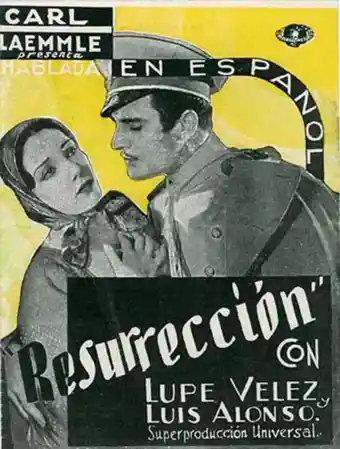
Alright, let’s be straight up: Resurrección isn't for your average Friday night movie marathon. If you’re into serious film history, or maybe just really curious about what early Spanish-language cinema looked like, then yeah, give it a shot. Everyone else looking for something fast-paced or visually slick? You’ll probably want to skip this one. 🎬
This film is a 1931 take on Tolstoy’s heavy novel, and it feels every bit its age. We’re talking about a story where a man, Nekhlúdoff, is on a jury and spots a woman, Katúsha Maslóva, accused of a crime. He then realizes she’s someone he absolutely mistreated years ago.
That moment of recognition, you can almost see the gears turning in his head. The film really tries to hit you with his sudden, overwhelming guilt.
So, he decides to follow her, all the way to Siberia, trying to make amends. It’s a journey, for sure, and not just geographically. It’s a full-on emotional pilgrimage.
One of the really interesting bits is knowing this was a simultaneously shot Spanish version. That means they filmed it at the same time as, likely, an English version, sometimes with different casts or directors. You can feel that unique energy, or sometimes, the slight stiffness that came with those kinds of productions.
Lupe Velez, she plays Katúsha, and she’s quite something here. She’s often known for her more lively, fiery roles, so seeing her in such a dramatic, tragic part is a twist. You still get flashes of her inherent spark, even when she’s meant to be suffering immensely.
There’s a scene early on, just after the trial, where Nekhlúdoff is grappling with his conscience. The way he paces, the shadows around him — it’s all very stagey, but in a way that feels purposeful for the time. It really sells his internal turmoil, even if it feels a little over-the-top by today's standards. 🎭
The journey itself, to Siberia, is less about stunning landscapes and more about the *idea* of the journey. You don’t get a lot of sweeping vistas. It’s more about the interactions, the cramped spaces, and the relentless sense of fate.
Some of the supporting performances, particularly among the other prisoners, feel incredibly authentic. There’s one older woman, not a main character, who just sits there with this quiet despair that really stuck with me. You can feel her resignation.
The movie is slow, no two ways about it. It takes its time, letting scenes linger, letting the guilt and the suffering just wash over you. If you’re not prepared for that pace, it might feel like forever.
But that lingering, sometimes it lets the emotional weight really sink in. Like, the silence between characters. It starts to feel heavy after a bit, not just empty.
Honestly, I kept thinking about how tough it must have been to make films like this back then. The technical limitations are visible, of course, but the ambition to tell such a grand, moral tale is still impressive.
The film isn’t always perfect. Some of the cuts feel a little abrupt, like they were rushing to get to the next important beat. And a few of the reaction shots from the side characters, they just sort of *hang there*.
But then Lupe Velez will have a moment, a look in her eyes, that just cuts through the datedness. It’s powerful stuff, really.
It’s a tough watch because of its age and its subject matter. But for those who appreciate seeing a classic story told through the lens of early sound film, Resurrección offers a fascinating, if sometimes clumsy, dive into human failings and the search for redemption. It’s a piece of cinema history, and sometimes that’s enough. ✨

IMDb 7.1
1934
Community
Log in to comment.