DbcultAccessing Vault...
4.8/10
Senior Film Conservator
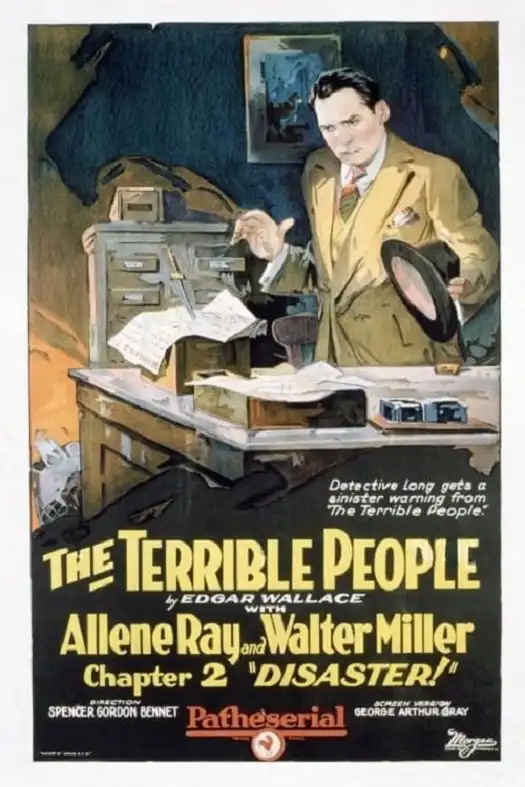
A definitive 4.8/10 rating for a film that redefined the boundaries of cult cinema. The Terrible People remains a cornerstone of transgressive art.
Okay, look. If you're not already into silent film serials from the 1920s, The Terrible People probably isn't going to be your gateway drug. This isn't some lost masterpiece that transcends its era. But if you are curious, if you enjoy seeing how these things were made, or if you just have a soft spot for melodramatic villains and cliffhangers that feel utterly ridiculous today, then yeah, there's something here. Anyone expecting modern pacing or subtle performances will absolutely hate it. They'll just be confused.
The whole thing feels like a time capsule, a product designed for weekly consumption at the local picture house. Each chapter, maybe 20 minutes long, is built around a central peril, a daring escape, and then a completely bonkers setup for next week. It’s less a narrative arc and more a series of increasingly elaborate traps. You can almost feel the filmmakers trying to outdo themselves with each new predicament. Sometimes it works, often it doesn't.
The acting, as you’d expect for the period, is broad. Really broad. Larry Steers, as the hero (or one of them), spends a lot of time looking stern and determined, his jaw practically vibrating with resolve. Alyce McCormick, on the other hand, gets to do a lot more with her expressions, particularly in moments of distress. There's one scene where she's tied up, and the way her eyes dart around the room, full of genuine panic, actually cuts through the general theatricality. It’s a small, human moment that sticks with you.
But then there are moments when the performances just feel... rote. Like everyone's hitting their marks, but the emotion isn't quite there. There's a particular bit where Walter Miller's character is supposed to be giving a really serious warning, and his gestures are so exaggerated, so 'silent film villain handbook,' that it becomes a little unintentionally funny. You almost expect a cartoon thought bubble above his head.
Pacing is, naturally, all over the place. Some chapters gallop along, cramming in chases and close calls. Others, especially in the middle section, just kind of meander. There's a chapter where the hero is exploring an abandoned mansion, and the camera follows him through every single empty room, lingering on dusty furniture. It goes on about 30 seconds too long, and the silence starts to feel awkward rather than suspenseful. It’s like they needed to pad out the runtime for the weekly slot.
The 'Terrible People' themselves are mostly a shadowy presence for a good chunk of the serial. Their costumes are effective in a low-budget, slightly menacing way – lots of dark cloaks and masks. But there’s one recurring henchman whose mask just doesn't quite sit right on his face; it always looks like it's about to slip, which undermines his villainous aura a bit. A tiny detail, but once you notice it, you can't unsee it.
The intertitles are a mixed bag. Some are wonderfully dramatic, pushing the plot forward with a sense of urgency. Others are just… clunky. Explaining things that are already obvious, or delivering dialogue that feels incredibly stilted even for a silent film. 'Ah, the fiend! He has captured her!' Yes, we can see that. The picture is quite clear.
Visually, it's a product of its time. The prints I’ve seen are often a bit rough, with visible scratches and flickering, which adds to the antique charm but can also be a bit distracting. The sets are functional, mostly. You can tell they reused a lot of locations. One particular 'secret lair' looks suspiciously like a basement that was just painted black.
But for all its imperfections, there's a certain energy to it. The sheer audacity of some of the cliffhangers is commendable. In one chapter, the hero is trapped in a room filling with water, and the very last shot is just his hand reaching up, about to go under. It's cheesy, absolutely, but you get why audiences would have been lining up the next week to see how he possibly got out of *that* one. That's the real draw here, I think: seeing the blueprint for so much adventure storytelling that came after.
It’s not a film you put on for a casual viewing, not unless you're specifically in the mood for an archaeological dig into cinema history. But if you approach it with a sense of curiosity and a willingness to forgive its many charming flaws, The Terrible People offers a fascinating, if sometimes frustrating, look at how we used to tell stories on screen.
IMDb 4.5
1934
Community
Log in to comment.