DbcultAccessing Vault...
7.6/10
Senior Film Conservator
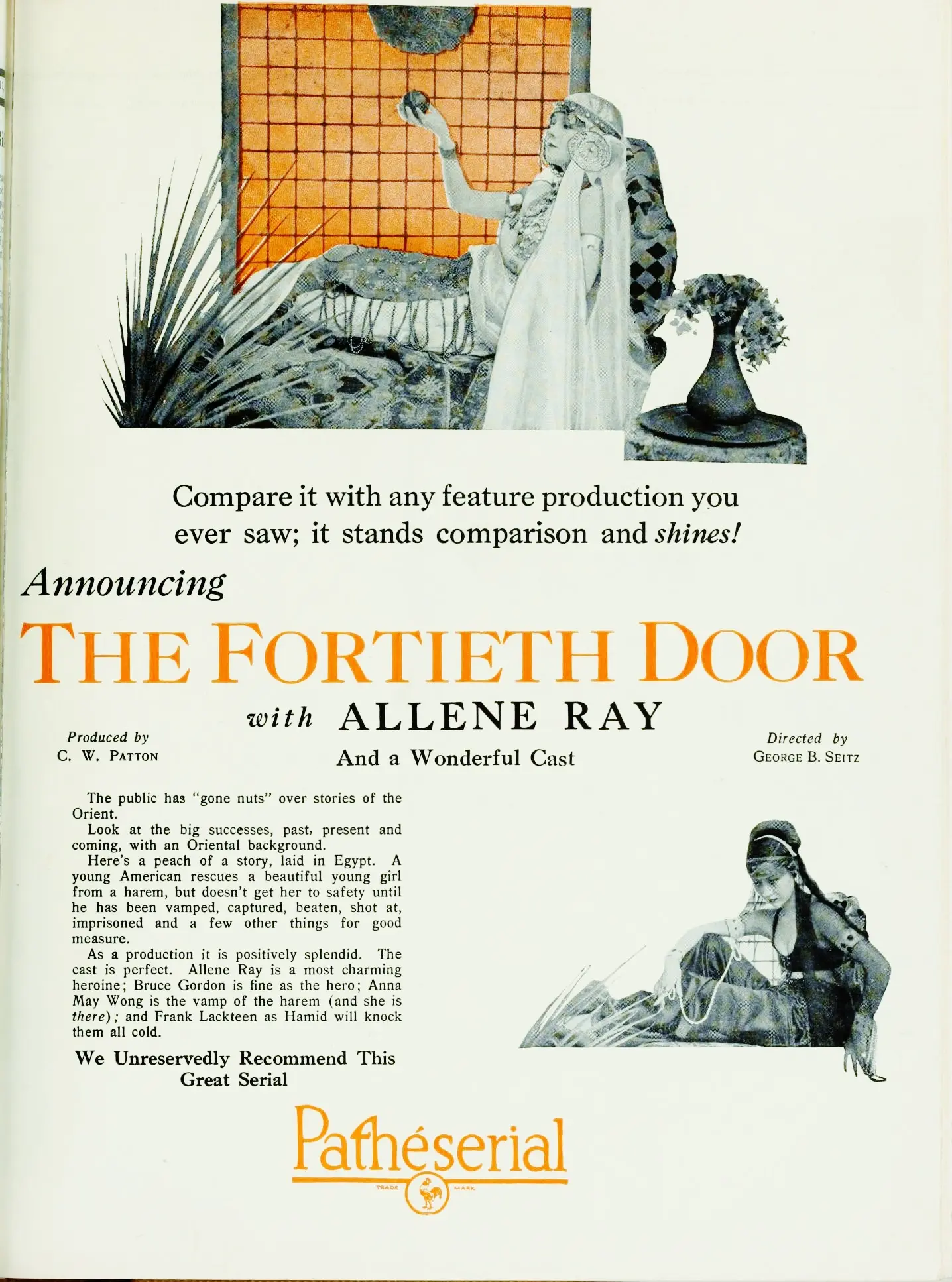
A definitive 7.6/10 rating for a film that redefined the boundaries of cult cinema. The Fortieth Door remains a cornerstone of transgressive art.
Stepping back into the cinematic landscape of 1924, one encounters a fascinating tapestry of early motion pictures, each striving to captivate audiences with nascent storytelling techniques and burgeoning star power. Among these, The Fortieth Door emerges as a particularly vibrant example of the adventure serial, a genre that thrived on exotic locales, perilous predicaments, and the enduring charm of its leads. Directed with an eye for the dramatic and written by the collaborative talents of Mary Hastings Bradley and Frank Leon Smith, this film, while perhaps not as widely remembered as some of its contemporaries, offers a compelling glimpse into the era’s fascination with orientalism, archaeological mystique, and the inherent thrill of the chase across untamed lands. It’s a silent epic that, despite the passage of a century, still manages to evoke a sense of breathless excitement, a testament to its foundational narrative strengths and the palpable energy of its cast.
At its heart, The Fortieth Door is a whirlwind of desert escapades, a narrative framework that was immensely popular in the 1920s. Films like Keith of the Border, though set in a different arid landscape, similarly capitalized on the rugged allure of vast, untamed territories. Here, the North African desert becomes a character in itself—a formidable, sun-baked stage where allegiances are tested, secrets are unearthed, and destinies are forged under a relentless sun. The plot, as described by contemporaneous accounts, plunges us directly into a maelstrom of peril: villains, a staple of any good serial, are perpetually in motion, often dashing madly across the aforementioned deserts, their sinister machinations placing the lives of both the intrepid hero and the vulnerable heroine in constant jeopardy. This relentless pursuit forms the backbone of the film’s tension, a continuous thread of suspense that would have kept audiences on the edge of their seats, eagerly awaiting the next installment.
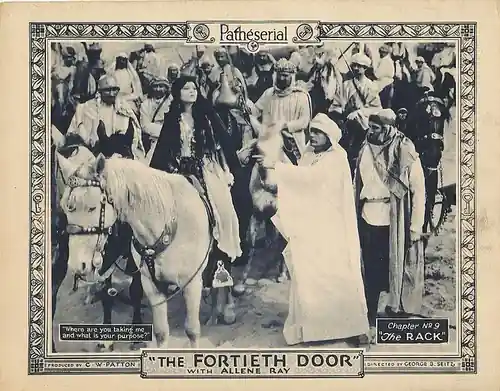
The intricate set pieces, particularly the descriptions of "long underground avenues, trick doors, trap doors," speak volumes about the ingenuity employed by filmmakers of the era to construct elaborate narrative puzzles. These architectural marvels are not merely decorative; they are integral to the plot, serving as both means of escape and instruments of capture. The very notion of trick doors and trap doors suggests a world where appearances are deceiving, where safety is an illusion, and where the line between freedom and incarceration can be crossed in an instant. Such elements echo the labyrinthine plots found in other thrillers of the period, perhaps even prefiguring the intricate designs of later adventure films. The villains, too, are afforded a certain theatricality, their "many ways... to torture the innocent" painting a vivid, if chilling, picture of their malevolent intent. This emphasis on dramatic villainy, a hallmark of silent cinema, allowed for broad, expressive performances that conveyed menace without the need for dialogue.
Central to this sprawling narrative is the luminous Allene Ray, a prominent action heroine of the silent era, who takes on the pivotal role of a young woman initially believed to be the daughter of a Mohammedan desert merchant. Ray, known for her athletic prowess and captivating screen presence, imbues this character with a blend of exotic allure and innate strength. Her portrayal must navigate the complexities of identity, as the plot hinges on the dramatic revelation that she is, in fact, French. This discovery is not merely a plot device; it serves as a catalyst for her burgeoning romance with the hero, adding a layer of cross-cultural intrigue to their connection. The shift in her perceived heritage not only validates her burgeoning affection for the Western hero but also perhaps reflects contemporary societal fascinations with identity and belonging in a rapidly globalizing world. Ray’s ability to convey such a profound transformation, moving from one cultural identity to another through gesture and expression, is a testament to her skills as a silent film actress. One might draw a parallel to the spirited independence seen in characters portrayed by other actresses of the time, such as in Polly Ann or Girl of the Sea, though Ray’s role here is particularly steeped in a grander, more perilous narrative.
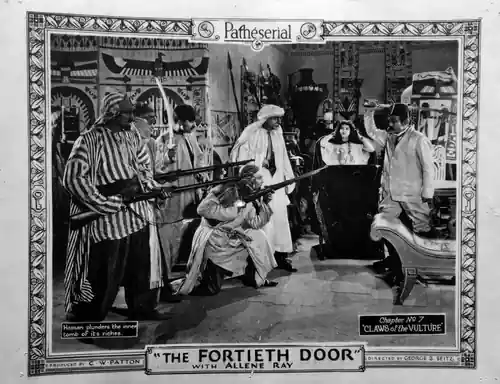
The supporting cast contributes significantly to the film’s rich tapestry. David Dunbar, likely playing the intrepid hero, would have embodied the stoic, courageous archetype necessary for such a desert adventure. His chemistry with Allene Ray would have been paramount, the silent screen requiring actors to convey deep emotional bonds through subtle glances and dramatic gestures. Bruce Gordon and Omar Whitehead, alongside the formidable Frank Lackteen, undoubtedly filled the shoes of the aforementioned unruly villains, their performances likely exaggerated for dramatic effect, using menacing expressions and physicality to convey their nefarious intentions. Lackteen, in particular, was renowned for his ability to portray sinister, often 'ethnic' villains, a common trope of the era, and his presence would have guaranteed a palpable sense of danger.
The inclusion of Anna May Wong in the cast is noteworthy, even if her role in serials of this period was often limited. Wong, a groundbreaking actress who frequently contended with stereotypical roles, brought an undeniable charisma to the screen. Her presence, however brief, would have added another layer of cultural authenticity and visual interest. Similarly, Lassie Lou Ahern and Lillian Gale, along with Bernard Siegel, Scott McKee, Eli Stanton, and Frankie Mann, rounded out a robust ensemble, each contributing to the bustling world of the desert merchant’s encampment, the archaeological diggings, and the various perilous encounters. The sheer size of the cast indicates an ambitious production, striving for a sense of scale and realism in its depiction of the exotic locales and intense action.
Beyond the immediate thrills, The Fortieth Door also weaves in elements of archaeological discovery, a thematic thread that was hugely popular in the 1920s following the discovery of Tutankhamun's tomb. These "archaeological diggings" provide not just a backdrop, but likely a source of the film's central MacGuffin or a hidden passage, connecting the ancient past with the present-day dangers. The allure of uncovering forgotten civilizations, of delving into the mysteries beneath the sand, offered a potent blend of intellectual curiosity and adventurous spirit. This aspect of the plot could serve to elevate the film beyond mere chase sequences, imbuing it with a sense of historical gravitas and the thrill of discovery.
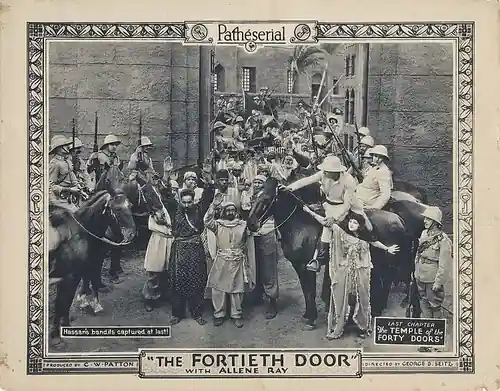
The climactic "rescue by the British Army" is perhaps the most telling detail about the film’s historical and geopolitical context. It firmly places The Fortieth Door within a specific colonial narrative, where the British Empire often served as the ultimate arbiter of order and justice in far-flung lands. This trope, common in adventure stories of the era, reflects the prevailing attitudes towards Western intervention and the perceived need for a powerful, external force to restore equilibrium. While today this might be viewed through a more critical lens, in 1924, it would have been a comforting, triumphant resolution for many audiences, symbolizing the triumph of 'civilization' over 'barbarism' and a clear-cut victory for the protagonists. This element distinguishes it from films with a more domestic focus, such as Not Guilty or Sauce for the Goose, grounding it firmly in the tradition of global adventure.
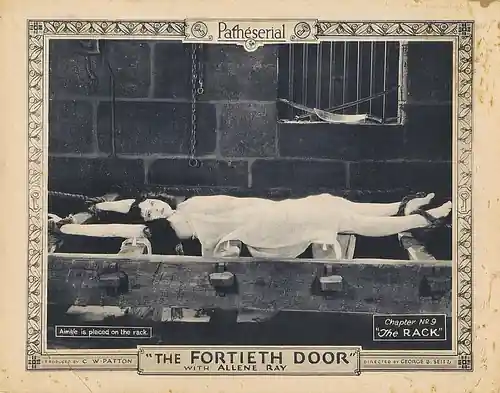
Understanding The Fortieth Door requires an appreciation for the unique cinematic language of the silent era. With no synchronized dialogue, the narrative relied heavily on visual storytelling: exaggerated expressions, dramatic gestures, intertitles to convey dialogue and exposition, and dynamic editing to build suspense. The "madly dashing across deserts" imagery suggests rapid cuts, perhaps parallel editing between the pursued and the pursuers, heightening the sense of urgency. The underground sequences, with their trick doors and trap doors, would have leveraged chiaroscuro lighting to create an atmosphere of claustrophobia and danger, playing on the audience’s primal fears of the unknown. The visual spectacle of the desert itself, with its sweeping vistas and dramatic shadows, would have been a powerful tool in establishing the mood and scale of the adventure.
The film’s appeal also lay in its ability to transport audiences to exotic, far-off lands, an escape from the mundane realities of daily life. For many, the desert setting, the 'Mohammedan merchant,' and the 'British Army' represented a world of grand romance and danger, far removed from their own experiences. This escapism was a key driver of silent film popularity, with serials like The Fortieth Door offering weekly doses of thrilling fantasy. Compared to more introspective or domestic dramas such as Outcast or Love and Hate, this film leans heavily into spectacle and overt action, prioritizing kinetic energy over psychological depth, though the heroine’s identity crisis does hint at deeper character development.
While The Fortieth Door might not possess the philosophical weight of some dramatic masterpieces, its significance lies in its robust contribution to the adventure serial genre. It exemplifies the craftsmanship of early Hollywood in creating gripping narratives that relied on physical action, clear-cut heroes and villains, and a relentless pace. The themes, though presented through the lens of a bygone era, remain potent: the quest for identity, the triumph of love against adversity, and the eternal struggle between good and evil. Allene Ray’s performance, particularly her character’s journey from assumed identity to true heritage, adds a layer of unexpected depth to what could otherwise be a straightforward action piece.
The film’s enduring charm, for those fortunate enough to view it today, lies in its unadulterated commitment to adventure. It’s a work that doesn't shy away from grand gestures or dramatic stakes, offering a pure, unadulterated cinematic experience. The collaborative writing of Mary Hastings Bradley, known for her adventure novels, and Frank Leon Smith, a prolific screenwriter of the era, clearly laid a strong foundation for this dynamic narrative. Their combined expertise likely ensured a plot that was both intricate enough to sustain interest across multiple chapters (if it was indeed a serial) and exciting enough to leave audiences craving more. Considering its release alongside diverse offerings like The Arizona Cat Claw (another Western adventure) and Wonders of the Sea (a documentary), The Fortieth Door carved its own niche as a compelling, fictional journey into peril and romance. Its impact, while perhaps not as widely discussed as some canonical silent films, is undeniable in its contribution to the era's entertainment landscape, proving that a well-crafted desert chase, replete with hidden passages and daring rescues, could truly capture the collective imagination.
In conclusion, The Fortieth Door stands as a vibrant artifact from the golden age of silent cinema, a testament to the power of visual storytelling and the timeless appeal of a good adventure. It’s a film that promises, and delivers, plenty of excitement, from the initial dash across the desert to the ultimate rescue by the British Army. The blend of exoticism, archaeological intrigue, and a compelling romance, all anchored by a strong performance from Allene Ray, makes it a fascinating watch for anyone interested in the evolution of cinematic narrative. It reminds us that even without spoken words, the universal language of action, emotion, and peril can transcend time, creating a viewing experience that is both exhilarating and thought-provoking. The intricate mechanisms of its plot, the vivid depiction of its setting, and the sheer audacity of its escapades ensure its place as a noteworthy entry in the annals of silent film history, a door well worth opening.
IMDb 5.3
1934
Community
Log in to comment.