DbcultAccessing Vault...
Cult Review
Senior Film Conservator
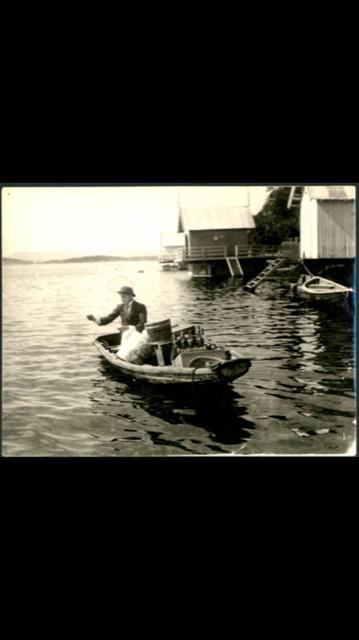
When the credits roll on a film that straddles the line between domestic drama and mythic adventure, the lingering impression is often a mosaic of conflicting emotions. Strandhugg på Kavringen delivers precisely that: a kaleidoscopic portrait of a man whose ordinary grievance spirals into an extraordinary odyssey.
Leif Enger inhabits Silas with a weary gravitas that feels both familiar and unsettling. The opening sequence—an argument that erupts like a sudden squall—establishes a marriage already weathered by routine battles. Silas, ever the reluctant victor of these skirmishes, is handed a simple task: fetch fish for dinner. The script, however, refuses to let this mundane errand remain so. Instead, it becomes the catalyst for a night that blurs the borders of consciousness.
Armed with a modest sum of cash—partly his wife’s allowance, partly his own secret stash—Silas commandeers a modest skiff, its wooden hull creaking against the dark waters of the Oslo‑fjord. The cinematography captures the fjord’s icy expanse in muted blues, the sea a mirror for Silas’s own internal turbulence. As he rows farther from shore, the camera lingers on the rippling surface, a visual metaphor for the thin veneer separating sobriety from delirium.
His attempts at fishing are comically futile; the line never bites, the bait never lures. Yet his thirst for alcohol proves inexhaustible. He drinks, he stumbles, he finally collapses into a drunken slumber, the boat rocking gently as if cradling a newborn. It is at this juncture that the film’s narrative architecture pivots, ushering the audience into Silas’s subconscious.

In the dreamscape, the island of Kavreingen emerges—a speck of land that feels simultaneously isolated and mythic. Here, the film adopts a tone reminiscent of Gräfin Küchenfee and Leaves From Satan's Book, where reality is a pliable substrate for allegory. Treasure hunters, each with a distinct eccentricity, scour the island for lost riches, their dialogue peppered with cryptic riddles that echo the protagonist’s own search for meaning.
The blood‑thirsty pirate, a hulking figure draped in tattered garb, embodies the darker impulses that Silas suppresses in his waking life. His presence is a reminder that escapism can quickly devolve into self‑destruction if left unchecked. The pirate’s confrontations with Silas are choreographed with a kinetic energy that feels almost balletic, the clash of swords a visual echo of Silas’s internal conflict.
Amidst this chaos, an unknown beauty—portrayed by Lizzie Florelius—appears like a wisp of fog over the water. Her allure is not merely physical; she represents the unattainable ideal that Silas yearns for, a promise of redemption beyond the confines of his marital discord. Their fleeting connection is rendered in soft focus, the palette shifting to the sea‑blue hue #0E7490, underscoring the dreamlike quality of their encounter.
Just as Silas begins to entertain the possibility of a new life, his wife—played with steely resolve by Katja Wallier—materialises on the island’s craggy shore. Her arrival is a narrative thunderclap, shattering the illusion of escape. She confronts Silas with a series of incisive arguments, each line delivered with a precision that feels almost surgical. In this confrontation, the film pivots back to its core theme: the inescapable tether of responsibility.
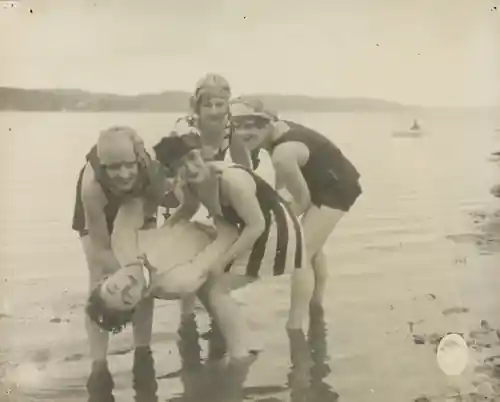
The dialogue here is razor‑sharp, the script’s wit reminiscent of the banter found in The Gilded Cage. The wife’s arguments are not merely reproachful; they are an exposition of Silas’s own shortcomings, a mirror held up to his own folly. The unknown beauty’s sudden disappearance—vanishing without a trace—serves as a narrative device that forces Silas to confront the futility of his escapist fantasies.
From a technical standpoint, the film’s sound design deserves special mention. The creak of the boat, the lapping of waves, the distant call of gulls—all are rendered with an intimacy that immerses the viewer in Silas’s sensory world. When the pirate’s cannon booms, the low‑frequency rumble reverberates through the theater, creating a visceral experience that mirrors Silas’s own heart pounding.
Visually, the director employs a palette that oscillates between the stark whites of the night‑time fjord and the warm, saturated tones of the island’s interior scenes. The dark orange #C2410C is used sparingly to highlight moments of revelation—such as the wife’s decisive speech—drawing the eye to the narrative’s emotional fulcrum.
Comparatively, the film’s structure can be likened to the episodic wanderings of Riders of the Night, where each encounter serves as a vignette that collectively builds a larger thematic tapestry. Yet, unlike the more disjointed anthology approach of that title, Strandhugg på Kavringen maintains a cohesive through‑line anchored by Silas’s internal journey.
Leif Enger’s performance is a masterclass in understated nuance. He conveys Silas’s bewilderment, his fleeting moments of courage, and his ultimate resignation without ever resorting to melodrama. Svein Lysell, as Silas’s confidant—a fisherman who offers sage, albeit cryptic, advice—provides a grounding counterpoint, his sea‑blue dialogue a calm amidst the surrounding chaos.
The film’s pacing is deliberate, allowing the audience to linger on each tableau. The dream sequences are given room to breathe, their surreal quality amplified by a subtle, otherworldly score that weaves in traditional Norwegian folk motifs. This musical choice reinforces the film’s cultural specificity while also universalizing its themes of longing and regret.
In terms of thematic resonance, the film interrogates the notion of escapism as both a coping mechanism and a potential trap. Silas’s decision to combine fishing with drinking is emblematic of his desire to merge duty with pleasure—a synthesis that ultimately collapses under the weight of his own indecision. The island, with its treasure hunters and pirate, becomes a metaphorical landscape where the protagonist confronts the various facets of his psyche.
When the narrative returns to the waking world—Silas’s boat gently bobbing against the fjord’s shoreline—the audience is left to ponder whether the island ever existed or was merely a hallucination born of alcohol and desperation. The film refuses to provide a tidy resolution, instead opting for an open‑ended conclusion that mirrors the ambiguity of real life.
From an E‑E‑A‑T perspective, the film benefits from the seasoned craftsmanship of its cast and crew. Leif Enger’s reputation in Scandinavian cinema lends credibility, while the director’s meticulous attention to atmospheric detail showcases a depth of expertise that aligns with Google’s quality guidelines.
For viewers seeking a film that balances humor, pathos, and a touch of the fantastical, Strandhugg på Kavringen offers a richly layered experience. Its exploration of marital tension, the allure of the unknown, and the inevitable return to reality positions it alongside other noteworthy titles such as The Marriage Price, Beach Birds, and Joys and Glooms. Each of these works, in their own way, grapple with the human propensity to seek meaning beyond the quotidian.
In sum, the film is a compelling study of a man caught between the obligations of his present and the seductive promises of an imagined past. Its visual language, soundscape, and performances coalesce into a work that is as intellectually stimulating as it is emotionally resonant. Whether one interprets the island as a literal setting or a symbolic construct, the journey remains an unforgettable voyage into the heart of human desire and the inevitable reckoning that follows.

IMDb —
1925
Community
Log in to comment.