DbcultAccessing Vault...
Cult Review
Senior Film Conservator
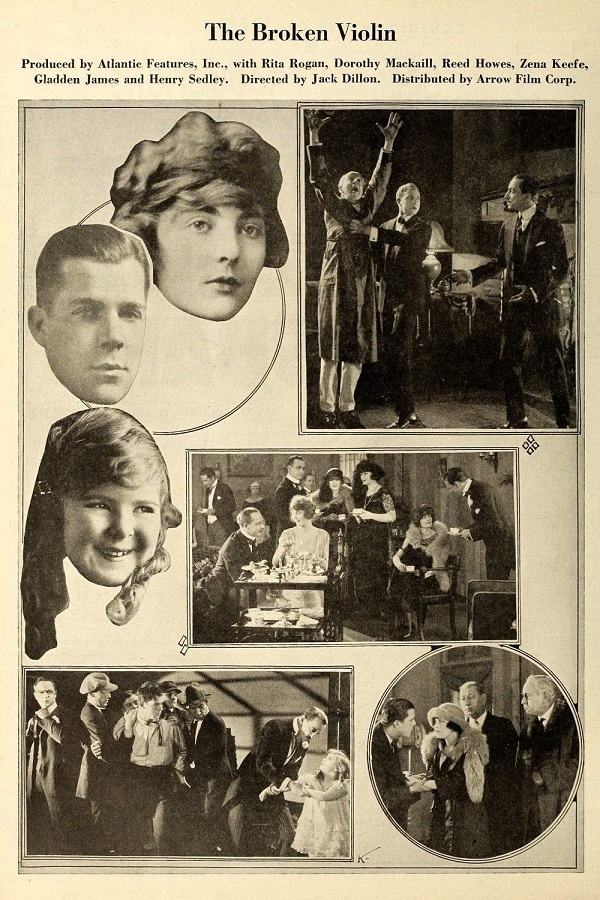
The year 1923 served as a pivotal juncture in the cinematic arts, a moment when the primitive theatricality of the previous decade began to yield to a more sophisticated, visually kinetic language. Within this transformative landscape, The Broken Violin emerges not merely as a melodrama of disinheritance, but as a masterclass in tension and technical audacity. The film centers on Jeremy Ellsworth (Warren Cook), an elder statesman of industry whose mortality prompts a desperate reach for legacy. This search for continuity is a recurring motif in the works of the era, echoing the atmospheric social strata seen in The Painted World. However, where other films might linger on the tragedy of the past, George Rogan’s direction propels the audience into a high-stakes game of identity theft and maritime pursuit.
Edward Roseman’s portrayal of James Gault is a chilling exercise in bureaucratic malice. As Ellsworth’s secretary, Gault represents the rot that often festers at the heart of opulent estates—the trusted servant who views the master’s fortune as a prize for the most cunning. His interception of the letter intended for John Ellsworth is the first domino in a sequence of moral collapses. By hiring Phil Carter (Gladden James) to impersonate the heir, Gault creates a puppet theater within the manor walls. This trope of the 'imposter heir' was a staple of the period, yet here it is executed with a briskness that avoids the lethargy often found in early silent features. It invites a fascinating comparison to the identity crises explored in The Yellow Passport, though the stakes here are driven more by individual greed than systemic oppression.
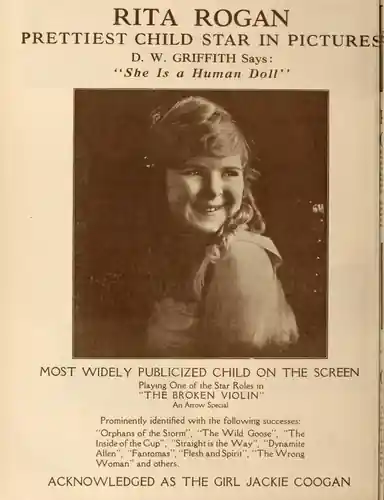
The introduction of John (Reed Howes) as a lumber camp foreman provides a stark visual and thematic contrast to the claustrophobic corridors of the Ellsworth home. John represents the 'natural man'—uncorrupted by the city’s mendacity and physically equipped to combat the ruffians Gault employs. Reed Howes brings a rugged, proto-action star energy to the role, a physicality that anticipates the swashbuckling era. The transition from the sylvan quietude of the woods to the chaotic abduction of Beatrice (Zena Keefe) is handled with a rhythmic precision that maintains a high emotional frequency. Keefe, for her part, navigates the role of the endangered sister with more than just the standard 'damsel' tropes; there is a palpable sense of terror in her performance that anchors the film’s more fantastical elements.
The climax of The Broken Violin is where the film secures its place in the annals of early action cinema. The rescue of Beatrice from a speedboat using a hydroplane is a sequence of breathtaking ambition. In an age before digital artifice, the sheer logistics of capturing a nautical chase from the air were Herculean. This sequence serves as a precursor to the modern blockbuster, utilizing technology—the hydroplane—as a literal 'deus ex machina' that bridges the gap between the archaic world of inheritance and the modern world of mechanical speed. It evokes a similar sense of environmental peril found in The Strike of the Rattler, yet elevates the spectacle through its use of cutting-edge (for 1923) transport.
Amidst the kidnappings and high-speed chases, the film finds its emotional core in the relationship between John and Beatrice’s governess (Rita Rogan). This subplot is essential for the film’s internal logic; it provides a reward for John that is independent of the Ellsworth fortune. The governess represents a bridge between the classes—someone who exists within the elite household but maintains a proletarian work ethic. Their union suggests that the 'broken' nature of the family can only be fixed through the infusion of new, honest blood. This thematic resolution mirrors the romantic reconciliations in Blind Love, where the restoration of sight is both literal and metaphorical.
When viewed alongside its contemporaries, The Broken Violin stands out for its pacing. While a film like Rouge and Riches might dwell on the moral decay of the upper class, Rogan’s film uses that decay as a springboard for kinetic energy. The casting of Dorothy Mackaill adds a layer of burgeoning stardom to the production; her screen presence, even in a supporting capacity, hints at the luminous career that would follow. The screenplay by Lillian Case Russell and George Rogan avoids the overly florid intertitles that plagued many silent films, opting instead for a narrative clarity that allows the visual composition to speak. The film shares a certain DNA with the psychological depths of Simon, the Jester, particularly in how characters are forced to reckon with their own perceptions of duty and honor.
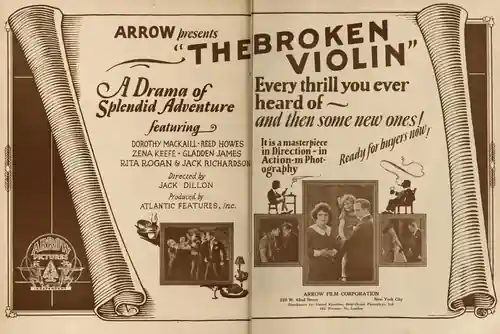
The title itself, a poignant metaphor for a family whose harmony has been shattered by disinheritance and deceit, resonates throughout the three-act structure. A violin cannot play its song if its strings are snapped or its body is cracked; similarly, the Ellsworth line is functionally 'broken' until John’s intervention. The restoration of the violin—the family unit—requires not just the removal of the imposter Phil Carter, but the physical and moral courage of the true heir. This concept of domestic repair is a universal theme, seen in various international contexts such as the Hungarian Gyermekszív, which also deals with the emotional labor of children in the face of adult failures.
Visually, the film employs a series of striking contrasts. The shadows in the Ellsworth library, where Gault and Carter hatch their schemes, are deep and oppressive, suggesting a world where truth is easily obscured. In contrast, the outdoor sequences—the lumber camp and the open water—are flooded with a naturalistic light that symbolizes John’s transparency and strength. This chiaroscuro approach to storytelling was a hallmark of the era’s best work, reminiscent of the atmospheric tension in Hamlet, Prince of Denmark. The camera work during the speedboat rescue is particularly noteworthy for its fluidity, a rarity when bulky hand-cranked cameras often dictated a static frame.
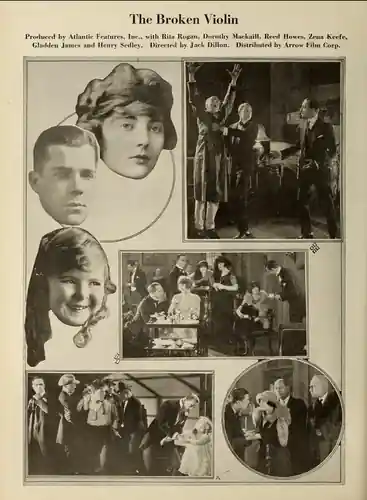
Ultimately, The Broken Violin serves as a testament to the versatility of the silent film medium. It manages to balance a complex plot of inheritance and fraud with high-octane stunts and genuine romantic pathos. It avoids the pitfalls of being a mere 'chase film' by grounding its action in the emotional reality of its characters. While it may not have the surrealist leanings of In Slumberland, its commitment to a grounded, yet thrilling narrative makes it a more accessible and enduring piece of cinema. It is a film that demands to be seen not just as a historical curiosity, but as a vibrant, living piece of storytelling that still has the power to enthrall a modern audience. The technical bravery of the hydroplane sequence alone justifies its preservation, but it is the human drama—the mending of the broken violin—that ensures its place in our collective cinematic memory.
In a world of digital artifice, there is something profoundly moving about the tactile reality of 1923’s The Broken Violin. It reminds us that at the heart of every great film, whether silent or sound, lies the simple, powerful desire for home, for truth, and for the courage to reclaim what was lost.
IMDb 8.6
1920
Community
Log in to comment.