DbcultAccessing Vault...
Cult Review
Senior Film Conservator
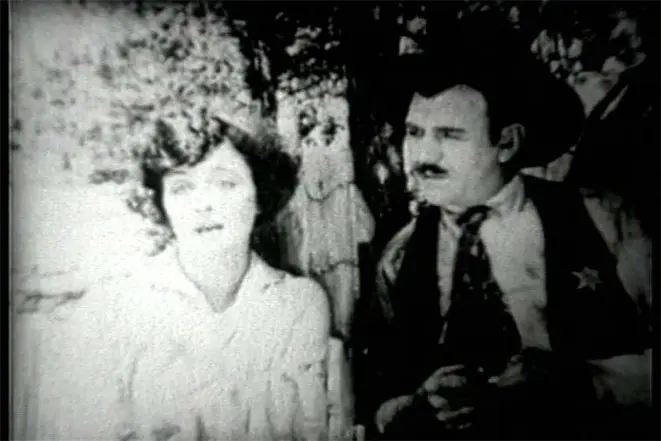
Is Rider of the Law (1927) worth watching today? Short answer: yes, but with significant caveats that demand a certain cinematic palate. This silent Western offers a fascinating, if sometimes frustrating, glimpse into the early days of the genre, making it an intriguing watch for dedicated film historians and silent film enthusiasts who appreciate its historical context and the raw energy of its performances.
However, for those accustomed to modern narrative pacing, intricate character development, or high-fidelity visuals, this film will likely feel like a slow, almost simplistic endeavor, struggling to hold attention beyond its initial curiosity factor. It’s a film that asks for patience and a willingness to engage with a different mode of storytelling.
At its heart, Rider of the Law is a classic tale of a hero finding his backbone. Al Hoxie plays a rancher whose quiet demeanor is mistaken for weakness, allowing an Eastern party, headed by his aunt, to effectively commandeer his operations. This setup provides fertile ground for character development, albeit in a rudimentary silent-era fashion. The hero's passivity is a character choice, not a narrative flaw, setting the stage for a dramatic transformation.
The catalyst for this change is, predictably, a woman in distress. When the object of his affection is threatened by a kidnapping plot, the bashful rancher sheds his meek exterior. This shift from mild-mannered to decisive action is the film’s central dramatic arc, executed with the broad strokes typical of 1920s Westerns. It’s a simple narrative, but effective in its simplicity, relying on universal themes of love, duty, and courage.
The conflict isn't just external; it's internal. Our hero must overcome his own shyness, his own reluctance to assert himself. This internal struggle, though conveyed through exaggerated gestures and intertitles, is surprisingly resonant. It taps into a primal fear of inadequacy and the desire to rise to the occasion when those we care about are in peril. The bandits are merely the physical manifestation of the challenge he must overcome.
For a specific audience, absolutely. If your interest lies in the evolution of the Western genre, the techniques of silent cinema, or the careers of its early stars like Al Hoxie, then Rider of the Law offers genuine insight. It’s a piece of cinematic history, a snapshot of what entertained audiences nearly a century ago.
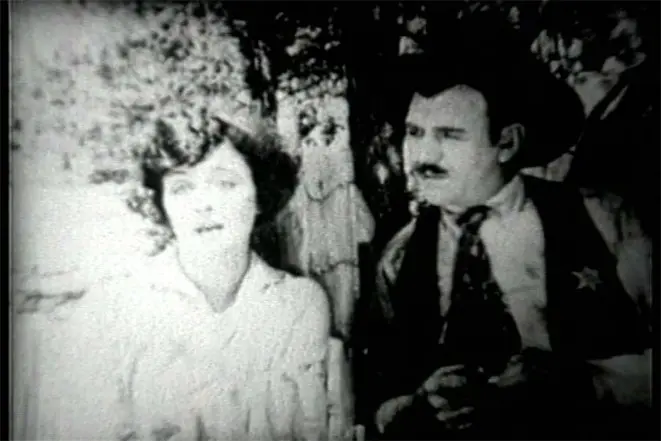
However, it demands an adjustment of expectations. This isn't a film that will compete with the narrative complexity or visual sophistication of even a B-movie from the sound era. It's a foundational text, a blueprint, rather than a fully realized modern masterpiece. Its value is more archaeological than purely aesthetic for a general audience.
This film works because of its raw, unadulterated Western spirit and Al Hoxie's genuine, if understated, screen presence, particularly when paired with his horse, Pardner. It captures a pure form of genre storytelling.
This film fails because its narrative simplicity can verge on predictability, its pacing often drags for contemporary viewers, and the visual quality of surviving prints can be challenging, hindering full immersion.
You should watch it if you are a devoted fan of silent cinema, a historian of the Western genre, or curious about the early filmography of actors like Al Hoxie and Paul Hurst, and are willing to engage with its historical context.
The direction in Rider of the Law, typical of its era, prioritizes clear storytelling over stylistic flourish. The camera largely remains static, capturing the action in wide shots that allow the audience to take in the full scope of a scene. There are few close-ups, and when they occur, they are usually for emotional emphasis on the lead actors. This approach makes for a somewhat distant viewing experience compared to modern cinema, but it was the prevailing style of the time.
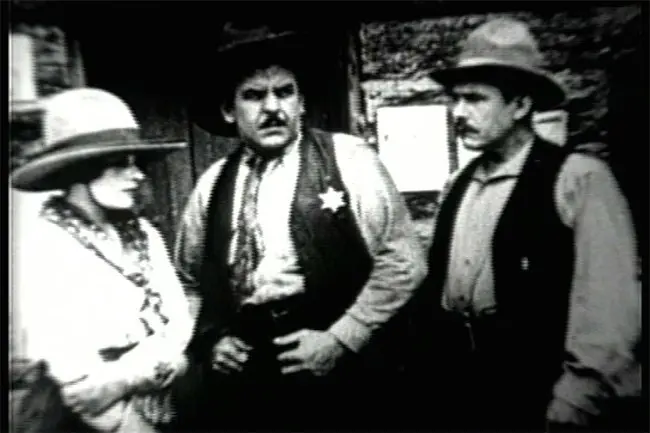
Director's choices often lean into the theatricality of silent acting, with actors relying on exaggerated facial expressions and body language to convey emotion. For instance, the aunt’s imperiousness is communicated through her rigid posture and authoritative gestures, leaving no doubt about her character's personality. This directness is both a strength and a limitation, ensuring clarity but sometimes sacrificing subtlety.
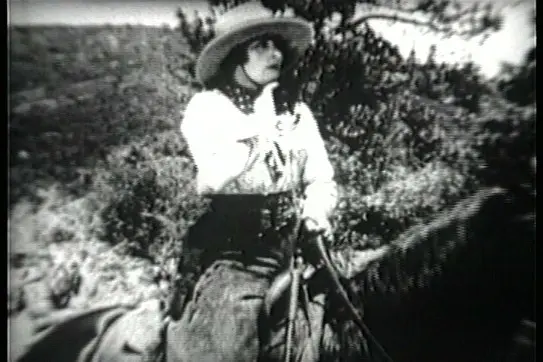
Cinematography, while not groundbreaking, effectively captures the arid beauty of the Western landscape. The outdoor sequences, particularly those involving horseback riding, possess an authentic feel. The dusty plains and rugged terrain are more than just backdrops; they are integral to the film's identity. One notable sequence involves the bandits' pursuit, where the natural light and sweeping vistas lend a sense of scale and urgency to the chase, despite the limitations of the camera technology.
However, the film lacks the visual poetry or innovative camera work seen in some of the more acclaimed silent films of the period, such as those by F.W. Murnau or even some of D.W. Griffith’s more ambitious projects. It’s functional, but rarely inspiring. The interior scenes, in particular, often feel flat, illuminated by what appears to be basic, unmotivated lighting, further highlighting the film's utilitarian approach to visual aesthetics.
Al Hoxie, as the titular 'Rider of the Law', embodies the archetypal Western hero with a distinct blend of shyness and latent power. His performance is a testament to the physicality of silent acting. He’s not a powerhouse of emotional expression in every frame, but his transformation from bashful rancher to assertive protector is clear and convincing through his posture and sudden shifts in demeanor. His bond with Pardner the Horse is also a highlight, an unspoken connection that adds a layer of warmth and authenticity to his character.
Ione Reed, as the damsel in distress, delivers a performance that, while constrained by the conventions of the era, effectively conveys vulnerability and charm. Her reactions to danger are appropriately dramatic, serving the plot's need for a clear stakes-raiser. She's less a fully fleshed-out character and more a narrative device, but she fulfills that role admirably.
Paul Hurst, often a reliable character actor, brings a robust energy to his role, though the specific details of his character aren't always clear from surviving prints. His presence, however, adds a much-needed jolt of intensity whenever he's on screen. Alfred Hewston and Bud Osborne, playing various antagonists or supporting roles, lean into the broader strokes of villainy and loyalty, respectively. Their performances are effective in creating clear good-guy/bad-guy dynamics, essential for the straightforward morality plays common in early Westerns.
What's truly striking is the sheer physicality required of these actors. The horseback riding, the staged fights, the falls – these were often done with minimal safety precautions, lending a raw authenticity that modern films often struggle to replicate. Cliff Lyons, known for his stunt work, likely contributed significantly to the film’s action sequences, even if uncredited in specific stunt roles. This dedication to practical effects and physical performance is an undeniable strength.
The pacing of Rider of the Law is characteristic of many silent films: it starts slowly, establishing characters and setting, then builds to a more action-packed climax. Modern audiences might find the initial setup a test of patience. Scenes can feel extended, with intertitles sometimes reiterating what is already evident through action or expression. This is not necessarily a flaw, but rather a different rhythm of storytelling, one that invites a more contemplative engagement.
The tone is largely earnest and straightforward. There's little room for cynicism or complex moral ambiguity. It's a clear-cut good versus evil narrative, with the hero's journey being one of self-discovery and righteous action. The humor, when present, is broad and situational, often stemming from the clash between the 'Eastern' sensibilities of the aunt's party and the rugged 'Western' reality. This simplicity in tone makes the film accessible, but also somewhat predictable.
One unconventional observation: the film’s depiction of the aunt's party, while stereotypical, offers a subtle commentary on the perceived clash between urban sophistication and rural pragmatism. It's a theme that would recur frequently in American cinema, but here, in its nascent form, it feels less like satire and more like a simple recognition of cultural differences. The 'Easterners' aren't evil, just misguided and out of their element, which provides a surprisingly nuanced layer to an otherwise black-and-white narrative.
Rider of the Law sits comfortably within the tradition of silent Westerns, sharing DNA with countless 'B' pictures of the era. It doesn't possess the epic scope of a The Covered Wagon (1923) or the pioneering narrative complexity of some of William S. Hart's earlier works. Instead, it aligns more with the straightforward action-adventure focus of other Al Hoxie vehicles, or even the more rudimentary tales like Border Justice (1925).
The film’s emphasis on horseback riding and outdoor action would have been a major draw for audiences. While films like The Square Deal (1917) might have offered similar thrills, Rider of the Law benefits from the slightly more advanced filmmaking techniques of the mid-1920s. It’s a solid entry, not a standout, but representative of the genre’s popular appeal before the advent of sound changed everything.
Its strength lies in its adherence to familiar tropes, rather than its subversion of them. This familiarity was comforting to audiences of the time, providing reliable entertainment. It's a film that doesn't try to reinvent the wheel; it just ensures the wheel keeps turning effectively for its intended purpose. It works. But it’s flawed.
Rider of the Law (1927) is a quintessential silent Western, a time capsule of a bygone era in filmmaking. It offers a straightforward narrative of a bashful hero finding his courage, driven by love and the threat of injustice. While it doesn't break new ground in terms of cinematic artistry or narrative complexity, it delivers exactly what its contemporary audience expected: a clear story, engaging action, and a satisfying resolution.
For modern viewers, its appeal is primarily academic or nostalgic. It's a film to be appreciated for its historical context, for the raw energy of its performances, and for its unvarnished portrayal of early Western tropes. It’s not a film that will convert skeptics of silent cinema, but for those already attuned to its unique charms, it offers a perfectly acceptable, if unremarkable, diversion. Go in with the right expectations, and you'll find a serviceable piece of cinematic history.
Is it a must-see? No. Is it worth seeing for the right audience? Absolutely. It’s a testament to the enduring appeal of the Western and the foundational work of its early stars. A solid 6/10 for its historical value and genre fidelity.
IMDb —
1930
Community
Log in to comment.