DbcultAccessing Vault...
Cult Review
Senior Film Conservator
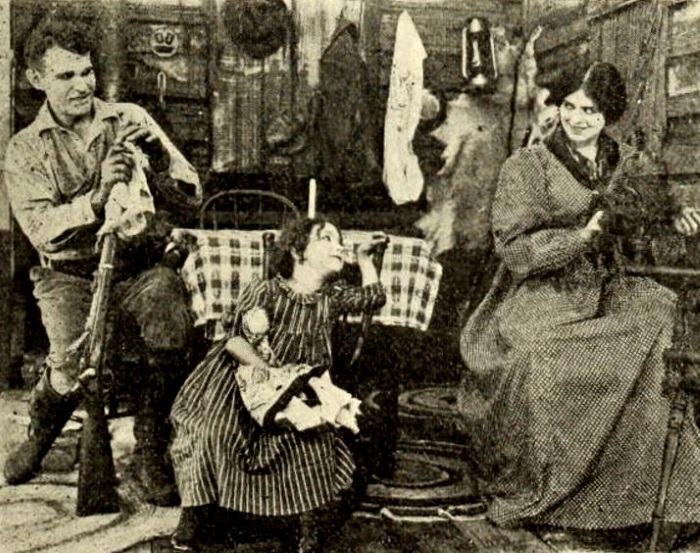
Stepping back into the nascent years of cinema, one encounters a fascinating tapestry of storytelling, often raw, unrefined, yet pulsating with an undeniable pioneering spirit. Among these early cinematic artifacts, 'Peril of the Plains' emerges as a stark, if somewhat simplistic, testament to the enduring allure of the American frontier narrative. This film, a product of an era when the language of motion pictures was still being articulated, offers a glimpse into both the prevalent societal anxieties and the burgeoning techniques of visual storytelling. It’s a work that, while perhaps overshadowed by more grandiloquent productions of its time, nonetheless holds a significant, albeit quiet, place in the historical continuum of the Western genre.
The film's premise is strikingly straightforward, almost archetypal: an isolated frontier family finds their homestead under siege by a group of Native Americans. This narrative skeleton, devoid of intricate subplots or complex character development, was common for the period. Early cinema often relied on easily digestible dramatic scenarios, designed to captivate audiences with action and suspense rather than psychological depth. In this regard, 'Peril of the Plains' serves as a potent example of how fundamental human fears—the fear of the unknown, the fear of invasion, the fear for one’s family—were exploited to create compelling, if often morally ambiguous, narratives. The stark dichotomy of settler versus 'savage' was a pervasive trope, reflecting the dominant cultural perspectives of an era still grappling with the legacies of westward expansion.
At the heart of this frontier drama are the performances, most notably by Dot Farley and Helen Armstrong. In an age before synchronized sound, the burden of conveying emotion, urgency, and character fell squarely on the actors' physical expressiveness and nuanced facial gestures. Farley, who also holds a writing credit for the film, likely brought a particular understanding of the narrative’s emotional beats to her portrayal. Her performance, alongside Armstrong's, would have relied on the exaggerated, yet deeply felt, theatricality common to early silent films. This style, often perceived as melodramatic by modern viewers, was the very bedrock of emotional communication in a medium that had yet to find its voice. Their gestures, their wide-eyed terror, their desperate struggles, were the only conduits for the audience to connect with the plight of the besieged family. Imagine the challenge of conveying the profound fear of an impending attack, the desperate hope for survival, and the fierce protectiveness of family, all without uttering a single word. It required a mastery of pantomime and a keen understanding of how to project emotions to the back of a bustling nickelodeon. Compared to the more restrained, naturalistic acting we expect today, these performances are a fascinating study in a lost art form, a testament to the power of the human body and face as narrative instruments.
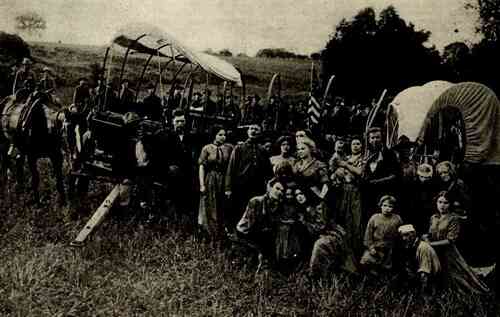
Dot Farley’s contribution as a writer also merits attention. In an industry often dominated by male voices, her involvement in shaping the narrative of 'Peril of the Plains' speaks to the often-overlooked agency of women in early cinema. While the plot itself is simple, her perspective would have undoubtedly infused the domestic aspects of the frontier struggle with a particular resonance. It's a reminder that the foundational stories of Hollywood were not solely the product of a singular vision, but a collaborative effort, often involving talents across various creative roles. This early example of a multi-hyphenate talent foreshadows the multifaceted roles many artists would embrace as cinema matured.
Technically, 'Peril of the Plains' would have adhered to the conventions of its time. Expect static camera positions, often capturing the entire scene in a wide shot, allowing the action to unfold within the frame. Editing, while present, would likely be functional rather than artful, serving primarily to advance the plot from one scene to the next. The thrill would have come from the raw depiction of conflict, the sense of immediate danger, and the visceral reactions of the characters. However, even within these limitations, early filmmakers were experimenting. The use of close-ups, though perhaps sparingly, would have been a powerful tool to draw the audience into the emotional core of a character's fear or determination. The external setting, the vast, unforgiving plains, would have been a character in itself, emphasizing the isolation and vulnerability of the frontier family.
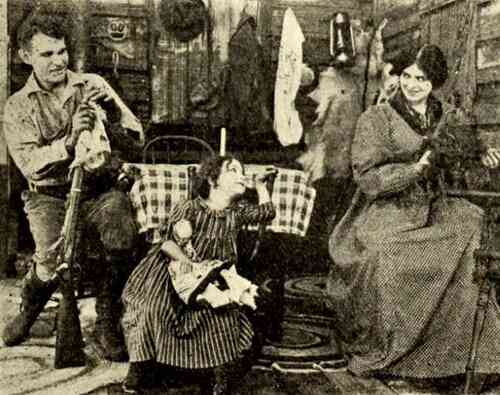
To properly appreciate 'Peril of the Plains', one must situate it within its specific historical and cultural milieu. The early 20th century was a period when the mythology of the American West was being solidified in popular culture, often through a romanticized and frequently problematic lens. Films depicting conflicts between settlers and Native Americans were common, reflecting a prevailing societal narrative that often demonized indigenous peoples while valorizing the 'pioneering spirit' of expansion. While modern sensibilities rightly challenge such one-sided portrayals, understanding these films as historical documents allows us to gauge the cultural currents of their time.
The film’s portrayal of Native Americans, while undoubtedly stereotypical by today’s standards, was unfortunately typical for its era. Such depictions were not unique; many films, even those with more ambitious historical scope, struggled with nuanced portrayals. For instance, while a film like The Redemption of White Hawk might attempt a more complex narrative around indigenous characters, many others, including 'Peril of the Plains', leaned into simpler, antagonist roles for Native Americans. This highlights a critical aspect of early cinema: its role in shaping and reinforcing cultural perceptions, for better or worse. It’s a lens through which we can observe the evolution of societal attitudes and the slow, arduous journey towards more equitable representation in media.
The Western genre itself was in its infancy, yet already establishing tropes that would define it for decades. The isolated homestead, the sudden attack, the desperate defense—these were foundational elements that resonated deeply with audiences. Films like 'Peril of the Plains' contributed to this evolving lexicon, providing a blueprint for countless narratives to follow. Its thematic cousin might be found in other early action-dramas, even those focusing on different types of conflict, such as Attack on the Gold Escort, which similarly explores a violent confrontation in a frontier setting, albeit with different antagonists. The raw excitement derived from these early action sequences, however rudimentary, was a powerful draw for cinema-goers, demonstrating the medium's capacity for thrilling escapism.
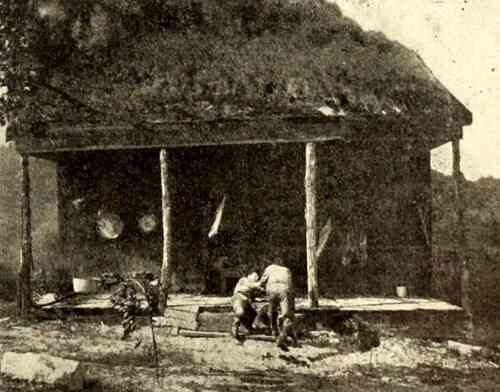
So, what is the enduring legacy of 'Peril of the Plains'? It may not possess the epic scope of a From the Manger to the Cross or the grand historical drama of Cleopatra, which sought to transport audiences to distant lands and times with elaborate sets and costumes. Instead, its value lies in its authenticity as a snapshot of early American filmmaking. It’s a modest yet significant piece of the puzzle that constitutes the history of cinema. For enthusiasts and scholars, it serves as a valuable document, illustrating the early conventions of genre, performance, and narrative construction. It allows us to trace the evolution of storytelling, to witness the very first attempts to capture complex human experiences on film, even if those attempts were often constrained by technological limitations and prevailing cultural biases.
Furthermore, it reminds us that even seemingly simple films from the past can offer profound insights. Beyond the surface narrative of conflict, there are underlying currents about human resilience, the struggle for survival in harsh conditions, and the foundational myths that shaped a nation's identity. While its depiction of certain groups is problematic, it is precisely this problematic aspect that makes it a crucial subject for study, enabling us to understand how historical narratives were constructed and disseminated through the powerful new medium of film. It stands as a testament to the early ambition of filmmakers to engage with themes of national identity and historical conflict, even if through a limited, and sometimes skewed, perspective.
In its unvarnished directness, 'Peril of the Plains' offers a raw, unfiltered look at the birth of a genre and the foundational elements of cinematic drama. It’s a film that demands to be viewed not just as entertainment, but as a cultural artifact, a window into a bygone era of both filmmaking and societal perception. While it may lack the polished sophistication of later Westerns, its very rawness is its strength, providing an invaluable glimpse into the formative years of an art form that would eventually dominate global entertainment. Its quiet existence within the vast archive of early cinema is a potent reminder that every film, no matter how small or forgotten, contributes to the grand narrative of motion picture history.
Ultimately, revisiting 'Peril of the Plains' is an exercise in cinematic archaeology. It's about unearthing the rudimentary yet potent building blocks of storytelling that paved the way for the masterpieces to come. It's a reminder that even in its simplest forms, cinema has always possessed the power to evoke strong emotions, to reflect societal fears, and to etch compelling narratives into the collective consciousness. A fascinating, if challenging, watch for anyone interested in the foundational myths and early techniques of the silver screen.
IMDb —
1917
Community
Log in to comment.