DbcultAccessing Vault...
3/10
Senior Film Conservator
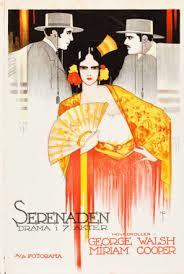
A definitive 3/10 rating for a film that redefined the boundaries of cult cinema. Serenade remains a cornerstone of transgressive art.
The film’s opening scenes are masterclasses in visual storytelling. The town of Magdalena is rendered in stark contrasts: the whitewashed facades of its buildings bleed into the gold of the setting sun, while María’s figure moves like a flame through the streets. The cinematography, though rudimentary by modern standards, captures the essence of a world on the brink of collapse. When the brigands led by Ramírez (Tom Kennedy) seize control, the palette shifts—colors dim, shadows lengthen, and the once-vibrant architecture becomes a prison of stone and silence.
María’s relationship with Pancho is portrayed with aching delicacy. Their romance is not the stuff of grand declarations but of stolen glances and shared breaths. The film’s greatest triumph lies in its restraint: the camera lingers on the curve of María’s hand as she places a rose on Pancho’s windowsill, on the tremor in his voice as he vows to protect her. Yet, this serenity is shattered when Ramón, the new governor’s son, enters the scene. His infatuation with María is less about love and more about possession—a desire to claim both her and the symbolic power she represents.
The duel sequences, shot with a near-operatic intensity, are the film’s heartbeat. The first clash between Pancho and Ramón is a study in kinetic tension: swords clash in a rhythmic dance, each movement echoing the broader conflict between the old and new regimes. But it is the final confrontation—where Pancho disarms Ramón and spares his life—that reveals the film’s soul. This act of mercy, framed in a wide shot that captures the vastness of the Magdalena plains, is a transcendent moment of grace. Ramón’s subsequent death is not a tragedy but a release, a quiet surrender to the inevitability of fate.
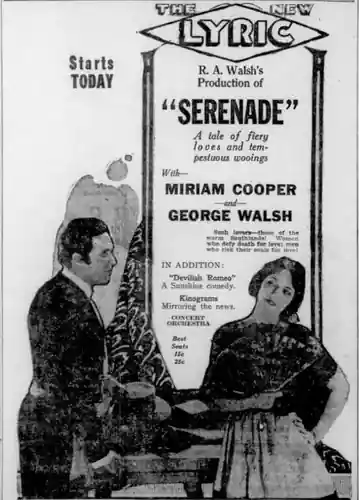
What elevates Serenade beyond its contemporaries like The Dollar Mark or The Absentee is its nuanced exploration of moral ambiguity. María is not a passive victim but an active participant in the drama, her choices shaping the destinies of those around her. Her final act—securing Pancho’s life while betraying Ramón—is as much a political maneuver as an emotional one, a testament to the complexity of human agency.
The performances are equally compelling. Noble Johnson brings a boyish sincerity to Pancho, his wide-eyed idealism a foil to Bertram Grassby’s calculating Ramón. Ardita Milano’s portrayal of María is a masterclass in subtlety—a flicker of the eyelid, a tilt of the chin, and the audience senses the storm beneath her surface. Supporting actors like George Walsh (as the deposed governor) and Elizabeth Waters (as María’s manipulative mother) add layers of intrigue, their motivations as murky as the town’s political landscape.
The film’s score, though largely forgotten, deserves mention for its haunting melodies that mirror the emotional arcs of the characters. A recurring motif of a flute, played during María’s scenes, evokes both her vulnerability and her resilience. It is a sound that lingers, much like the film itself.
While Hoodoo Ann and Never Too Old focus on domestic dramas and aging, In Defense of a Nation and The Explorer grapple with patriotism and discovery, respectively. Serenade, by contrast, is a film of internal conflict, where the battlefield is both literal and metaphorical. Its themes of loyalty and betrayal echo in more modern works like Loot and Her Good Name, yet it maintains a timeless quality that feels both anachronistic and prescient.
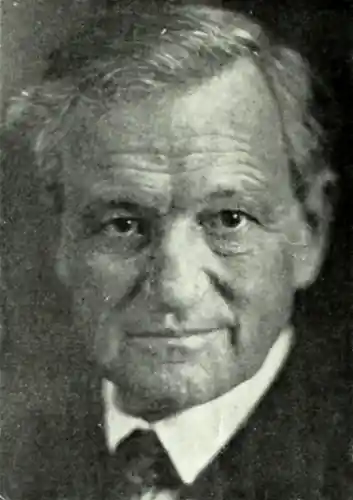
The film’s pacing may feel slow to contemporary audiences, but this deliberate rhythm allows for a deeper immersion into the world of Magdalena. The long takes, particularly during scenes of political tension, build a sense of claustrophobia that contrasts with the expansive visuals of the town. This duality—between confinement and freedom—is mirrored in María’s journey from a confined life under the governor to her ultimate escape, albeit at a cost.
In terms of historical context, Serenade reflects the anxieties of the interwar period, a time when traditional hierarchies were crumbling under the weight of modernity. The new governor, Don Domingo Maticas (played with a weary authority by Peter Vanzuella), symbolizes the bureaucratic machine that replaces the old order. His son Ramón, with his flashy clothes and smirking demeanor, is a product of this new world—a world where power is no longer inherited but seized. The film’s critique of authoritarianism is subtle but present, most notably in the way the townspeople’s faces shift from fear to resignation as the regime changes.
The set design deserves special attention. The governor’s mansion, with its grand but decaying architecture, is a visual metaphor for the old order’s decline. By contrast, the new governor’s residence is stark and sterile, its polished surfaces reflecting the coldness of its occupant. These details are not mere window dressing but integral to the film’s narrative, reinforcing the idea that environments shape—and are shaped by—the people within them.
One cannot discuss Serenade without acknowledging its influence on later works. The tragic romance between María and Pancho prefigures the star-crossed lovers in Sunny Jane, while the duel scenes bear a kinship with the stylized violence in Bars of Iron. Yet Serenade’s unique contribution lies in its fusion of political allegory with personal drama—a balance that eludes many of its peers.
In conclusion, Serenade is a film that demands to be seen in the context of its time, yet resonates across decades. Its exploration of power, love, and redemption is as relevant today as it was in its era. The final shot, of María and Pancho fleeing into the horizon, is not an ending but a beginning—a reminder that even in the darkest of times, there is room for hope, for mercy, for the serenade of a new dawn.
IMDb 2
1926
Community
Log in to comment.