DbcultAccessing Vault...
Cult Review
Senior Film Conservator
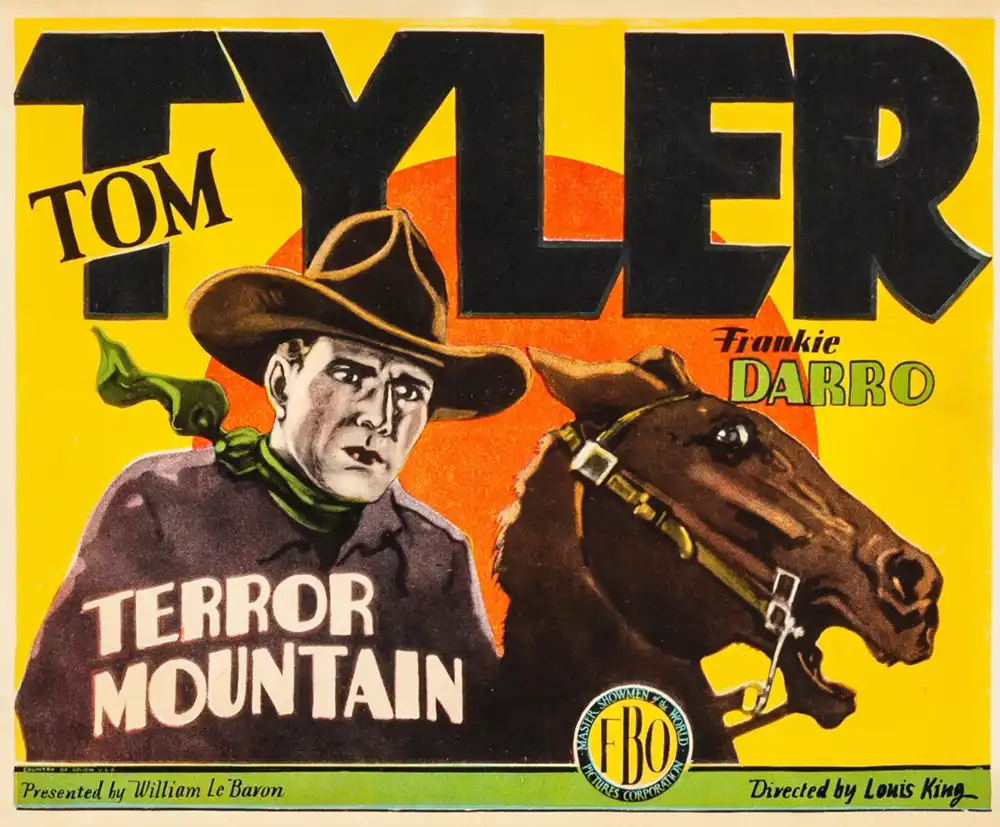
“Terror Mountain” is a tough sell for most modern viewers, let’s be honest. If you're not already deep into silent or early talkie Westerns, or if you simply don't have a high tolerance for obvious stunt doubles and acting that feels like a stage play shot with a camera, you'll probably find it a slog. But if you’re someone who genuinely enjoys digging into the dusty corners of film history, especially the low-budget stuff, there’s a strange, almost hypnotic charm here. It's for the patient, the curious, and those who appreciate the raw, unpolished energy of early genre filmmaking, warts and all. Everyone else? Give it a pass.
The first few minutes really set the tone. We open on a sweeping shot of... well, a mountain. It’s not exactly 'terror-inducing,' more like 'nicely rugged.' The title card font is great though, very period. Then we meet Tom Tyler, our hero, looking stoic as ever, riding a horse that seems to be doing most of the acting. His introduction is less about dialogue and more about him just being there, which, for a B-western hero, is often enough.
Jules Cowles, as the comic relief sidekick, is introduced with a bit too much fanfare. He's got this whole routine about a sputtering wagon, and it just goes on. You can almost feel the director saying, "Okay, this is where the laughs are," but it falls a little flat. The delivery feels forced, and the camera lingers on his exaggerated expressions a beat too long. It’s not terrible, just a bit much when you're trying to establish stakes.
The dialogue, in general, is a whole thing. Characters often speak in these very declarative sentences, like they're reading from a teleprompter that only shows one line at a time. There's a scene where Tyler confronts Al Ferguson's character – the inevitable villain, you know the type – and Ferguson just states his intentions. No subtlety, no real menace. It's less a conversation and more two people delivering monologues at each other. You miss the natural back-and-forth you'd expect.
What does work, surprisingly, are the moments where they just let the landscape speak. There's a particular shot of Tyler riding through a canyon, dust kicking up, and for a few seconds, it’s genuinely atmospheric. No dialogue, no forced plot points, just a man and his horse against the vastness. It’s easy to overlook, but it gives the film a fleeting sense of scale that the cramped interior sets often lack.
And the interiors! The saloon set is clearly just a few planks and a painted backdrop. You can almost hear the echoes of the crew moving equipment around. But then, the lighting in one of those scenes, when the oil lamp flickers – it creates this really cool, stark shadow on Tyler's face. Probably accidental, but it sticks with you. It’s a nice little visual detail in a film that often feels very flat.
There’s a chase scene, of course. It involves a lot of galloping and some very obvious cuts where the stunt rider is clearly not Tom Tyler. One moment, Tyler’s in a close-up, rugged and determined. The next, it’s someone else entirely, wearing a hat pulled down low, galloping away. It’s endearing in its clumsiness. It reminds you how much was improvised or just 'good enough' back then. You saw a lot of that in films of this era, like the early shorts, or even something like The Goat, where the focus was more on getting the story across than perfect continuity.
Frankie Darro, the kid actor, has some genuine energy. He’s a bit over-the-top, but he brings a much-needed spark to scenes that might otherwise feel sluggish. His reactions feel more immediate, less rehearsed than some of the adults. You almost wish the movie focused a little more on his perspective, rather than the boilerplate heroics.
Jane Reid, as the female lead, is mostly there to be rescued or to look concerned. Her chemistry with Tyler is... polite. They stand next to each other. They exchange glances. It’s not exactly sparks flying, more like two acquaintances sharing an elevator. But there’s a brief moment where she genuinely looks scared when the bad guys show up, and it feels real. That fleeting vulnerability is more impactful than any of the forced romantic subplots. The big 'romantic' moment at the end just kind of happens, almost as an obligation.
The sound mixing is an adventure on its own. Sometimes the music swells for no clear reason, then abruptly cuts out. The horse hoofbeats often sound like they were added in post, and not particularly well. You'll hear a character speak, and then the ambient noise will suddenly drop out, leaving an almost eerie silence before jumping back in. It’s these little audio glitches that make you realize how far film technology has come.
The pacing, honestly, is all over the place. Some scenes drag forever, particularly when Jules Cowles is trying to be funny. Then, suddenly, a major plot point will be rushed through in a few lines of dialogue, almost an afterthought. The final confrontation feels a little anticlimactic. It's less a showdown and more a quick scuffle, then everyone dusts themselves off and the credits roll. There's no real sense of earned victory, just a resolution.
It’s not a film that will change your life. It won't reinvent the genre. But it’s a snapshot. A glimpse into a time when movies were still figuring things out, when the sheer novelty of moving pictures and recorded sound was enough to draw a crowd. You watch it not for a perfect narrative, but for the weird little quirks, the flashes of unexpected beauty, and the sheer earnestness of it all. It’s a historical artifact that still manages to entertain, if you’re willing to meet it halfway.
IMDb —
1923
Community
Log in to comment.