DbcultAccessing Vault...
Cult Review
Senior Film Conservator
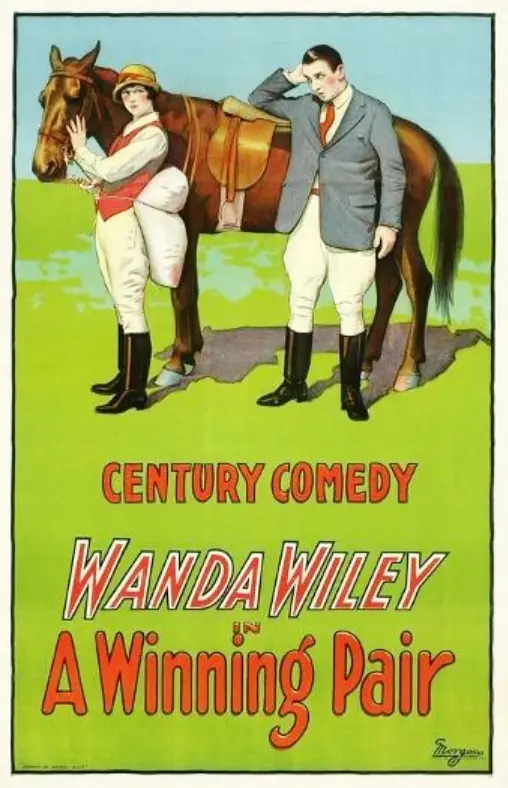
Is 'A Winning Pair' a mandatory watch for the modern cinephile? Short answer: yes, but primarily as a frantic, high-energy artifact of female-led slapstick that deserves more than its current obscurity. This film is for the silent comedy completist and fans of physical performance; it is not for anyone looking for emotional depth or a plot that moves beyond a single, desperate gag.
1) This film works because Wanda Wiley possesses a kinetic energy that refuses to be sidelined by the thin script.
2) This film fails because the central conflict—a woman faking a tragedy to get a kiss—feels increasingly manipulative rather than romantic.
3) You should watch it if you want to see how silent shorts bridged the gap between vaudeville stunts and narrative filmmaking.
Wanda Wiley is the show. In an era dominated by the likes of Keaton and Chaplin, Wiley carved out a space for the 'athletic girl'—a trope that often gets overlooked in favor of the more passive 'flapper' archetype. In 'A Winning Pair,' her physicality is the primary engine of the narrative. When she dives into those sofa cushions, it isn't just a soft landing; it's a committed, full-body commitment to the bit. You can almost feel the dust particles hitting the back of your throat. This isn't the dainty comedy of errors seen in Miss Jackie of the Navy; this is raw, unadulterated slapstick.
Wiley’s performance is less of an act and more of an assault on the senses. She moves with a frantic desperation that feels surprisingly modern. While other films of the period, like The House Built Upon Sand, were busy building moral frameworks, Wiley was busy falling off horses. There is a purity in that. She doesn't ask for the audience's permission to be loud or clumsy. She simply is. The horse is the best actor, but Wiley is the better athlete.
The opening dream sequence is a fascinating look at how 1920s directors used visual shorthand to convey desire. Charles Lamont, who would later go on to direct some of the most iconic Abbott and Costello features, shows his early promise here. The 'bevy of beautiful bathing girls' isn't just window dressing; they represent the idealized social sphere that Wanda feels she must conquer to win her man. The cinematography during the dive is crisp, capturing the arc of her body before the hard cut back to the living room. It works. But it's flawed.
The transition is the film's strongest moment. We see the ethereal, slow-motion grace of the dive instantly replaced by the chaotic, high-frame-rate scramble of Wanda waking up. It’s a jarring shift that perfectly encapsulates the disappointment of reality. Compared to the more grounded, naturalistic approach of Jamestown, 'A Winning Pair' leans heavily into the surrealism of the slapstick genre. The sofa cushions aren't just props; they are the antagonists of her domestic life.
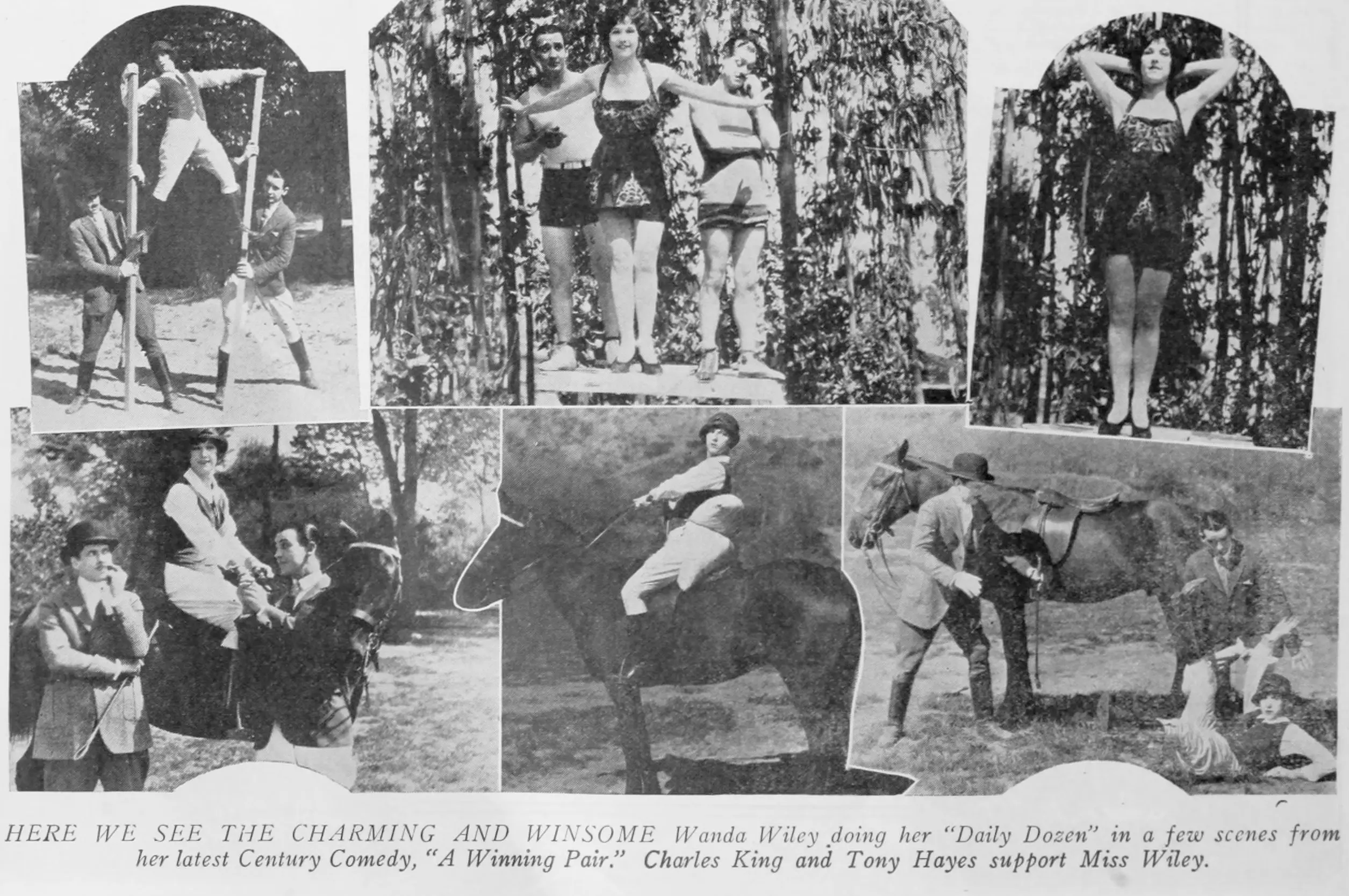
One of the most debatable aspects of the film is the horseback riding sequence. On the surface, it’s a standard 'damsel in distress' trope. Wanda fakes a fall to get attention. However, if you look closer, it’s actually a subversive commentary on the performance of femininity. Wanda is clearly a skilled rider—she has to be to fake a fall that convincingly. She is performing helplessness to navigate a world where her actual strength (her athleticism) isn't enough to win the man's heart. It's a cynical observation wrapped in a comedy bow.
This manipulation is far more complex than the straightforward romances found in A Man and His Money. In that film, the stakes are financial; here, the stakes are purely theatrical. Wanda is the director of her own romance, staging a tragedy to ensure a happy ending. It’s a bold choice for a 1926 short. The way she peeks one eye open to check if he’s watching before she 'faints' again is a masterclass in comedic timing. It reminds me of the calculated wildness in Wild Women, where the chaos is always intentional.
Yes, if you have twenty minutes to spare and an interest in the history of physical comedy. It provides a rare look at Wanda Wiley, a performer who could hold her own against the giants of her era. While the plot is thin and the ending is predictable, the sheer energy of the performance makes it a worthwhile artifact. It is a snapshot of a time when comedy was moving away from simple gags toward more character-driven (if still absurd) scenarios.
Pros:
- Wanda Wiley's incredible physical commitment.
- Sharp, effective editing during the dream sequence transition.
- A rare glimpse into the 'athletic girl' comedy subgenre.
- Directed by Charles Lamont, a future master of the genre.
Cons:
- The plot relies on a manipulative and somewhat tired trope.
- Supporting characters are largely forgettable and serve only as props for Wiley.
- The pacing drags slightly during the initial horseback setup.
'A Winning Pair' is a fascinating, if slight, entry in the silent comedy canon. It succeeds because of its star's refusal to be anything less than extraordinary in her movements. While it doesn't have the emotional resonance of Breaking Home Ties, it doesn't try to. It is a film about the lengths one will go to for a kiss, and the bruises one is willing to endure to get there. It’s a rough, tumble, and ultimately charming piece of history that proves Wanda Wiley was a force to be reckoned with. She didn't just win the man; she won the scene. Even if she had to lie to do it.
IMDb 6.5
1931
Community
Log in to comment.