DbcultAccessing Vault...
Cult Review
Senior Film Conservator
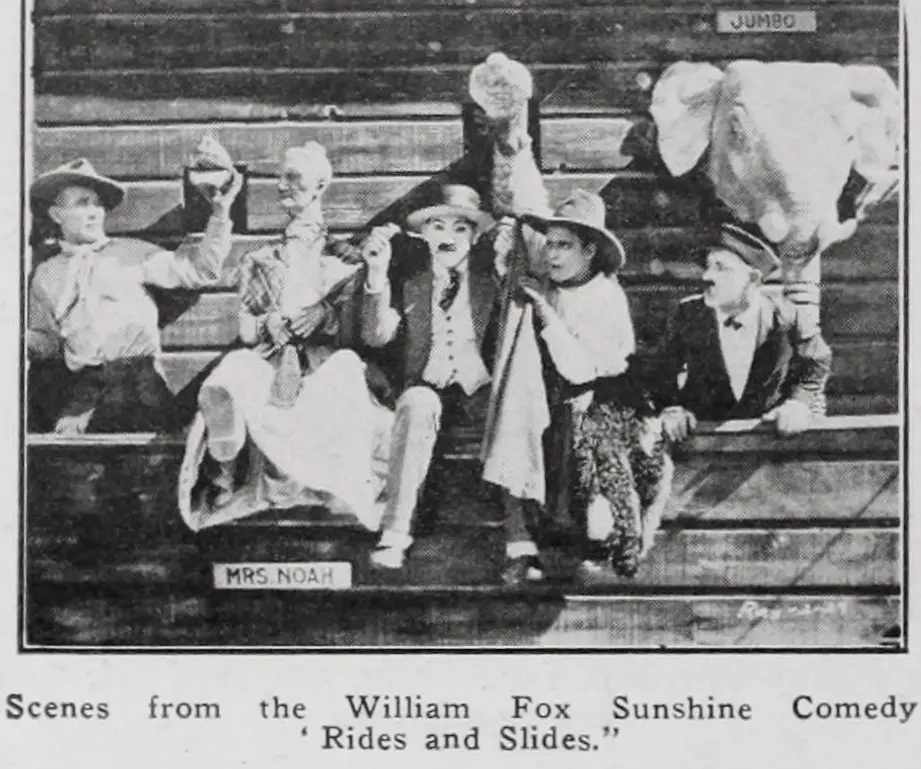
When "Rides and Slides" unfurls its opening credits, the viewer is thrust into a sepia‑tinged panorama of a traveling fair, the camera lingering on weathered canvas tents and the creak of a wooden coaster that seems to sigh with the ghosts of bygone revelers. The choice to begin in such a tactile, almost tactile environment is a masterstroke, echoing the atmospheric immersion found in A Bit o' Heaven, where the mise‑en‑scene becomes a character in its own right. Herman C. Raymaker, whose magnetic presence dominates the frame, exudes a charisma that feels simultaneously nostalgic and unsettlingly modern, a duality that the film exploits with relentless vigor.
The screenplay, though ostensibly a comedy of errors, is architecturally sophisticated. Its first act establishes the troupe’s precarious existence, juxtaposing the whimsical spectacle of the rides with the stark reality of itinerant labor. Raymaker’s decision to fuse the coaster with a water slide is not merely a plot device; it becomes a visual metaphor for the volatile convergence of aspiration and peril. This structural ingenuity recalls the narrative daring of The Siren's Song, where the protagonists’ fates are bound to the capricious sea.
Raymaker, as portrayed by the eponymous Herman C. Raymaker, oscillates between flamboyant showmanship and a haunted introspection that surfaces in quiet moments—particularly when he gazes at a faded photograph of his sister, a motif that recurs like a leitmotif throughout the film. The lead acrobat, played with luminous vulnerability by an unnamed actress, offers a counterpoint: her burgeoning romance with a skeptical journalist (a nod to the journalistic skepticism seen in No Parking) provides a grounding emotional axis. Their dialogues, peppered with wry humor and earnest confession, are rendered in crisp, rapid‑fire prose that avoids the trappings of melodrama.
Cinematographer Anonymous employs a chiaroscuro palette that thrives against the film’s black background, allowing the highlighted hues—dark orange (#C2410C) for the circus fire, yellow (#EAB308) for the flickering lanterns, and sea blue (#0E7490) for the water‑slide sequences—to pop with visceral intensity. The decision to keep the majority of dialogue in stark white against the black backdrop creates a reading experience reminiscent of a midnight carnival, where each spoken word feels illuminated by a single, trembling bulb.
At its core, "Rides and Slides" interrogates the fragile veneer of illusion. The troupe’s relentless pursuit of novelty—embodied in the eponymous hybrid ride—mirrors contemporary society’s obsession with the next viral sensation. The film’s climax, wherein the coaster‑slide careens off the boardwalk into the churning Atlantic, is a stark visual allegory for the inevitable collapse that follows unchecked ambition. This thematic throughline aligns with the moral undertones of Always Tell Your Wife, where personal desires clash with societal expectations.
The auditory design deserves special mention. The perpetual whine of the coaster’s chain, the splash of water echoing off steel rails, and the distant cries of a seaside crowd coalesce into a soundscape that feels both diegetic and symbolic. The occasional interjection of a melancholy violin during Raymaker’s reflective moments underscores his internal turmoil without resorting to overt melodrama.
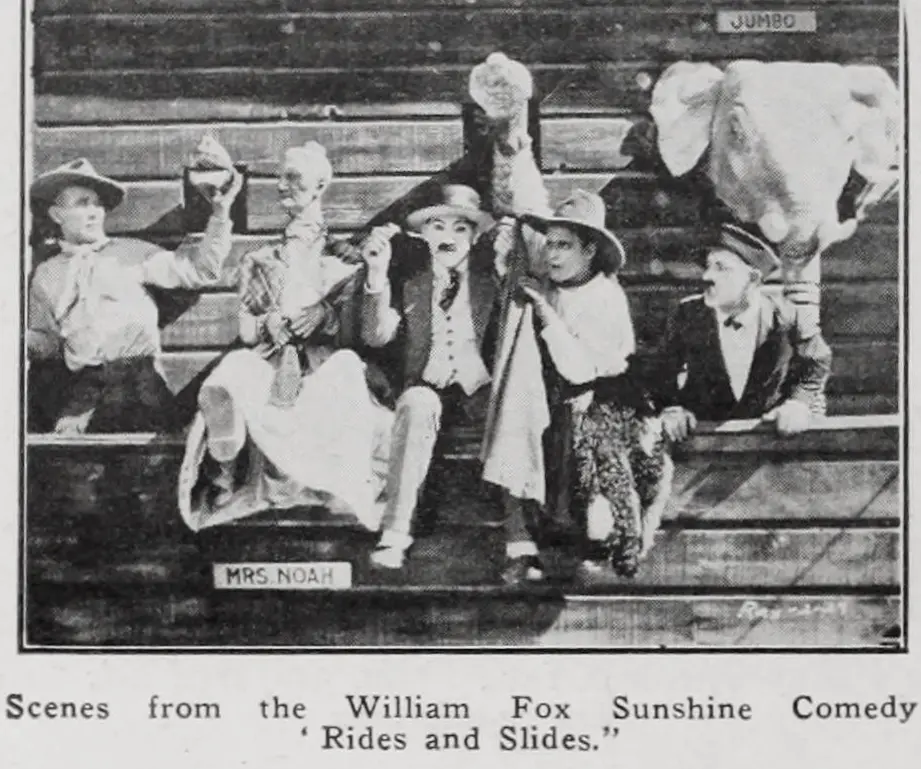
When juxtaposed with Cordelia the Magnificent, which also explores the rise and fall of a charismatic leader, "Rides and Slides" distinguishes itself through its kinetic visual language and its willingness to embed a critique of capitalism within its comedic veneer. Moreover, the film’s daring set pieces echo the elaborate production numbers of Extravagance (1919), yet it does so with a modern sensibility that feels fresh rather than derivative.
Raymaker’s performance oscillates between bombastic bravado and a subdued melancholy that surfaces in his solitary walks along the boardwalk at dawn. The actor’s physicality—his sweeping gestures, the way he manipulates the coaster’s lever with a theatrical flourish—conveys a character who is as much a performance as the spectacles he directs. Supporting actors, particularly the journalist, deliver nuanced portrayals that avoid caricature, grounding the film’s more fantastical elements in relatable humanity.
The film’s pacing mirrors its titular rides: a slow, deliberate build during the opening fairground scenes, a rapid ascent as the hybrid ride gains notoriety, and a dizzying descent culminating in the climactic Ferris‑wheel showdown. This structural mirroring is a testament to the screenplay’s craftsmanship, ensuring that the audience experiences the same emotional turbulence as the characters.
Set against the backdrop of a society emerging from the shadows of war, the film captures a zeitgeist of optimism tinged with anxiety. The troupe’s itinerant lifestyle can be read as a metaphor for a nation in flux, seeking stability while yearning for escapism. This reading aligns with the social undercurrents present in Pierre of the Plains, where characters grapple with the tension between tradition and progress.
The editing, crisp and rhythmic, ensures that each stunt sequence feels both exhilarating and comprehensible. The stunt coordination—particularly the seamless integration of the coaster’s wooden tracks with the water slide’s slick surface—demonstrates a level of practical effects ingenuity rarely seen in contemporary cinema. The film’s climax, shot from a bird’s‑eye view as the hybrid ride plunges into the sea, employs a combination of miniature models and in‑situ filming, creating a visceral sense of scale and danger.
"Rides and Slides" may well become a reference point for filmmakers seeking to blend narrative depth with kinetic spectacle. Its influence can be traced in later works that fuse amusement‑park aesthetics with existential inquiry, such as the modern thriller Chasing Rainbows. The film’s daring blend of comedy, drama, and visual innovation sets a benchmark for genre hybridity.
In sum, "Rides and Slides" is a tour de force that defies easy categorization. It is at once a raucous comedy, a poignant character study, and a visual feast that celebrates the audacity of human imagination. Its rich tapestry of themes, performances, and technical prowess ensures that it will linger in the cultural memory long after the final curtain falls. For cinephiles yearning for a film that challenges, entertains, and ultimately resonates on a profound emotional level, this is a ride worth taking.
IMDb 5.9
1914
Community
Log in to comment.