DbcultAccessing Vault...
Cult Review
Senior Film Conservator
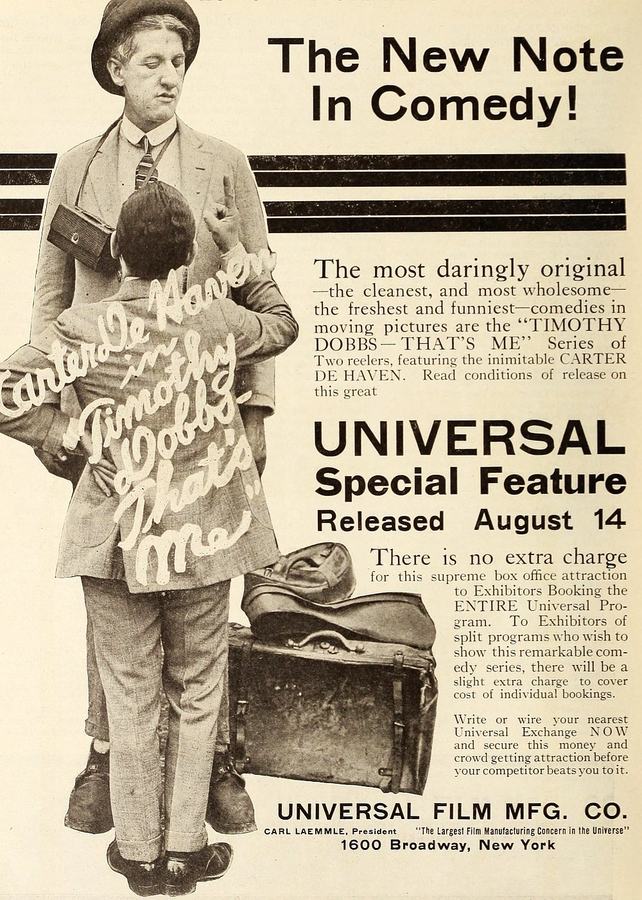
Stepping back into the nascent years of cinema, one encounters a fascinating array of creative experimentation, a period where the very language of film was being forged. Among these intriguing artifacts stands 'Timothy Dobbs, That's Me,' a delightful and often insightful ten-part episodic series from 1916. Far from being a mere historical curiosity, this collection of two-reel comedies, penned and often starring the remarkably versatile Carter DeHaven, offers a vibrant window into early 20th-century American life, societal anxieties, and the foundational comedic principles that would define the silent era. It’s a work that, even today, sparkles with an understated ingenuity, prompting us to reconsider the sophistication inherent in what might, at first glance, appear to be simple entertainment.
The genius of 'Timothy Dobbs, That's Me' lies primarily in its ingenious structure: ten entirely independent episodes, each a self-contained narrative. This format, while common for serials of the time, allows for a unique exploration of character and circumstance. Timothy Dobbs is not a static hero; he is a chameleon, a vessel through which DeHaven examines various facets of the human condition—ambition, pretense, accidental heroism, and the perennial quest for belonging. Unlike the sprawling, ambitious narratives seen in epic productions like D.W. Griffith's Intolerance, which sought to weave grand historical and moral tapestries, Dobbs’s world is intimately human, focused on the micro-dramas of an everyman perpetually navigating the absurdities of an evolving society. This episodic approach grants the series a refreshing dynamism, allowing each installment to hit the ground running, presenting Dobbs in a new predicament, a fresh guise, or a completely different social stratum, without the burden of extensive exposition.
Carter DeHaven, the creative force behind this series, is truly its beating heart. As both writer and a prominent performer (though the title role is played by L.M. Wells, DeHaven's influence as writer shapes the entire persona), his fingerprints are all over Dobbs's journey. DeHaven's comedic sensibility is sophisticated for the era, moving beyond mere slapstick to incorporate elements of character-driven humor, situational irony, and social satire. He crafts a protagonist who is inherently relatable in his struggles, even as he tumbles from one outlandish scenario to the next. Whether Dobbs is the humble 'Sody Clerk' or suddenly flush with 'A Thousand a Week,' DeHaven imbues him with a persistent, if often misguided, optimism that resonates deeply. His writing, though tailored for visual storytelling, demonstrates a keen understanding of narrative arcs and character development, even within the confines of a two-reel short.
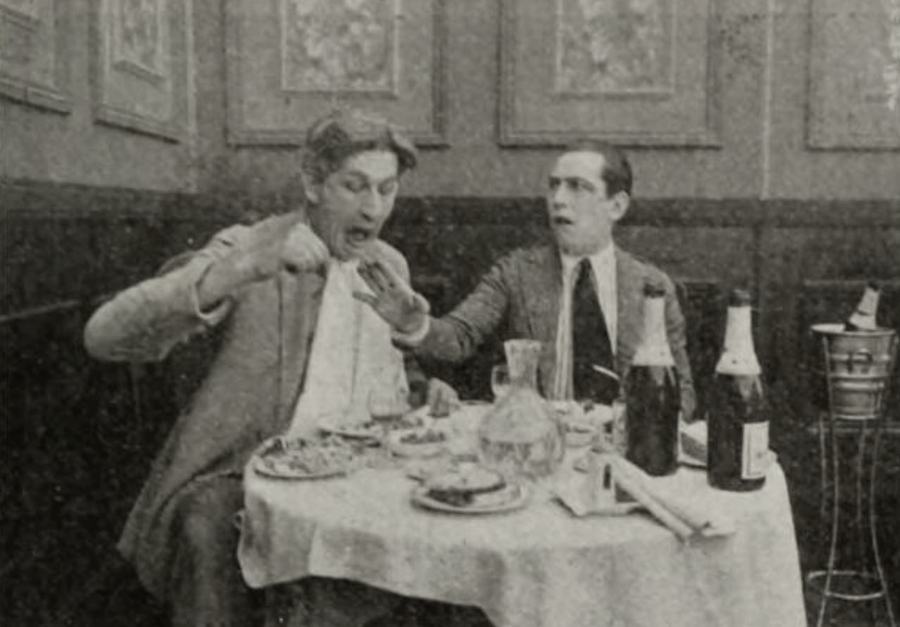
The cast assembled for 'Timothy Dobbs, That's Me' provides a robust framework for DeHaven's vision. L.M. Wells, in the titular role, delivers a performance that is both earnest and physically expressive, embodying the shifting fortunes of Dobbs with commendable agility. He is not a clown in the mold of a Chaplin or Keaton, but rather a character actor who understands the nuances of comedic timing and the subtle art of conveying emotion without dialogue. Vola Vale, often playing the object of Dobbs's affection or a figure of societal grace, brings a delicate charm and occasionally a spirited defiance to her roles, providing an excellent foil to Dobbs's often clumsy romantic overtures, particularly in 'He Almost Lands an Angel.' Robert Milasch and Gilmore Hammond, seasoned character actors of the period, contribute gravitas and villainy, respectively, grounding the fantastical elements of Dobbs's adventures in a world that feels recognizably human, even when events spiral into delightful chaos. Helen Leslie and Ruby Cox, alongside C. Norman Hammond, round out a capable ensemble, each contributing to the series' rich tapestry of human interaction.
One of the most compelling aspects of the series is its exploration of identity. Timothy Dobbs is a man in constant flux, a blank slate onto which society projects various roles. In 'He Became a Cop,' he attempts to uphold law and order, only to find himself entangled in the very criminal elements he seeks to combat. The episode 'From the Rogue's Gallery' explicitly plays with themes of mistaken identity and the societal labels that can define or condemn an individual. This fluid sense of self is a recurring motif, hinting at the anxieties of a rapidly industrializing nation where social mobility was both a dream and a precarious reality. Dobbs's attempts to 'Break Into Society' or to wear 'Borrowed Plumes' speak to a universal human desire for acceptance and status, often achieved through less-than-authentic means. This theme echoes, albeit in a lighter vein, the exploration of societal expectations and class structures found in more dramatic contemporary works, showing how silent film could tackle complex ideas through various genres.
The action sequences, while perhaps rudimentary by modern standards, are executed with a verve that keeps the audience engaged. There's a tangible sense of kinetic energy, whether Dobbs is involved in a chase, a brawl, or simply a frantic dash to escape an embarrassing predicament. These moments are seamlessly integrated with the comedic elements, ensuring that the series is never purely one-note. The blend of humor and thrills provides a dynamic viewing experience, a testament to the early filmmakers' understanding of pacing and audience engagement. It’s a style that could be seen as a precursor to the action-comedies that would become a staple of Hollywood, demonstrating that the synthesis of these genres was being refined even in the early silent era.
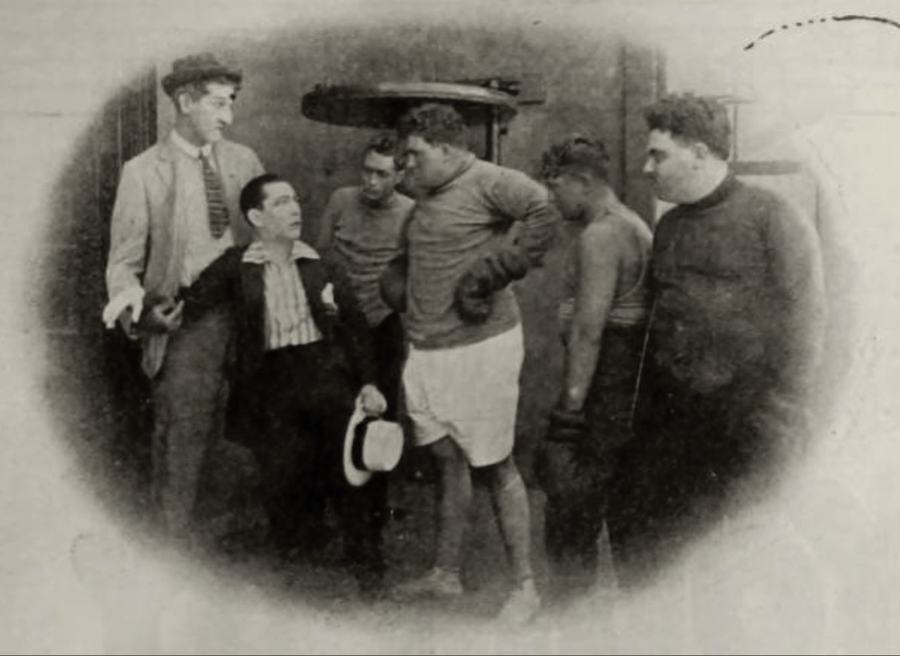
Visually, 'Timothy Dobbs, That's Me' offers a fascinating glimpse into the aesthetics of 1916. The sets, while not extravagant, are meticulously detailed, creating believable backdrops for Dobbs’s adventures—from bustling city streets to elegant drawing rooms. The cinematography, though lacking the sophisticated camera movements of later eras, is clear and effective, focusing on conveying narrative and comedic beats through well-framed shots and expressive performances. The editing, crucial in two-reelers to maintain momentum, is sharp and purposeful, ensuring that each gag lands and each plot point progresses efficiently. These technical elements, while perhaps not groundbreaking in isolation, collectively serve the storytelling with remarkable efficacy, highlighting the craft and dedication of the era's filmmakers. The visual language, even without sound, is remarkably articulate, a skill that master storytellers of the era, from Griffith to the nascent Mack Sennett, were perfecting.
The series also serves as a valuable historical document, reflecting the cultural zeitgeist of its time. The emphasis on individual ambition, the rapidly changing social landscape, and the distinct class divisions are all subtly woven into the fabric of Dobbs's adventures. The episode 'Hired and Fired', for example, speaks to the precariousness of employment in a burgeoning industrial economy, a theme that would resonate deeply with audiences of the era. The portrayal of law enforcement in 'He Became a Cop', while comedic, still offers a glimpse into the public's perception of authority figures. In this sense, 'Timothy Dobbs, That's Me' is more than just a collection of funny shorts; it's a social commentary, albeit one delivered with a light touch and a mischievous wink. Its episodic nature, much like later television sitcoms, allowed for a continuous, low-stakes engagement with contemporary issues, making it highly accessible and relatable to its audience.
Comparing 'Timothy Dobbs, That's Me' to other works of the period offers further appreciation for its unique contributions. While not as overtly dramatic as a feature film like The Squaw Man, or as grand in scale as a historical epic, its episodic structure and focus on a single character's evolving journey align it with the popular serials of the time, such as One Million Dollars. However, Dobbs’s independence in each episode sets it apart from cliffhanger-driven narratives, emphasizing character exploration over plot suspense. It lacks the overt moralizing sometimes found in films like The Redemption of White Hawk, preferring instead to find its lessons within the laughter. DeHaven's subtle humor and character-centric approach might even be seen as a precursor to the more nuanced comedic performances of later silent film stars, laying groundwork for the evolution of screen comedy beyond mere physical gags.
The final episode, 'Fame at Last,' provides a satisfying, if ironic, culmination to Dobbs's journey. It encapsulates the series' enduring charm: the idea that recognition, success, or even notoriety often arrives through unforeseen circumstances, a whimsical twist of fate rather than a meticulously planned ascent. This concluding chapter, like all those before it, reinforces the notion that life is a series of unpredictable events, and the best one can do is navigate them with a spirit of resilience and a touch of humor. It’s a poignant reflection on the human desire for acknowledgement, and how often it manifests in ways we least expect.
In conclusion, 'Timothy Dobbs, That's Me' stands as a testament to the inventive spirit of early cinema and the multifaceted talent of Carter DeHaven. It’s a series that, despite its age, retains a remarkable freshness, its comedic observations on human nature and societal ambition remaining surprisingly relevant. For enthusiasts of silent film, and indeed anyone curious about the foundational elements of screen comedy, this episodic gem offers a rich, entertaining, and insightful experience. It reminds us that even in the absence of spoken dialogue, cinema possessed a profound capacity for storytelling, character development, and social commentary, all delivered with an infectious, timeless charm. It’s a journey well worth taking, a delightful rediscovery of a character who, despite his many transformations, remains enduringly, wonderfully himself.
IMDb —
1917
Community
Log in to comment.