DbcultAccessing Vault...
Cult Review
Senior Film Conservator
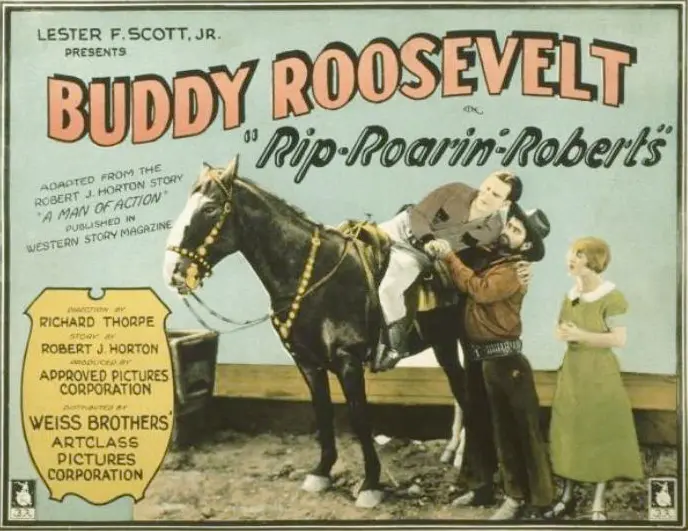
Ah, the silent era Western. A genre often dismissed by modern audiences as simplistic, yet within its stark black and white frames lies a profound elegance, a primal narrative force that speaks to fundamental human desires: justice, love, and the untamed spirit of adventure. Rip Roarin' Roberts, a 1924 cinematic artifact, stands as a compelling testament to this era's enduring charm and narrative efficiency. Directed with a brisk pace and penned by the collaborative talents of Betty Burbridge and Robert J. Horton, this film isn't merely a relic; it's a vibrant snapshot of the nascent American myth-making machine, offering a glimpse into the foundational tropes that would define the Western for decades to come.
From the very outset, the film establishes its hero, Buddy Roberts, portrayed with an effortless charisma by Buddy Roosevelt, as a man of principle and daring. Roosevelt, a true cowboy star of his time, embodies the archetype with a natural grace that transcends the limitations of silent film acting. He's not just a protagonist; he's the embodiment of frontier idealism, a wanderer seeking not merely personal gain but an opportunity to etch his mark on a landscape yearning for order. The promise of a thousand-dollar reward, while certainly a potent motivator, feels secondary to Roberts' inherent drive for righteousness. His decision to seek appointment as a deputy sheriff in Sleepy Hollow isn't a mere convenience; it's a conscious choice to embrace the mantle of authority, to become the very instrument of justice the beleaguered town so desperately needs.
Sleepy Hollow itself is more than just a backdrop; it functions as a microcosm of the frontier experience. It's a town teetering on the precipice, its peace perpetually threatened by the looming menace of The Hawk and his marauding gang. The narrative cleverly uses this vulnerability to heighten the stakes, making Roberts' presence not just welcome, but essential. The Hawk, though perhaps not as deeply explored as some of his contemporaries in more complex Westerns like The Border Legion, serves his purpose admirably as the quintessential antagonist—a symbol of lawlessness and the untamed wild that Roberts must conquer. His presence is a constant, palpable threat, a dark cloud hanging over the hopeful aspirations of the townspeople.
The film’s inciting incident arrives with a swift, impactful punch. Estelle Morgan, played by the luminous Brenda Lane, enters the scene not just as a romantic interest but as a catalyst for Roberts' immediate immersion into the town's plight. Lane brings a quiet strength to Estelle, a character who, despite the conventions of the era, is more than just a damsel in distress. Her vulnerability is evident, yet her spirit remains unbroken. The drunken, brutish attack by Red Turner, The Hawk's right-hand man, is a stark demonstration of the lawlessness Roberts has sworn to eradicate. This isn't merely a personal affront; it's an attack on the very fabric of decency, a direct challenge to the burgeoning authority Roberts represents. The ensuing brawl, a staple of the genre, is executed with a raw energy that captivates, showcasing Roberts' physical prowess and unwavering commitment to protecting the innocent. It’s a moment designed to cement his heroic status, not just in the eyes of Estelle, but for the audience as well.
The narrative propulsion truly kicks into high gear as Roberts, ever the vigilant lawman, decides to track Turner back to The Hawk's lair. This decision, while bold, also highlights Roberts' occasional impulsiveness, a trait that makes him more human and less a flawless superhero. His subsequent capture by The Hawk's men introduces a moment of genuine peril, a temporary triumph for the forces of chaos. Here, the film deftly builds suspense without relying on dialogue, using visual cues and the actors' expressions to convey the gravity of Roberts' predicament. The silent era's reliance on exaggerated gestures and facial acrobatics, often ridiculed today, finds its purpose in these moments, communicating fear, determination, and cunning with remarkable clarity.
Roberts' escape is orchestrated with a satisfying blend of ingenuity and raw grit. It's a testament to his character that even when cornered, his will to survive and fulfill his mission remains unyielding. The return to Sleepy Hollow, a town now aware of the escalating danger, sets the stage for the inevitable confrontation. Estelle's role in harboring Roberts, providing him with a safe haven, elevates her beyond a mere love interest. She becomes an active participant in the struggle, demonstrating a quiet bravery that complements Roberts' more overt heroism. This partnership, forged in the crucible of shared danger, lends a deeper resonance to their eventual romantic resolution.
The climactic gunfight is, as expected, the film’s grand spectacle. The arrival of The Hawk and his gang in Sleepy Hollow transforms the sleepy frontier settlement into a volatile arena. The tension, meticulously built through the preceding sequences, explodes into a flurry of action. While special effects were rudimentary by modern standards, the choreography of the gun battle, the rapid movements of the actors, and the stark visual contrast of good versus evil combine to create a thrilling conclusion. The death of The Hawk at Roberts' hands is not just a victory; it's a symbolic triumph of order over chaos, a definitive statement that justice, however hard-won, will ultimately prevail. This narrative arc, though straightforward, is remarkably effective, echoing the moral clarity often found in early cinema, much like the clear-cut good-vs-evil dynamic in a film such as The Birth of a Nation, albeit without the latter's problematic social commentary.
Buddy Roosevelt, as Buddy Roberts, is undeniably the film's magnetic center. His physical presence, his confident stride, and his expressive eyes convey a depth of character that many silent film actors struggled to achieve. He moves with an athletic grace, whether engaged in fisticuffs or mounted on horseback, truly embodying the 'rip roarin' spirit of the title. Brenda Lane, in her portrayal of Estelle Morgan, brings a necessary softness and vulnerability, but also a quiet resolve that prevents her from being a mere plot device. Her reactions often ground the more fantastical elements of the Western, making the stakes feel genuinely human. The supporting cast, including Joe Rickson as the menacing Red Turner and the uncredited actor behind The Hawk, contribute effectively to the film's atmosphere, their performances often relying on broad strokes that were characteristic of the era but nonetheless impactful.
The writing by Betty Burbridge and Robert J. Horton is a masterclass in economical storytelling. They understand the rhythm of the Western, the need for clear motivations, escalating conflicts, and a satisfying resolution. The plot, while not revolutionary, is tightly constructed, with each event logically flowing into the next. There’s no wasted motion, no extraneous subplots to distract from the central conflict. This narrative discipline is a hallmark of effective genre filmmaking, ensuring that even without spoken dialogue, the story remains compelling and easy to follow. This efficiency is particularly noteworthy when compared to some of the more convoluted narratives of the era, such as The Misleading Lady, which relied more heavily on intricate comedic misunderstandings.
Visually, the film makes effective use of its locations, capturing the vastness and rugged beauty of the Western landscape. The cinematography, though lacking the sophisticated camera movements of later eras, is functional and evocative, using wide shots to establish scale and close-ups to highlight emotional beats. The editing maintains a brisk pace, preventing any scene from overstaying its welcome and keeping the audience engaged in the unfolding drama. The use of intertitles, while a necessity, is judicious, providing just enough information to propel the story forward without bogging down the visual narrative. This thoughtful approach to visual storytelling elevates the film beyond mere pulp entertainment into a piece of competent cinematic artistry.
Rip Roarin' Roberts, while perhaps not as widely known as some of its more epic contemporaries, holds a significant place in the pantheon of early Westerns. It showcases the foundational elements that would become synonymous with the genre: the lone hero, the virtuous maiden, the dastardly villain, and the ultimate triumph of good over evil. It’s a film that, despite its age and silent format, manages to convey excitement, romance, and a sense of genuine adventure. The straightforward narrative makes it incredibly accessible, even to those unfamiliar with silent cinema, serving as an excellent entry point into the rich history of the Western.
Its enduring appeal lies in its unpretentious embrace of classic storytelling. There are no grand philosophical statements or complex psychological explorations akin to later, more revisionist Westerns. Instead, it offers a pure, unadulterated dose of frontier heroism. Buddy Roberts is a character who embodies courage, integrity, and a willingness to fight for what is right—qualities that resonate across generations. The film's resolution, with Buddy and Estelle planning their marriage, provides a comforting sense of closure, a promise of stability in a world that often feels chaotic. It’s a testament to the idea that even in the wildest corners of the world, love and justice can find a way to flourish.
In an era where cinema was still finding its voice, Rip Roarin' Roberts speaks volumes through its actions, its expressive performances, and its unwavering commitment to a compelling narrative. It's a reminder that sometimes, the most powerful stories are the simplest ones, told with conviction and a whole lot of heart. For fans of classic cinema, or anyone curious about the roots of the Western genre, this film offers a thoroughly enjoyable and historically significant viewing experience. It truly earns its moniker, delivering a rip-roarin' good time that echoes the spirit of a bygone era with admirable clarity and vigor.
The film's impact, though perhaps not as monumental as a groundbreaking epic like The Birth of a Nation, is significant in its contribution to solidifying the Western as a commercially viable and audience-beloved genre. It helped establish Buddy Roosevelt as a formidable screen presence and demonstrated the consistent appeal of tales of justice in the untamed territories. The simple yet effective narrative structure, focusing on a clear conflict and a satisfying resolution, paved the way for countless future Westerns, influencing how heroes and villains would be portrayed on screen for decades. It's a film that, despite its age, continues to resonate with its directness and its celebration of classic American virtues. The creative partnership of Betty Burbridge and Robert J. Horton crafted a tale that, through its simplicity, achieved a timeless quality, proving that a well-told story, even without spoken words, can captivate and inspire. Their ability to distill complex themes of law and order, personal bravery, and burgeoning romance into a concise and engaging plot is commendable, showcasing a profound understanding of the medium's capabilities during its formative years. The film serves as a valuable historical document, offering insight into the entertainment values and societal aspirations of the 1920s, a period of significant cultural transition. Its unadorned charm and relentless pursuit of justice make Rip Roarin' Roberts a memorable entry in the annals of silent Westerns, a testament to the enduring power of a good story well told, proving that the silent screen could indeed roar with excitement and adventure.
IMDb —
1927
Community
Log in to comment.