DbcultAccessing Vault...
5.2/10
Senior Film Conservator
A definitive 5.2/10 rating for a film that redefined the boundaries of cult cinema. Rita ou Rito?... remains a cornerstone of transgressive art.
Is ‘Rita ou Rito?...’ worth your time today? Short answer: yes, for specific audiences, but with significant caveats that demand a certain appreciation for early cinematic oddities. This isn't a film for everyone, especially those seeking modern pacing or nuanced storytelling.
It's a delightful, if dated, curiosity for cinephiles, historians of Portuguese cinema, and anyone with a soft spot for the foundational elements of gender-bending farce. However, if your preference leans towards contemporary comedies, high production values, or narratives that don't require a certain historical generosity, then ‘Rita ou Rito?...’ will likely test your patience rather than entertain.
To truly appreciate a film like ‘Rita ou Rito?...’, one must approach it not merely as a piece of entertainment, but as an artifact. Released at a pivotal moment in cinema’s development, this Portuguese farce by Reinaldo Ferreira offers a fascinating glimpse into the comedic sensibilities and narrative structures that captivated audiences over a century ago. It’s a film that thrives on the simple, yet effective, premise of mistaken identity and the inherent humor in societal role-play. The title itself, a playful linguistic twist, hints at the central theme of gender fluidity and the blurring of lines that drives the entire plot.
The setup is classic: a grand hotel, a retired military man prone to exaggeration, a charming daughter, and a suitor desperate enough to don a wig and skirt. This isn’t groundbreaking storytelling by today’s standards, but in its era, the audacity of the cross-dressing plot point, even if purely for comedic effect, was a bold stroke. It challenges, however subtly, the rigid gender norms of the time, presenting a male character willing to transgress them for love. This makes it more than just a silly comedy; it’s a minor historical document of evolving social attitudes, even within the confines of slapstick.
This film works because... it fully commits to its farcical premise with a relentless energy, showcasing early examples of physical comedy and a surprisingly modern embrace of gender-bending humor, however superficial its intent.
This film fails because... its pacing can feel sluggish to contemporary viewers, relying heavily on a single comedic device that, while innovative for its time, eventually wears thin without deeper character development or narrative complexity.
You should watch it if... you are a student of early cinema, enjoy historical comedies, or have a particular interest in the development of Portuguese filmmaking and its unique contributions to the silent era.
Reinaldo Ferreira, as both writer and director, crafts a narrative that feels very much like a filmed stage play, a common characteristic of early cinema. The camera is often static, observing the action from a fixed perspective, allowing the actors to move within the frame and deliver their physical comedy. There are no sweeping crane shots or complex tracking movements; the focus is squarely on the performances and the unfolding of the plot's many twists.
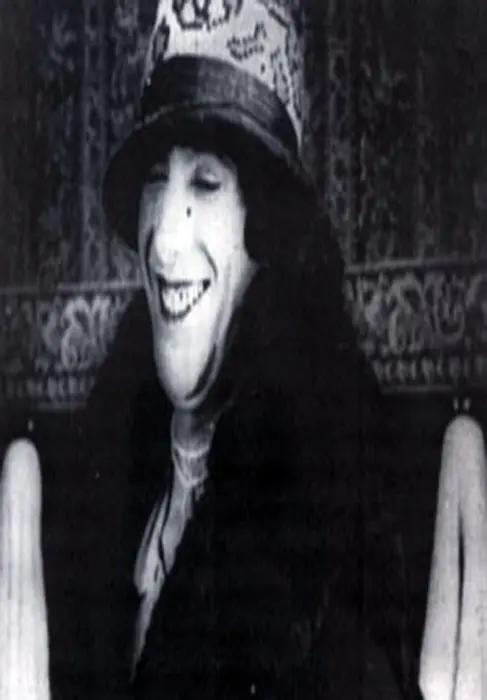
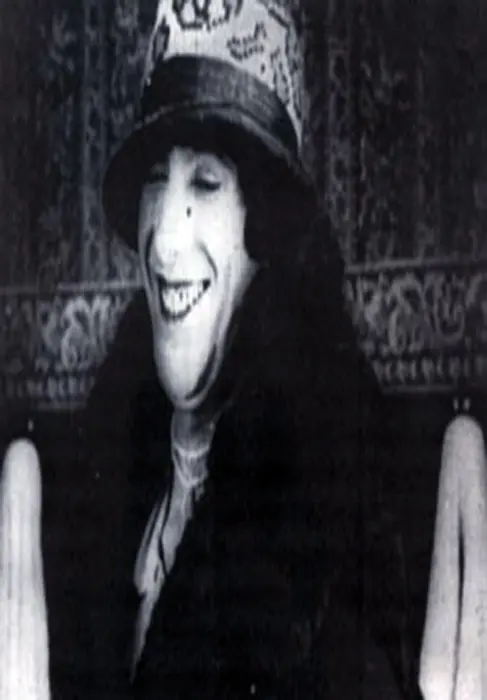
This directorial choice, while perhaps limiting by modern standards, serves the farcical nature of the story well. It allows the audience to fully absorb the visual gags, such as Rito's increasingly elaborate disguises or the exaggerated reactions of Colonel Peixe-de-Espada. One particular scene, where Rito-as-Rita navigates a crowded hotel lobby, attempting to avoid recognition while simultaneously flirting with Gabriela, highlights Ferreira's ability to orchestrate comedic chaos within a confined visual space.
The cinematography, while rudimentary, effectively captures the period's aesthetic. The lighting, likely natural or very basic artificial sources, gives the film a soft, almost dreamlike quality that enhances its historical charm. It’s a testament to the ingenuity of early filmmakers working with limited technology, transforming constraints into a distinct visual style. The lack of intricate camera work forces the viewer to pay closer attention to the actors' expressions and body language, which is where much of the film's humor truly lies.
The cast of ‘Rita ou Rito?...’, though largely unknown to modern international audiences, delivers performances that are energetic and committed to the farcical tone. Antónia de Sousa, as Gabriela, embodies the spirited ingenue with a convincing blend of charm and mischievousness. She reacts to Rito's antics with a delightful mix of surprise and knowing amusement, grounding the more outlandish elements of the plot.
However, it is Alexandre Amores as Rito who carries the bulk of the comedic heavy lifting. His portrayal of the lovestruck suitor in drag is the film’s central spectacle. Amores manages to convey both the awkwardness of his disguise and the underlying romantic desperation. The physical comedy involved in his transformation and subsequent interactions, particularly when he has to quickly switch between male and female personas, is genuinely impressive for the era. His exaggerated gestures and facial expressions, typical of silent film acting, are well-suited to the broad humor.
Fernando Alves da Costa as Colonel Peixe-de-Espada provides a robust foil to Rito's antics. His booming presence and penchant for tall tales, even without dialogue, are clearly communicated through his expansive physicality. The secondary characters, including Doctor Pilulas (Letícia de Miranda), who relentlessly promotes her fabricated pills, add layers of quirky charm. Doctor Pilulas's scenes, while initially feeling tangential, serve as a clever commentary on burgeoning consumerism and the gullibility of the public, a surprisingly sharp observation for a film of this nature. Her unwavering sales pitch, often delivered with an almost manic intensity, is a standout comedic thread.
The pacing of ‘Rita ou Rito?...’ is undeniably a product of its time. For viewers accustomed to the rapid-fire cuts and plot developments of contemporary cinema, the film can feel leisurely, even ponderous at times. Scenes often linger, allowing the full impact of a physical gag or a character's reaction to register. This slower rhythm, however, is not without its merits. It encourages a more contemplative viewing experience, inviting the audience to immerse themselves in the historical context and appreciate the nuances of silent film performance.
The tone is consistently lighthearted and comedic, never veering into genuine drama or tension. Even when characters face potential exposure, the audience is always aware that this is a farce, and all will undoubtedly end well. This unwavering commitment to comedic escapism is one of its strengths, creating a world where the most pressing concerns are romantic entanglements and maintaining a flimsy disguise. It’s a pure, unadulterated dose of early cinematic joy.
Thematic undertones, while not deeply explored, are present. The most obvious is the playful subversion of gender roles through Rito’s disguise. While it’s primarily a comedic device, it subtly questions the performative nature of gender and identity. The film also touches upon themes of deception, the lengths one goes for love, and perhaps a gentle satire of upper-class pretensions, particularly through the character of the Colonel and the setting of the opulent Palace Hotel.
‘Rita ou Rito?...’ holds significant value as a piece of early Portuguese cinema. It showcases the nascent industry's ability to produce popular entertainment, even if it often drew inspiration from foreign theatrical traditions. Films from this period are often rare and difficult to access, making the very existence and preservation of this work a triumph. It provides a window into the cultural landscape of Portugal during the early 20th century, reflecting the humor and social mores of the time.
Comparing it to other silent farces of the era, such as Pants or even more well-known international comedies like those of Buster Keaton (though ‘Rita ou Rito?...’ lacks Keaton's legendary precision), highlights both its unique charm and its limitations. While it might not possess the universal comedic timing of a Chaplin or Keaton, it certainly embodies the spirit of early film experimentation in comedy. It stands as a testament to the foundational efforts of filmmakers like Reinaldo Ferreira to build a national cinematic identity.
Yes, ‘Rita ou Rito?...’ is worth watching for specific audiences. It offers a unique historical perspective on early Portuguese cinema and the development of farcical comedy. It is not a film for casual viewers seeking modern entertainment, but rather for those who appreciate the quirks and charms of silent-era productions. Its value lies in its historical significance and its commitment to a simple, yet engaging, comedic premise. The film’s audacity in its gender-bending plot, even for humor, feels surprisingly fresh in its historical context.
Audacious Premise: The cross-dressing plot, while a common farcical trope, is handled with an infectious, unselfconscious glee.
Charming Period Detail: Offers a delightful glimpse into early 20th-century fashion, architecture, and social interactions.
Subtle Social Commentary: The Doctor Pilulas subplot provides an unexpected satirical edge on commercialism.
Limited Character Depth: Characters are largely archetypes, serving the plot rather than offering complex emotional journeys.
Technical Limitations: As an early silent film, it naturally lacks the sophisticated cinematography and sound design of later productions.
Accessibility: May be challenging to find in high-quality restored versions, impacting the viewing experience.
‘Rita ou Rito?...’ is a fascinating, if imperfect, window into early Portuguese cinematic comedy. It works. But it’s flawed. Its true value lies not in its ability to compete with modern entertainment, but in its historical significance and its charmingly earnest commitment to its farcical premise. Reinaldo Ferreira’s direction, while simple, allows the comedic performances to shine, particularly Alexandre Amores’s energetic turn as the cross-dressing Rito. The film is a testament to the ingenuity and playful spirit of early filmmakers working within the constraints of their era.
While its pacing demands patience and its humor can feel dated, there's an undeniable charm to its audaciousness. It’s a film that asks you to meet it halfway, to appreciate it for what it is: a historical curiosity, a foundational piece of a national cinema, and a genuinely amusing, if quaint, exploration of identity and desire. For those willing to engage with its particular rhythms, ‘Rita ou Rito?...’ offers a rewarding, smile-inducing journey back to cinema’s formative years. It's a film that deserves to be seen, not just for its laughs, but for the story it tells about the evolution of film itself.
IMDb 6.7
1921
Community
Log in to comment.