DbcultAccessing Vault...
Cult Review
Senior Film Conservator
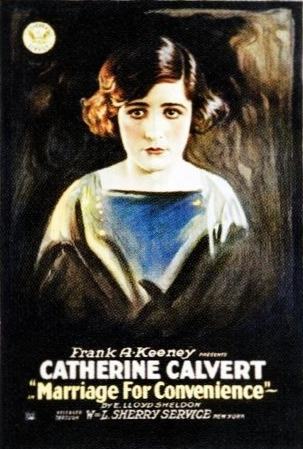
The year 1919 stood as a threshold for American cinema, a moment where the crude tropes of the early nickelodeon era began to calcify into the sophisticated melodramas that would define the silent epoch. Marriage for Convenience, directed by Sidney Olcott, serves as a quintessential artifact of this transition. It is a film that weaponizes the concept of familial duty, transforming the domestic space into a labyrinth of moral compromise and hidden monstrosity. At its center is Catherine Calvert, an actress whose face was a canvas for the anxieties of a post-war society grappling with shifting class dynamics and the persistent ghost of Southern chivalry.
The narrative engine is fueled by a particularly cruel irony. The Rand family, though 'poor but proud,' clings to a social standing that their bank accounts can no longer support. This socioeconomic friction is the catalyst for the entire tragedy. When Barbara Rand, played with a fragile luminosity by Ann May, is blinded in her flight from a 'notorious roadhouse,' the film shifts from a cautionary tale about female virtue into a gritty exploration of the cost of survival. The roadhouse itself functions as a symbol of the encroaching modernity that threatens the traditional Southern home—a place of shadows, illicit spirits, and predatory men.
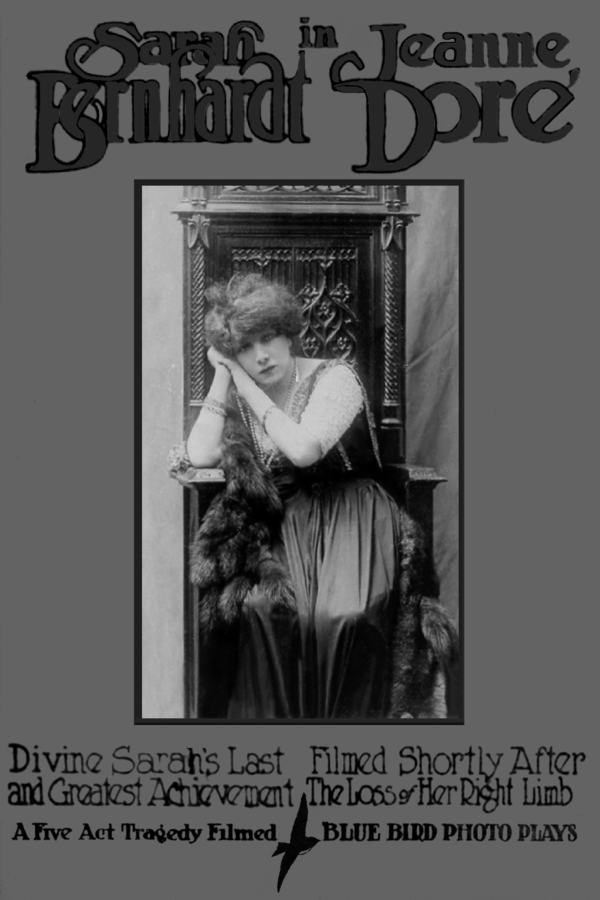
Natalie’s decision to marry Oliver Landis is not framed as a romantic triumph but as a grim transaction. It echoes the themes found in The Piper's Price, where the fiscal realities of life demand a pound of flesh from the protagonist. In Landis, we see the archetype of the 'respectable' villain—a man whose wealth acts as a cloaking device for his inherent depravity. Henry Sedley portrays Landis with a chilling, calculated stillness that contrasts sharply with the more overt histrionics often found in films like Reggie Mixes In.
Visually, the film utilizes the limitations of its era to create an atmosphere of claustrophobic dread. The sequences involving Barbara’s blindness are handled with a tactile sensitivity. The camera lingers on her groping hands and vacant gaze, making the audience complicit in her vulnerability. This sense of unseen danger is a precursor to the psychological depth seen in later works like The Kaiser's Shadow, where the primary threat is often the person standing right beside you.
"The tragedy of Natalie Rand is not that she married for money, but that she inadvertently sold her sister's protector to her sister's violator. It is a cyclical horror that silent cinema navigated with a peculiar, haunting grace."
The character of Howard Pollard serves as the narrative’s sacrificial lamb. George Majeroni plays Pollard with a nuanced ambiguity that allows Natalie’s mistake to feel earned rather than forced. The scene at the cliffside is a masterpiece of early location shooting. The physical height of the precipice mirrors the stakes of the moral conflict. As Pollard falls to his death, the audience is left with a sickening realization: the 'justice' Natalie sought has only served to further entrench the true villain in her life. This subversion of the expected hero's journey is reminiscent of the dark turns in La Belle Russe.
The final act of Marriage for Convenience descends into a proto-thriller. Oliver Landis’s attempt to prematurely remove Barbara’s bandages is one of the most genuinely unsettling moments in 1910s cinema. It is an act of supreme malice—an attempt to render the victim permanently incapacitated to ensure the perpetrator's safety. Here, the film touches upon the same themes of feminine agency and survival found in Peggy, the Will O' the Wisp, though with a much darker palette.
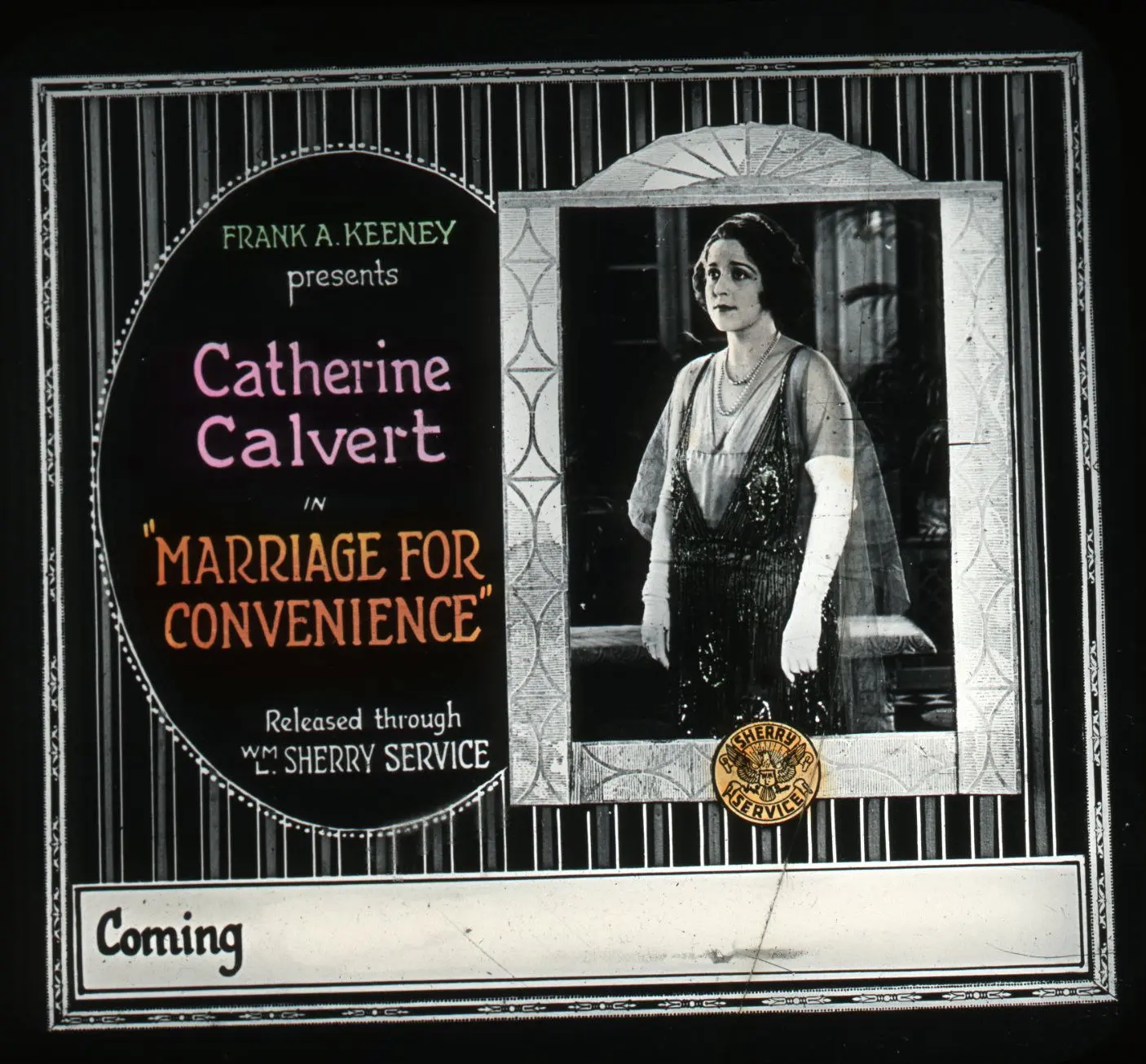
Natalie’s confrontation with Oliver, pistol in hand, marks her transition from a passive victim of circumstance to an active agent of retribution. However, the film denies her the catharsis of a clean kill. Oliver’s suicide is a cowardly exit, a final refusal to face the earthly justice of the state or the social ruin he deserves. It is an ending that feels both hollow and heavy, much like the resolution in What the Gods Decree. The 'convenience' of the title is ultimately revealed to be a lie; there is nothing convenient about the wreckage of these lives.
While many films of 1919 relied on flat lighting and staginess, Olcott and his cinematographers experimented with depth of field and shadow to enhance the psychological tension. The interiors of the Rand home feel stagnant and heavy, draped in the mourning of their lost status, while the Landis estate is cold and cavernous. This environmental storytelling is a hallmark of high-tier silent drama, similar to the atmospheric density found in Pitfalls of a Big City.
The cast is uniformly excellent for the period. Catherine Calvert avoids the excessive gesticulation that marred many of her contemporaries' performances. Her Natalie is a woman of internalised grief, her eyes conveying a weary intelligence that makes her eventual realization of the truth all the more agonizing. Edmund Burns, as the discarded fiancé Ned Gardiner, provides a necessary, if somewhat peripheral, moral anchor. His presence reminds the audience of the life Natalie could have had, a stark contrast to the gothic nightmare she inhabited. This dynamic of the 'lost love' is a recurring motif in the era's romantic tragedies, such as Just a Song at Twilight.
In the broader canon of silent film, Marriage for Convenience often gets overshadowed by the more bombastic epics of Griffith or the slapstick of Keaton. However, it deserves recognition for its uncompromising look at the intersection of poverty and sexual predation. It does not shy away from the fact that Natalie’s 'noble' sacrifice was built on a foundation of lies and that her path back to Ned Gardiner is paved with the corpses of both the innocent and the guilty. It lacks the whimsical charm of Daphne and the Pirate, opting instead for a somber realism that feels surprisingly modern.
Ultimately, the film is a meditation on sight. Barbara loses her physical vision, Natalie is blinded by her desire to save her sister, and Oliver is blinded by his own narcissism and lust. The restoration of Barbara’s sight at the end is a bittersweet victory; she wakes up to a world where her sister’s husband was her attacker and her sister’s hands are metaphorically stained with the blood of an innocent man. It is a complex, textured piece of storytelling that demands a reappraisal from modern cinephiles. It stands alongside Patriotism and The Life and Works of Verdi as an example of how 1919 was a year of immense creative fertility and narrative risk-taking.
For those who appreciate the intersection of high drama and social commentary, this film is an essential watch. It captures a specific American anxiety—the fear that the structures meant to protect us (marriage, wealth, family) are the very things that can destroy us. In the flickering shadows of this century-old celluloid, we find a story that remains uncomfortably relevant, a reminder that the price of convenience is often far higher than we are prepared to pay.
IMDb 6.3
1930
Community
Log in to comment.