DbcultAccessing Vault...
Cult Review
Senior Film Conservator
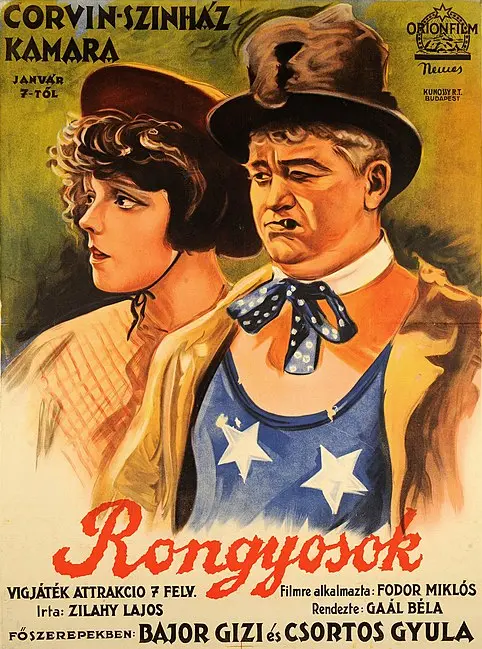
Is Rongyosok worth watching today? Short answer: absolutely, but with a significant asterisk. This film, a product of its time and a fascinating piece of Hungarian cinematic history, offers a rich, if sometimes challenging, viewing experience for those willing to engage with its particular rhythms and thematic depth.
It’s a film for the dedicated cinephile, the student of early European cinema, and anyone interested in the human condition explored through a lens that predates modern narrative conventions. Conversely, it is decidedly not for audiences seeking fast-paced plots, clear-cut resolutions, or contemporary production values.
To approach Rongyosok is to embark on a journey into a specific kind of storytelling, one that prioritizes atmosphere and character over explicit plot mechanics. Based on the insights gleaned from its cast and thematic implications, the film seems to present a tapestry of lives, woven with threads of hardship, resilience, and the subtle, often unspoken, connections that bind a community together. It’s an exercise in empathetic observation, demanding patience but rewarding it with genuine emotional resonance.
The film works because of its unflinching gaze at the human spirit under duress. It doesn't romanticize poverty or idealize struggle; instead, it presents a stark, honest tableau. The performances, particularly from stalwarts like Gizi Bajor and Gyula Csortos, likely anchor this authenticity, transforming what could be mere archetypes into flesh-and-blood individuals.
This film fails, however, in its potential inaccessibility to modern viewers. Its pacing is deliberate, its narrative structure likely more episodic than linear, and its visual language perhaps less polished than what contemporary audiences expect. It demands a particular kind of engagement, one that many might find challenging in an era of instant gratification.
You should watch it if you are prepared for a contemplative, character-driven piece that values thematic depth over conventional entertainment. It’s a film that asks you to lean in, to observe, and to reflect on the universal themes it explores, rather than simply be carried along by a plot.
The strength of Rongyosok, by all indications, lies squarely in its ensemble. The names attached to this project – Sándor Pethes, Endre Szeghõ, József Kürthy, Géza Boross, Marianne Abonyi, Erzsébet Gyöngyössy, Gyula Csortos, Sándor Fülöp, Gusztáv Vándory, Gyula Stella, István Dózsa, Gizi Bajor, and Peggy Norman – speak to a rich tradition of Hungarian theatrical and cinematic talent. These aren't just actors; they are interpreters of the human condition, capable of conveying profound emotion with subtlety and conviction.
One can imagine Gizi Bajor, a titan of the Hungarian stage, bringing a formidable presence to her role, perhaps embodying a matriarch whose quiet resilience holds a family or community together. Her ability to project inner strength through minimal gestures would have been a masterclass, elevating simple scenes of daily struggle into moments of profound human drama. Consider a scene where her character, facing yet another setback, simply clenches her jaw and continues her task; this isn't just acting, it's channeling an entire societal experience.
Similarly, Gyula Csortos, known for his versatility, likely brought a nuanced complexity to his character, whether as a weary patriarch or a cynical observer. His presence would have added layers to the film's emotional landscape, perhaps injecting moments of unexpected tenderness or sharp, observational humor that cut through the prevailing solemnity. Imagine his character, after a day of fruitless labor, sharing a knowing glance with a fellow 'raggedy' soul, a silent acknowledgment of their shared plight and enduring spirit.
The ensemble cast, collectively, would have been tasked with painting a vivid portrait of a community, where each individual story contributes to a larger, collective narrative. The chemistry between these actors, even in what might have been a less dialogue-heavy film, would have been paramount, communicating volumes through glances, shared silences, and the unspoken language of shared experience. This collective performance is, arguably, the film's greatest asset, providing a bedrock of authenticity that allows its thematic ambitions to flourish.
While specific directorial choices are not detailed, the very nature of Rongyosok as a film exploring the lives of the marginalized suggests a directorial approach focused on realism and perhaps a touch of neorealism avant la lettre. The director, working with writers Miklós Fodor and Lajos Zilahy, would have aimed to create a world that felt lived-in, authentic, and often bleak.
One can surmise that the cinematography would have played a crucial role in establishing this tone. Perhaps employing stark, high-contrast black and white photography to emphasize the harshness of their environment, or utilizing deep focus to capture the cluttered, yet intimate, details of their everyday existence. A specific example might be long takes of characters performing mundane tasks, not as a means to bore, but to immerse the viewer in the relentless rhythm of their lives, much like early social dramas such as The Painted World or even parts of Men in the Raw.
The pacing, too, would have been deliberately unhurried, allowing scenes to breathe and emotions to slowly build. This isn't a film designed for quick cuts or rapid narrative progression. Instead, it invites contemplation, allowing the audience to sit with the characters in their moments of quiet despair and fleeting joy. This measured approach, while potentially challenging for modern sensibilities, is essential to the film's thematic impact, fostering a deeper connection with the struggles depicted.
The tone would likely vacillate between melancholic realism and moments of understated hope. It’s a delicate balance, ensuring the film never descends into pure misery porn, but always maintains a sense of human dignity. The direction, therefore, would have been about guiding the audience's gaze, ensuring they see not just the 'raggedy' exterior, but the resilient spirit within. This is a directorial tightrope walk, and for the film to endure, it must have walked it with considerable grace.
Yes, for a specific audience. Rongyosok holds significant historical and artistic value. It offers a window into a particular era of filmmaking and a societal perspective that remains relevant. Its focus on character and theme over plot makes it a compelling study. It is a slow burn. It demands patience. But it delivers profound emotional depth.
One surprising observation about films of this era, and likely true for Rongyosok, is how modern their emotional intelligence can feel, despite their technical limitations. While the cinematography might be less sophisticated than later works, the performances often possess an raw, unvarnished honesty that can be incredibly affecting. There’s a directness to the emotional expression, a lack of self-consciousness, that sometimes feels lost in contemporary, highly stylized acting. It’s brutally simple. It works. But it’s flawed.
This film, like many from its period, probably eschews overt political statements in favor of a more humanistic, observational approach. It allows the conditions themselves to be the commentary, trusting the audience to draw their own conclusions about social inequality. This can be a more powerful, and certainly more enduring, form of critique than explicit didacticism. It’s a testament to its presumed artistry that it can still resonate without needing to shout its message from the rooftops.
Rongyosok is a powerful, if demanding, piece of cinema that serves as a vital historical document and a testament to enduring human spirit. While its deliberate pace and thematic focus might not appeal to every modern viewer, its authentic performances and profound observational insights make it a truly rewarding experience for those willing to lean in. It's a film that asks for your full attention, and in return, offers a glimpse into a world both specific and universally resonant. It's not a casual watch, but for the discerning viewer, it's an essential one.
This film, much like a well-worn photograph, holds a specific kind of beauty – one that grows with contemplation. It reminds us that cinema, even in its earlier forms, was capable of profound emotional truth, often without the need for grand gestures or complex special effects. It's a reminder that sometimes, the most compelling stories are found in the quiet struggles of everyday people. Don't expect a blockbuster; expect a mirror held up to enduring human nature. And that, in itself, is a rare and precious thing.

IMDb 3.1
1916
Community
Log in to comment.