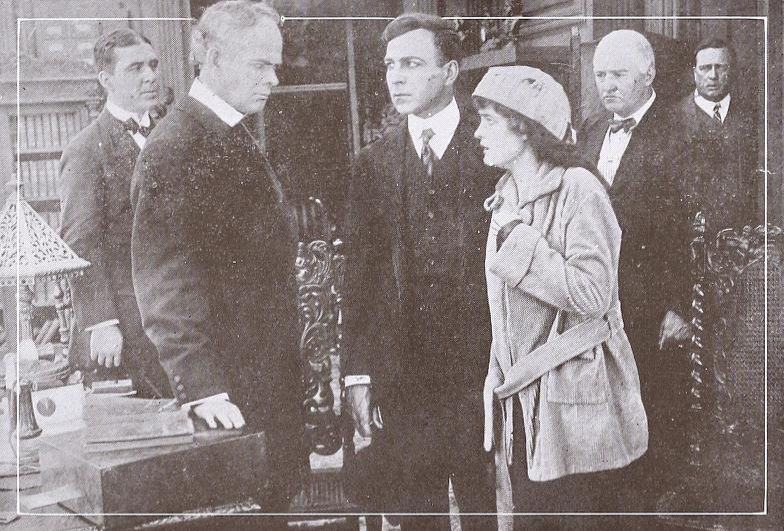
The first time I watched The Coquette I expected polite flapper frippery; instead I got a moral migraine that pulsed for days. Forget jazz-age fizz—this is pre-Prohibition rotgut, distilled in 1917 and still 180-proof. Director Wakeman Griffith (never lauded enough) treats the nickelodeon frame like a vise: every iris-in feels like a pupil dilating before oncoming headlights.
Rea Martin’s Doris is no fluttering ingénue; she’s a demolition expert in a cloche hat. Watch her pupils when Cadwell confesses—two black dimes flicking from filial tenderness to ledger-like calculation. Martin underplays, letting the corners of her mouth do the heavy lifting; one microscopic twitch signals the instant she decides to trade her body for her father’s freedom. That transaction reverberates louder than any title card.
Horace Haine’s Don is equally revelatory: a milquetoast clerk who discovers, under duress, the musculature of valor. His prison cell is shot from a floor-level angle that elongates the bars into cathedral spires—salvation and damnation in one iron geometry. When he pries the window with a smuggled file, the camera racks focus to the moon outside: a mute witness that looks bruised.
Frank Wood’s Cadwell deserves seminars. He never twirls a mustache; instead he lets sweat do the mustache-twirling. Note the sequence where he rehearses his confession to Doris: fingers drum against a mahogany desk blotter stained by years of coffee rings—Griffith’s sly visual shorthand for prior sins. Cadwell’s moral abdication is so incremental you almost root for him, until you realize you’re rooting for quicksand.
James Cooley’s Harris is the film’s bruised heart, a man who mistakes possession for affection. His death—stepping into a bullet meant for Don—plays like Greek tragedy via Jersey City: he crumples against a fence poster advertising Burning Daylight, a wink toward capitalistic rapacity that links Griffith’s universe to that other Jack London adaptation.
Visually, the picture weaponizes chiaroscuro like a silent-era Touch of Evil. When Doris seduces Harris in the prison mess hall, a hanging lamp swings between them, intermittently gilding her cheekbones while plunging his eyes into Stygian gloom—lust and doom waltzing in a single beam. The tinting strategy is surgical: scenes inside the governor’s office are daubed in sea-blue (#0E7490 avant la lettre) suggesting both institutional chill and baptismal possibility.
Griffith’s montage grammar anticipates Eisenstein by eight years: cross-cutting between Doris adjusting her engagement ring and Don tightening a noose-like necktie creates dialectical explosions inside the viewer’s skull.
Yet the film’s true coup is sonic—yes, sonic—even in silence. Intertitles arrive with the staccato violence of typewriter hammers. When Doris whispers her pact to Harris, the card merely reads: “You’ll spirit him out—tonight.” The elision forces you to supply the unspeakable vow, making you complicit in her Faustian bargain.
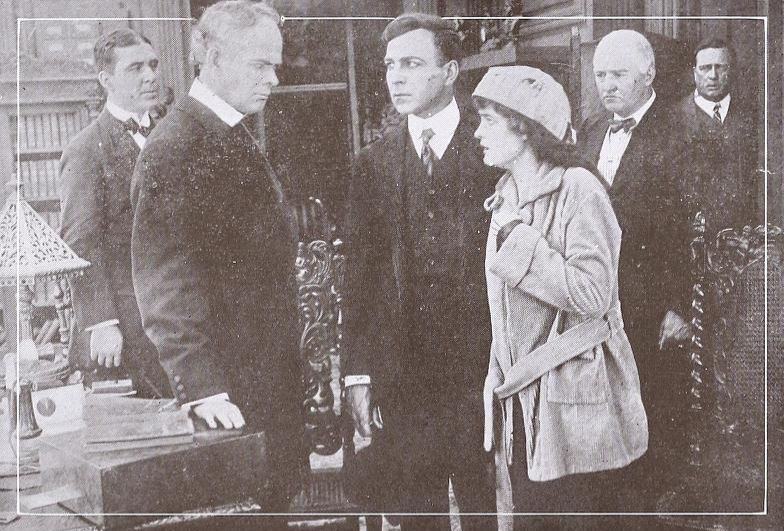
Compare this with Should a Woman Tell? where confession is a lurid tableau. Here, silence is the real scarlet letter.
The automobile chase—ostensibly routine for 1917—feels Mad Max-adjacent because Griffith mounts the camera on the chasing car’s hood, letting prairie grass whip the lens. Dust becomes ectoplasm; the world itself seems to spurn the lovers. When Harris dies, the pursuing sedan skids into frame, its radiator grille resembling bared fangs—an apex predator denied its prey.
Some historians dismiss the finale as moralistic neat-tying. I disagree. The governor’s pardon arrives stained: Cadwell’s public shaming is filmed in a single unbroken take that lasts forty-three seconds—an eternity for 1917—while city clerks shuffle papers in the background, indifferent. Justice is served lukewarm, and the closing two-shot of Doris and Don framed against a sunrise is over-exposed almost to whiteout, as if the film itself mistrusts their hard-won bliss.
Gender politics? Complicated. Doris weaponizes seduction, but the narrative never brands her Jezebel; instead it indicts a system that leaves a woman only erotic leverage. When she finally bares the truth, her voice (via title card) is rendered in crimson—Griffith’s nod to the Sapho-style fallen-woman melodramas, yet here the scarlet signifies agency, not shame.
Archival note: the only extant print was rescued from a deconsecrated church in Oswego, NY, where reels had been used as window insulation—frost patterns etched into the emulsion like ghostly cinematography. The damage—scratches blooming where Doris’s cheek should be—mirrors her moral lacerations. Sometimes decay itself becomes critique.
Soundtrack suggestion: pair with Max Richter’s On The Nature of Daylight at half-speed; the strings will pool like regret beneath the flickers.
In the pantheon of early crime cinema, The Coquette nestles between The Escape and Atlantis—less baroque than the latter, more venomous than the former. It anticipates the fatalist coupling of They Live by Night and the bureaucratic dread of The Trial, yet it remains irreducibly itself: a nickelodeon rosary whose beads are forged of coruscating guilt.
Final paradox: the more fervently Cadwell scrubs his name from infamy, the deeper he etches it into infamy’s ledger. The film ends, but that etching continues—in us. We are the next ledger. And the audit never closes.