DbcultAccessing Vault...
Cult Review
Senior Film Conservator
Is Rough and Ready (1925) worth watching today? Short answer: yes, but with significant caveats. This early silent comedy is a delightful, if fleeting, glimpse into the anarchic spirit of 1920s slapstick, tailor-made for cinephiles and historians with a penchant for physical comedy, but likely to test the patience of those accustomed to more refined narrative structures or contemporary humor.
It’s a film that demands a certain appreciation for its era, a willingness to engage with humor that predates sound, color, and complex character arcs. If you approach it as a historical artifact with genuine comedic intent, you'll find moments of pure, unadulterated joy. However, if you're seeking a narrative-driven experience or a film that resonates with modern sensibilities without effort, you might find its charm elusive.
This film works because its star, Lige Conley, commits with an almost unsettling fervor to every single gag, no matter how absurd. His boundless energy is infectious.
This film fails because its plot is essentially a thin excuse for a string of escalating destructions, offering little in the way of character development or emotional stakes.
You should watch it if you have an interest in the foundational elements of physical comedy, appreciate the craftsmanship of practical stunts, or simply want to see a forgotten silent comedian give his all.
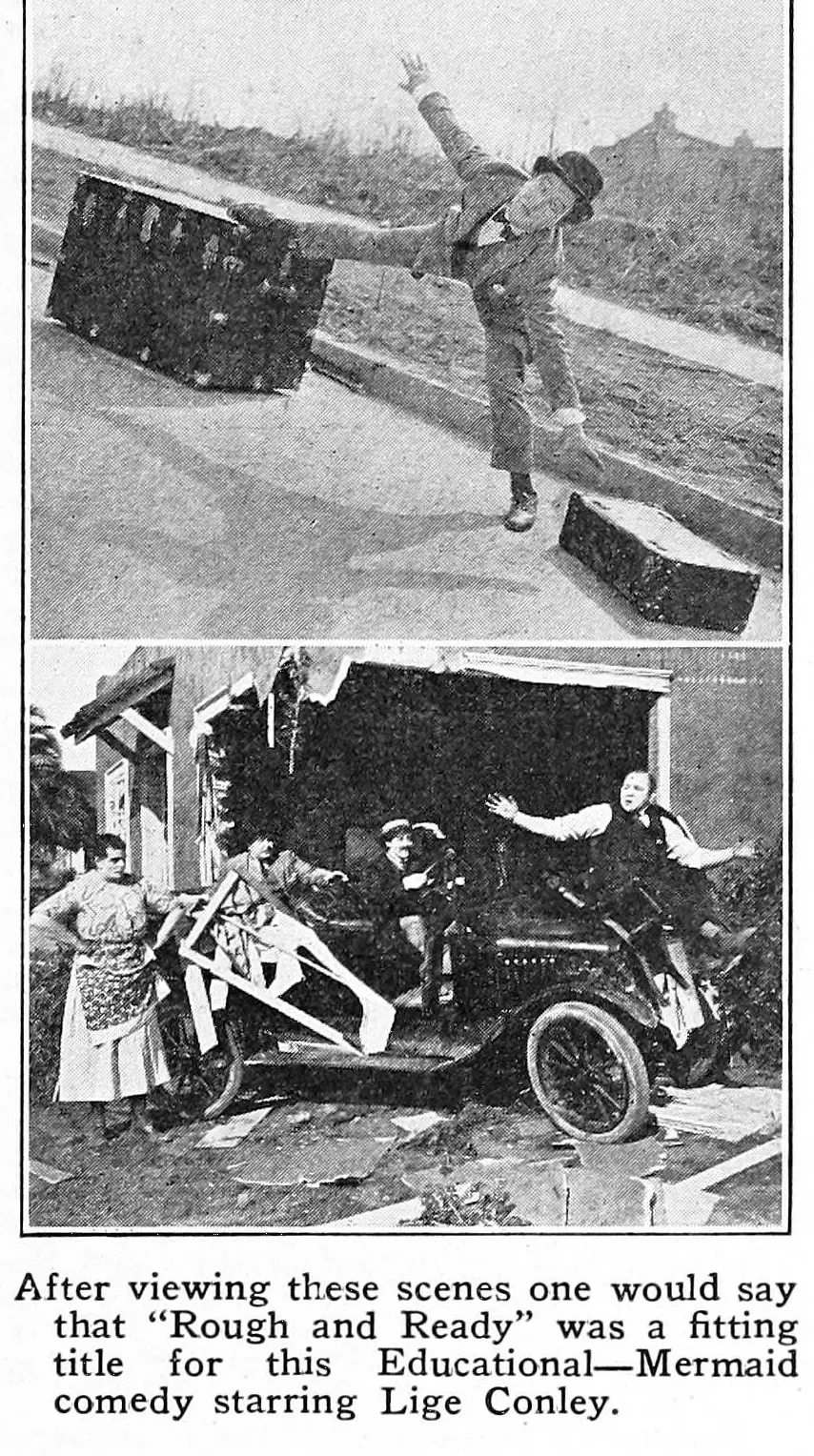
Silent cinema, particularly its comedic output, often feels like a foreign land to contemporary audiences. Yet, within that seemingly distant landscape lies a raw, visceral appeal that few modern films dare to emulate. Rough and Ready, a product of this vibrant era, plunges us headfirst into a world where logic takes a backseat to laughter, and property damage is merely a means to an end. It’s a film that doesn’t just show you chaos; it invites you to revel in it, to find the humor in every shattered windshield and crumpled fender.
The premise is deceptively simple: Lige, an everyman perpetually on the brink of disaster, gets a job at an automotive school. The genius, if one can call it that, lies in the execution. This isn't subtle humor. This is the comedy of escalation, a snowballing series of unfortunate events, all stemming from Lige's well-meaning but utterly incompetent attempts to teach a young woman how to drive. It’s a classic setup that has been revisited countless times, from The Scarecrow to modern sitcoms, yet here it feels fresh, infused with the specific energy of its time.
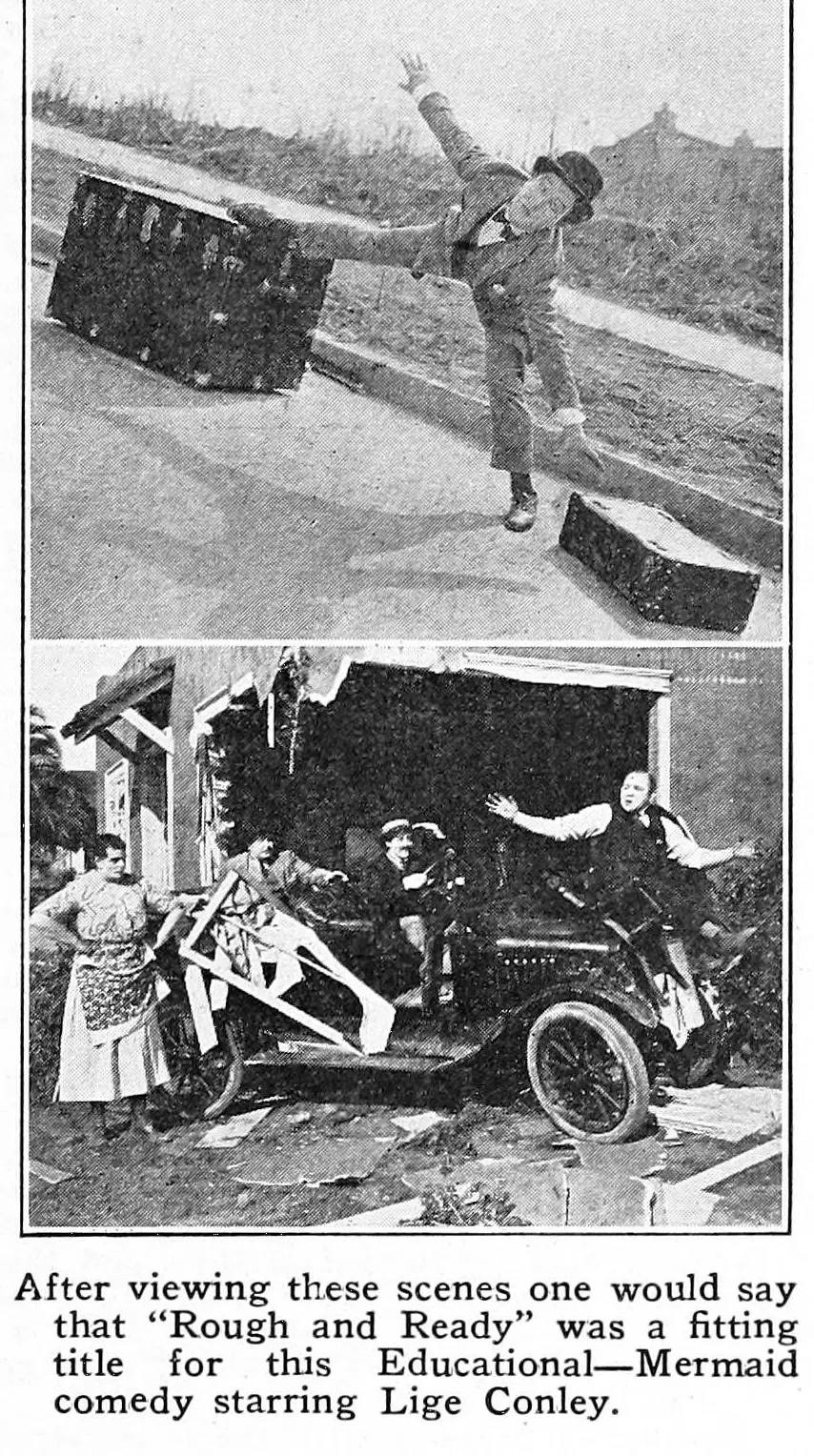
The film’s true strength lies in its relentless pace and commitment to visual gags. There’s hardly a moment’s pause between one near-catastrophe and the next. This isn’t a film that asks you to think deeply; it asks you to laugh loudly. And for the most part, it succeeds. The sheer audacity of the destruction, all practical and captured on film, is genuinely impressive for 1925. It’s a testament to an era where special effects meant carefully orchestrated real-world mayhem, a stark contrast to the CGI-laden spectacles of today.
Lige Conley, the central figure in Rough and Ready, is a name that doesn't often grace the same conversations as Chaplin, Keaton, or Lloyd. Yet, his performance here suggests a performer of considerable talent, a live wire whose energy crackles through the black and white frames. Conley embodies a particular brand of silent comedian – less the melancholic poet of Chaplin, and certainly not the stone-faced stoicism of Keaton, but rather a manic, almost unhinged force of nature.
His physicality is remarkable. He throws himself into every stunt, every pratfall, every near-miss with an abandon that is both hilarious and slightly alarming. When he’s trying to instruct his student, his body language speaks volumes: the exasperated gestures, the wide-eyed panic, the frantic attempts to regain control that only ever lead to further chaos. There's a particular sequence where he demonstrates a maneuver, only to immediately crash, his expression a perfect blend of surprise and resignation.
Conley's comedic persona is less about character depth and more about pure, unadulterated comedic energy. He is a walking, talking (or rather, gesturing) engine of destruction, a man whose very presence seems to invite catastrophe. While he might not have achieved the enduring icon status of his peers, films like Rough and Ready make a strong case for his place in the pantheon of early comedic talents. He delivers a performance that, while broad, is undeniably effective and captivating.
One could argue that Conley's lack of a distinct, recurring character, unlike Chaplin's Tramp or Keaton's Great Stone Face, might have hindered his long-term legacy. He was a chameleon of chaos, perhaps, but without a signature hat or a specific set of mannerisms, his individual brilliance sometimes gets lost in the broader history of silent film. This film, however, serves as a potent reminder of what he brought to the screen: a raw, untamed comedic spirit that was genuinely unique.
The direction of Rough and Ready, while not groundbreaking in its cinematic language, is highly effective in serving its primary purpose: delivering laughs. The unnamed director (as writers are not credited, it's fair to assume a collaborative, less auteur-driven process common in shorts of this era) understands the mechanics of slapstick. Gags are meticulously set up, even if the payoff is always pure, unadulterated chaos.
The pacing of the gags is particularly noteworthy. There's little wasted time. The film moves from one destructive set piece to the next with an almost machine-gun rapidity. This choice keeps the audience engaged, preventing any lulls in the comedic momentum. Consider the scene where the car careens through a fence, then into a building – it’s a rapid succession of impacts, each one building on the last, culminating in a final, glorious wreck. This isn't just random destruction; it's carefully choreographed anarchy.

Cinematography, while basic by today's standards, is functional and clear. The camera is largely static, allowing the physical comedy and practical stunts to take center stage. There are no fancy tracking shots or complex angles; the focus is on capturing the action clearly, ensuring the audience sees every crumpled fender and every bewildered expression. This simplicity is, in itself, a strength. It allows the viewer to focus entirely on the performers and the gags, unburdened by stylistic flourishes that might distract.
The use of practical effects is, of course, the star of the show here. The destruction of cars and property is real, lending an authenticity to the mayhem that CGI can sometimes struggle to replicate. The sight of a real car being smashed, or a wall being breached, has an undeniable impact. It speaks to a different kind of filmmaking, one where the physical world itself was the primary special effect. It’s a refreshing change from the often weightless feel of modern action sequences.
The pacing of Rough and Ready is, to put it mildly, relentless. This is a film that wastes no time on exposition or character development beyond the bare minimum required to set up the next gag. From the moment Lige is ejected from his boarding house, the film accelerates, much like the out-of-control vehicles he attempts to tame. This breakneck speed is characteristic of many silent shorts, designed to deliver maximum comedic impact in a condensed timeframe.
The tone is one of pure, unadulterated farce. There are no emotional undertones, no moments of introspection. It's a world where consequences are fleeting, and the primary goal is always the next laugh. This singular focus can be both its greatest strength and its most significant limitation. For those seeking a light, escapist experience, the film delivers precisely that. For others, the lack of narrative depth might feel hollow after a while.
It’s a peculiar form of escapism, one where the audience is invited to laugh at the misfortune of others, at the destruction of property, and at the sheer incompetence of the protagonist. Yet, there's a charming innocence to it, a sense that no real harm is done, despite the visual evidence. The film exists in a comedic bubble, untouched by realism, driven solely by the mechanics of the gag. It works. But it’s flawed.
This approach to storytelling, or rather, gag-telling, requires a different kind of engagement from the audience. It’s less about following a coherent plot and more about appreciating the ingenuity (or lack thereof) of each comedic setup. The film doesn't build to a grand climax; it simply builds from one instance of vehicular mayhem to another, until it abruptly concludes, leaving a trail of wreckage and a lingering smile.
Yes, Rough and Ready is absolutely worth watching today for specific audiences. This silent short offers a valuable historical perspective on early cinematic comedy. It showcases the raw talent of Lige Conley, whose energetic performance is genuinely captivating. The practical stunts and escalating destruction are impressive for their era. It provides a unique window into the humor and filmmaking techniques of the 1920s. However, casual viewers might find its lack of narrative depth challenging. It's best enjoyed by silent film enthusiasts, film historians, and fans of pure physical slapstick.
Rough and Ready is a charming, if slight, piece of silent film history that showcases the boundless energy of Lige Conley. It's a testament to the raw, unrefined power of physical comedy, driven by impressive practical stunts and a relentless pace. While it undeniably lacks the narrative sophistication or emotional resonance of the era's true giants like Chaplin or Keaton, it offers a pure, unadulterated dose of slapstick fun.
For those willing to set aside modern expectations and embrace the chaotic spirit of early cinema, this film is a delightful diversion. It's not a film that will change your life or provoke deep thought, but it will certainly elicit a few genuine laughs and offer a valuable glimpse into a bygone era of filmmaking. It's a film for the curious, for the historian, and for anyone who appreciates the simple joy of watching things spectacularly fall apart. It’s a worthwhile watch, provided you know exactly what you’re signing up for.

IMDb —
1920
Community
Log in to comment.