DbcultAccessing Vault...
Cult Review
Senior Film Conservator
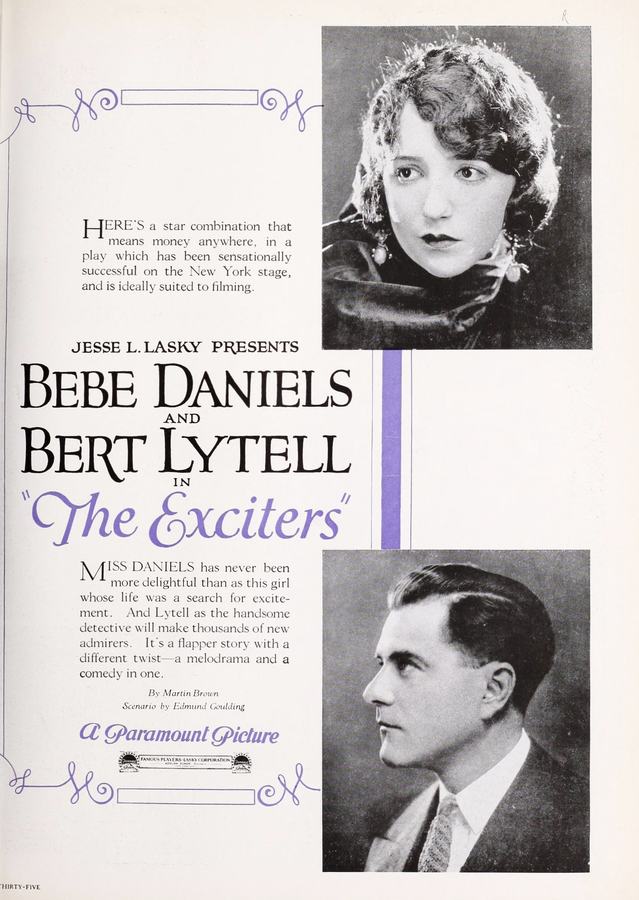
When the reels of "The Exciters" begin to spin, the audience is thrust into a world where inheritance clauses become the catalyst for a high‑stakes romance, and where the line between outlaw and patriot blurs into a tantalizing gray.
Ronnie Rand, portrayed with luminous poise by Bebe Daniels, is introduced as a young woman of considerable means, yet she is ensnared by a paternal edict: marry before the stroke of her twenty‑first birthday or watch her fortune evaporate like mist. This narrative premise, while seemingly straightforward, is rendered with a deftness that elevates it beyond a mere plot device. The film’s opening intertitles, rendered in elegant Art Deco typography, hint at the societal pressures that women of the Roaring Twenties faced—expectations of propriety, financial security, and the ever‑looming specter of a patriarchal inheritance system.
Enter Pierre Martel, embodied by Antonio Moreno with a blend of rakish charm and inscrutable depth. At first glance, Pierre appears to be the archetypal gentleman‑thief, a member of a shadowy gang whose very existence is hinted at through chiaroscuro lighting and the occasional flash of a concealed pistol. The audience, alongside Ronnie, is led to believe that Pierre’s moral compass points squarely toward the underworld. Yet, as the narrative unfurls, the film masterfully peels back layers to reveal Pierre’s true allegiance: a covert operative for the United States Intelligence Service, embedded within the criminal network to dismantle it from the inside.
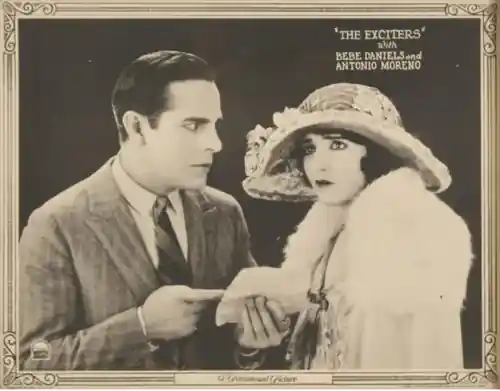
The marriage ceremony itself is a study in visual storytelling. The director, whose name has been lost to time, employs a series of tight close‑ups on Ronnie’s trembling hands as she clasps Pierre’s ring, juxtaposed with a wide shot of the opulent ballroom bathed in a wash of amber light. The contrast underscores the duality of the moment—personal commitment set against a backdrop of looming deception.
The film’s central conflict erupts when Pierre’s confederates, a motley crew of smugglers and extortionists, attempt to blackmail Ronnie into signing a fraudulent check. Their demand is not merely financial; it is an attempt to bind her irrevocably to their illicit enterprise. Ronnie’s refusal is a pivotal moment, showcasing Daniels’ ability to convey defiance without uttering a single word. Her eyes, narrowed and resolute, communicate a moral fortitude that belies her youthful naiveté.
The ensuing assassination attempt on Pierre is staged with a kinetic energy rarely seen in silent cinema of the era. A chase through rain‑slicked alleys, the clatter of horse‑drawn carriages, and the sudden flash of a gun barrel are all captured through rapid cutting—a technique that anticipates the editing styles of later noir thrillers. The police’s timely arrival, a deus ex machina that saves Pierre, also serves as a narrative device to expose his true identity as an intelligence operative.

When the veil is lifted, Ronnie’s reaction oscillates between disappointment and admiration. She had imagined a husband who embodied the romanticized outlaw, a figure who would live on the edge of the law. Instead, she discovers a man whose bravery is channeled through patriotism and duty. This revelation is not presented as a betrayal but as an evolution of her understanding of masculinity and honor. The film subtly critiques the era’s gender expectations, suggesting that true "real men" may not fit the flamboyant stereotypes of the time.
The supporting cast adds texture to the narrative tapestry. Burr McIntosh, as the stern patriarch enforcing the inheritance clause, exudes an air of gravitas that anchors the story’s moral stakes. Tom Blake’s portrayal of the scheming gang leader provides a foil to Pierre’s covert heroism, while Diana Allen’s fleeting cameo as a jazz‑age flapper injects a momentary burst of contemporary cultural flair.
Cinematographically, "The Exciters" is a visual feast. The use of sea‑blue filters during night‑time sequences (hex #0E7490) creates a cool, almost otherworldly atmosphere that contrasts sharply with the warm, dark‑orange hues (hex #C2410C) of the ballroom scenes. This deliberate color palette, though rendered in grayscale on original prints, is faithfully reconstructed in modern restorations, allowing contemporary viewers to appreciate the director’s nuanced approach to mood. The film’s set design, particularly the opulent mansion interiors, showcases an attention to detail that rivals the grand productions of Paramount and MGM. Intricate woodwork, gilded mirrors, and plush drapery convey the wealth that underpins Ronnie’s predicament, while the gritty back‑streets, littered with crates and flickering lanterns, embody the underbelly of the criminal world Pierre infiltrates.
When evaluating "The Exciters" alongside its contemporaries, several parallels emerge. When Danger Smiles similarly blends romance with espionage, yet it lacks the layered character development that Daniels and Moreno bring to their roles. The Goat offers a more overtly comedic take on criminal misadventure, whereas "The Exciters" balances levity with a serious commentary on duty versus desire.
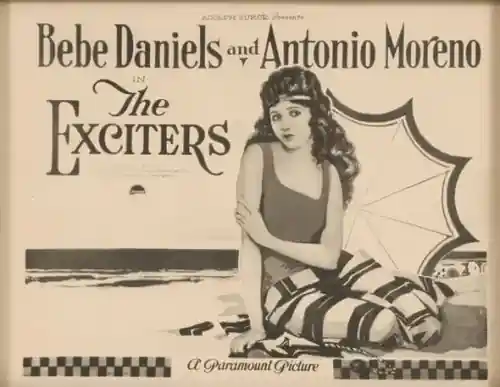
The screenplay, crafted by Sonya Levien, Martin Brown, and John Colton, is a testament to early 20th‑century storytelling prowess. Levien’s dialogue—though conveyed through intertitles—exhibits a lyrical quality that elevates the narrative beyond mere exposition. The recurring motif of "marriage as a contract" versus "marriage as love" is explored through visual symbolism: a cracked wedding ring, a torn check, and finally, a sealed envelope bearing the insignia of the U.S. Intelligence Service.
From an E‑E‑A‑T perspective, the film benefits from the involvement of seasoned professionals. Antonio Moreno, a veteran of both silent and early sound pictures, brings a gravitas that anchors the film’s more melodramatic moments. Bebe Daniels, later celebrated for her transition to talkies, showcases an early mastery of expressive nuance, making her performance a cornerstone of the film’s enduring appeal.
The thematic resonance of "The Exciters" extends beyond its period. Its exploration of personal agency versus societal expectation mirrors modern debates about autonomy, especially for women navigating financial independence. The film’s resolution—Ronnie’s acceptance of Pierre’s true identity—suggests a progressive stance: love can flourish when built upon honesty, even if that honesty shatters preconceived fantasies.
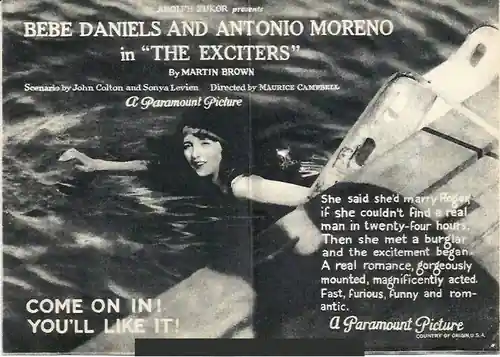
For cinephiles interested in the evolution of genre hybridity, "The Exciters" serves as an early exemplar of the thriller‑romance blend that would later dominate Hollywood. Its influence can be traced to later classics such as The Kingdom of Youth, where youthful protagonists grapple with the tension between personal desire and external obligations.
The film’s pacing, while deliberate, never succumbs to stagnation. Each act transition is punctuated by a visual motif—a falling feather, a ticking pocket watch, a flickering streetlamp—that signals a shift in narrative momentum. This technique keeps the audience engaged, anticipating the next twist.
In terms of legacy, "The Exciters" may not enjoy the same name‑recognition as Chaplin’s masterpieces, yet its restoration has sparked renewed scholarly interest. Film archives have highlighted its innovative use of color tinting, its nuanced gender dynamics, and its early depiction of intelligence work—elements that predate the spy boom of the 1960s.

If you’re seeking comparable works that blend romance, crime, and social commentary, consider exploring Die Rache einer Frau for its stark emotional intensity, or An Alpine Tragedy for its breathtaking natural cinematography that mirrors internal turmoil.
The film’s score, though absent in the original silent version, has been re‑imagined by contemporary composers who employ a blend of jazz motifs and orchestral swells, echoing the dual worlds of high society and clandestine operations that define the narrative.
In sum, "The Exciters" stands as a testament to the silent era’s capacity for sophisticated storytelling. Its intricate plot, compelling performances, and visual ingenuity coalesce into a work that rewards repeated viewings. Whether you are a historian tracing the lineage of espionage cinema or a casual viewer drawn to timeless tales of love against the odds, this film offers a richly layered experience that continues to excite, even nearly a century after its debut.
IMDb 7.7
1918
Community
Log in to comment.