DbcultAccessing Vault...
5.6/10
Senior Film Conservator
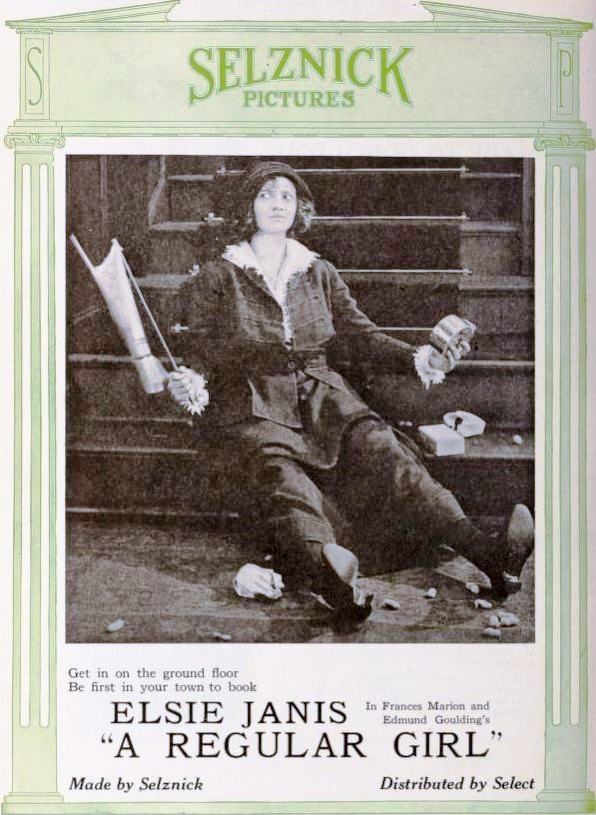
A definitive 5.6/10 rating for a film that redefined the boundaries of cult cinema. A Regular Girl remains a cornerstone of transgressive art.
The year 1919 represented a seismic epoch in American cinema, a period where the industry grappled with the collective trauma of the Great War and the burgeoning demands of a modernizing society. A Regular Girl, directed by James Young and penned by the formidable duo of Edmund Goulding and Frances Marion, stands as a fascinating artifact of this transition. It is not merely a vehicle for the irrepressible Elsie Janis—known affectionately as the 'Sweetheart of the A.E.F.'—but a surprisingly nuanced exploration of class elasticity and the moral obligations of the elite. While many contemporary films like The Wolf focused on rugged frontier archetypes, Janis’s project turns its gaze inward, toward the urban centers where the returning soldier became a symbol of both pride and societal neglect.
Elsie Janis was a performer of singular magnetism, a vaudevillian powerhouse whose real-life dedication to entertaining troops in France lent her portrayal of Elizabeth Schuyler a layer of authenticity that transcends silent era histrionics. The film opens with a portrait of Elizabeth as the quintessential 'poor little rich girl,' a trope common in the era but handled here with a certain kinetic restlessness. Her initial frivolity is portrayed not as malice, but as a lack of direction. This mirrors the thematic undercurrents found in The Serpent's Tooth, where the fragility of social standing is constantly under threat by personal growth or moral failure.
When the war intervenes, the film shifts its visual palette. The opulence of the Schuyler estate is replaced by the stark, utilitarian aesthetic of the field hospital. It is here that the narrative earns its emotional stripes. Elizabeth’s transition from a woman who demands service to one who provides it is the crux of the film’s moral argument. Unlike the more static characterizations in Hulda from Holland, Elizabeth’s evolution is born of grit and blood. She returns to the United States not as a victor, but as a witness to the profound dislocation of the American serviceman.
The second act of A Regular Girl introduces a plot device that was a staple of the period: the high-born lady in disguise. To win a wager from her skeptical father—a man who believes charity is a hobby rather than a vocation—Elizabeth must raise $10,000 by her own hand. Her decision to pose as a 'slavey' at Mrs. Murphy’s boarding house is where the film finds its heart and its humor. The boarding house serves as a microcosm of post-war America, filled with men whose medals provide no currency in the labor market. This social masquerade reminds one of the narrative tensions in The Princess of Patches, though Janis brings a more athletic, comedic energy to the role.
The interactions between the 'slavey' and the veterans are played with a delicate balance of pathos and camaraderie. Janis avoids the pitfalls of condescension, portraying Elizabeth as a woman genuinely invigorated by the honesty of labor. The cinematography in these sequences captures the cramped, soot-stained reality of the working class, providing a sharp contrast to the airy, sun-drenched frames of her previous life. It is a visual dialogue between the 'haves' and the 'have-nots' that feels remarkably modern, echoing the socio-economic anxieties explored in Shifting Sands.
The film’s crescendo—a charity circus—is a masterstroke of integration, allowing Elsie Janis to showcase her actual physical talents. This isn't just a plot point; it’s a meta-textual celebration of the actress herself. Performing bareback stunts and equestrian feats, Janis bridges the gap between the character’s mission and the audience’s desire for spectacle. In an era where stunt doubles were becoming more common, Janis’s insistence on performing her own feats adds a layer of 'Regular Girl' authenticity that the title promises. This sequence is far more than mere fluff; it represents the mobilization of the community. The veterans she befriended become her troupe, turning their collective skills into a revenue stream for their own salvation.
The sheer scale of the circus production provides a visual feast that rivals the atmospheric tension of European imports like The Eyes of the Mummy, though the tone here is one of exuberant optimism rather than Gothic dread. The energy is infectious, and the resolution—Elizabeth winning her father’s respect and the funds to open a vocational office—feels earned rather than gifted. It is a triumph of the will that resonates with the same spirit of youthful determination found in Historien om en gut.
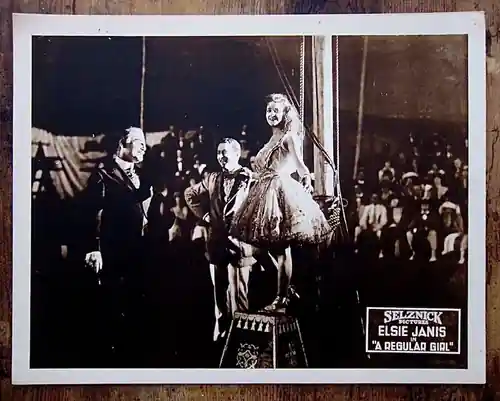
The screenplay by Frances Marion and Edmund Goulding is the secret weapon of A Regular Girl. Marion, the highest-paid screenwriter of her time, had an uncanny ability to write female characters who were both vulnerable and indomitable. Goulding, who would later go on to direct Grand Hotel, brings a sense of structural elegance to the narrative. Together, they weave a story that avoids the mawkish sentimentality often found in films like Her Purchase Price. Instead, they focus on the pragmatic reality of the post-war world. The dialogue (conveyed via intertitles) is sharp, witty, and devoid of the stilted prose that plagued many silent dramas.
The supporting cast, including Matt Moore and L. Rogers Lytton, provides a solid foundation for Janis’s pyrotechnics. Moore, in particular, offers a grounded romantic interest that doesn't overshadow the central theme of female agency. The chemistry between the leads is understated, allowing the film’s social message to remain the primary focus. This is a far cry from the melodramatic entanglements of Infidelity, where personal scandals drive the plot. Here, the 'scandal' is the systemic failure to care for those who served.
Viewing A Regular Girl through a contemporary lens, one is struck by its prescience. The 'returning soldier' narrative would become a staple of cinema for decades to come, but Janis and her team were among the first to tackle it with such directness. The film’s aesthetic choices, from the gritty realism of the boarding house to the grandiose circus finale, showcase a sophisticated understanding of visual storytelling. While it may lack the haunting psychological depth of Der Märtyrer seines Herzens, it compensates with a vibrant, quintessentially American vitality.
The film also serves as a poignant reminder of the ephemeral nature of silent film stardom. Elsie Janis was a titan of her era, yet her cinematic output was relatively small compared to her stage career. A Regular Girl is perhaps the best preservation of her unique aura—a blend of tomboyish athleticism and sophisticated grace. It is a performance that feels less like acting and more like an extension of her own philanthropic spirit. In this regard, it shares a certain spiritual DNA with Cavanaugh of the Forest Rangers, where the protagonist’s worth is measured by their service to the greater good.
Technically, the film is a testament to the proficiency of the 1919 studio system. The lighting in the boarding house sequences utilizes low-key shadows to suggest a world of limited opportunity, while the Schuyler mansion is bathed in a high-key, almost ethereal glow. This visual dichotomy reinforces the class themes without requiring a single word of exposition. The editing, particularly during the circus climax, is rhythmic and propulsive, creating a sense of mounting excitement that was quite advanced for its time. It lacks the experimental flair of something like Die Königstochter von Travankore, but its classicism is its strength, ensuring the story remains accessible and emotionally resonant.
Furthermore, the film’s depiction of the 'slavey'—a character type often used for cheap laughs—is handled with a surprising amount of dignity. Elizabeth’s labor is not a joke; it is a transformative experience. This elevates the film above the standard 'socialite-goes-slumming' narrative. It is a story of genuine reintegration, both for the men returning from the front and for the woman who found her soul in the process. The film’s ending, while predictably happy, feels like a call to action for its 1919 audience, urging a more compassionate approach to the post-war reality.
In the final analysis, A Regular Girl is a triumph of populist filmmaking with a conscience. It manages to be entertaining, spectacular, and socially relevant all at once. Elsie Janis gives a performance for the ages, proving that she was far more than a wartime mascot; she was a cinematic presence of considerable weight. While the film may be overshadowed in the history books by more avant-garde works or the epic dramas of Griffith, it remains a vital piece of the silent era puzzle. It captures a specific moment in time—a moment of hope, struggle, and the enduring belief that one person, even a 'regular girl,' can effect change. For those looking to understand the intersection of celebrity, war, and social reform in early cinema, this film is an essential watch, standing tall alongside other period explorations like The Bird of Prey or the dramatic weight of Le torrent.
Ultimately, the legacy of A Regular Girl is its refusal to be cynical. In a world currently obsessed with deconstruction, there is something profoundly refreshing about a film that believes in the possibility of redemption through service. It is a bright, shining example of the power of the medium to not only reflect society but to offer a blueprint for its improvement. Whether you are a scholar of silent film or a casual viewer, the charm and conviction of Elizabeth Schuyler’s journey will linger long after the final iris-out.
IMDb —
1924
Community
Log in to comment.