DbcultAccessing Vault...
Cult Review
Senior Film Conservator
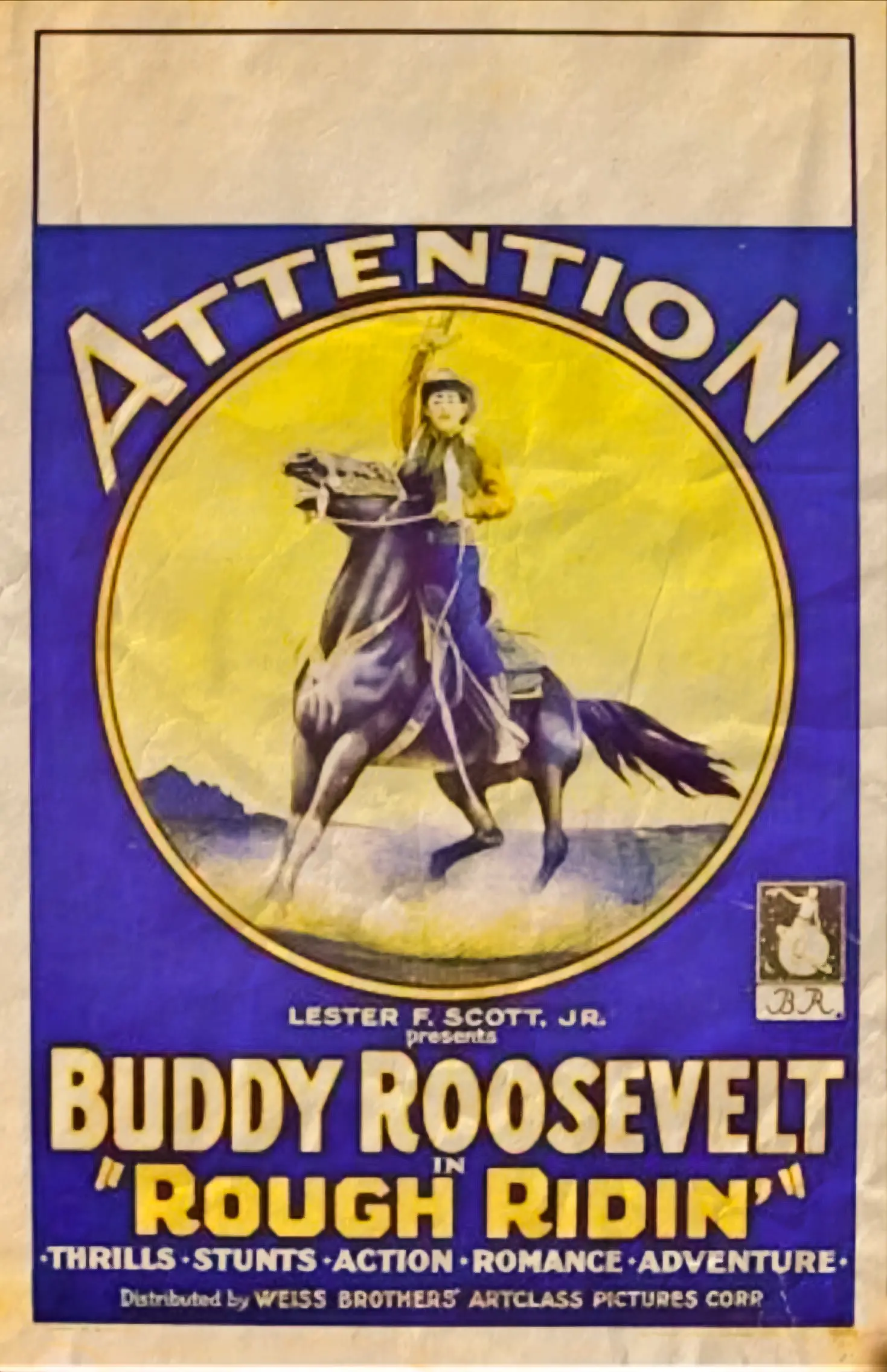
The 1920s represented a feverish zenith for the American Western, a period where the silent screen was not merely a medium of entertainment but a sprawling canvas for the construction of national mythos. In this landscape, Rough Ridin' (1924) emerges as a fascinating specimen of the 'B-Western' lineage, a film that prioritizes kinetic energy and moral rectitude over the burgeoning psychological complexity of its contemporaries. Directed with a steady, if utilitarian, hand by Richard Thorpe—who also appears in the film as the framed brother, Dick Ross—the production serves as a showcase for Buddy Roosevelt, a performer whose transition from stuntman to leading man infused the genre with a palpable, unvarnished physicality.
The narrative architecture, penned by the prolific duo of Betty Burbridge and Margaret M. Harris, adheres to the established tropes of the era while managing to maintain a tension that feels surprisingly modern. We find ourselves on a ranch where the air is thick with the scent of sagebrush and suspicion. The antagonist, Jack Wells (played with a sneering, mustache-twirling efficacy by Joe Rickson), is the quintessential serpent in the garden. As the foreman, he occupies a position of trust which he systematically dismantles to frame the innocent Dick Ross. This setup, while perhaps formulaic to the cynical modern eye, functioned in 1924 as a vital exploration of the fragility of reputation in a lawless land.
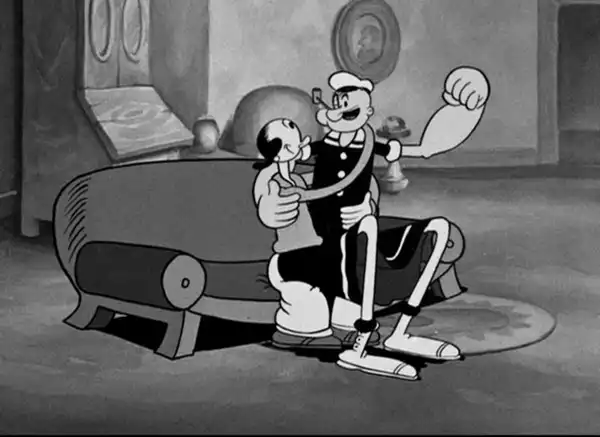
Buddy Roosevelt, born Kenneth Sanderson, brought a raw, equestrian-focused charisma to the screen that differed significantly from the more polished personas of stars like William S. Hart or even the early Tom Mix. In Rough Ridin', Roosevelt’s performance is defined by its lack of artifice. He doesn't just occupy the frame; he dominates it with a restless, muscular presence. When his character, Buddy Benson, sets out to clear the name of his sweetheart’s brother, the film transforms from a domestic drama into a high-octane pursuit. Unlike the more whimsical tone found in Jumping Beans, there is a grit here that anticipates the hard-boiled Westerns of the coming decades.
The chemistry between Roosevelt and Elsa Benham (playing Mary Ross) is understated, filtered through the restrictive social mores of the early 20th century. Benham provides a focal point for the film’s emotional stakes, her performance characterized by a quiet resilience that elevates the 'damsel in distress' trope into something more akin to a partner in the struggle for justice. It is her faith in her brother and her suitor that drives the plot forward, acting as the moral compass for Benson’s physical interventions.
To fully appreciate the nuances of Rough Ridin', one must view it against the backdrop of its peers. While John Ford was already experimenting with expansive vistas and communal themes in works like Bucking Broadway, Thorpe’s film remains more localized, more intimate in its stakes. It shares a certain thematic DNA with The Blue Streak, particularly in its emphasis on speed and the technological transition of the West, though 'Rough Ridin'' feels more anchored in the traditional dirt and leather of the ranching life.
Consider also the contrast with international fare of the time, such as the Japanese period pieces like Iwami Jûtarô. While the latter focuses on the rigid codes of the samurai, the American Western—and Rough Ridin' specifically—celebrates the rugged individualist. Buddy Benson is not bound by a lord or a legacy; he is bound by his own internal sense of right and wrong. This democratization of the hero was a powerful draw for audiences of the 1920s, offering a vision of justice that was accessible and earned through sweat and lead.
The cinematography in Rough Ridin', though uncredited in many archival records, displays a sophisticated understanding of depth and movement. The chase sequences are particularly noteworthy, utilizing the natural topography to create a sense of peril. The camera often sits low to the ground, capturing the thundering hooves in a way that feels visceral, almost tactile. This is a far cry from the static stage-bound feeling of earlier silents like The Discard.
Furthermore, the editing rhythm reflects the screenplay's urgency. Burbridge and Harris were masters of the 'scenario,' and their ability to weave multiple threads—the frame-up, the romantic tension, and the final confrontation—is evident in the film's brisk pacing. There is very little 'fat' on this narrative bone. Every scene serves to either heighten the villainy of Wells or demonstrate the prowess of Benson. This lean storytelling style is something that would later define the works of directors like Thorpe as they moved into the sound era, where efficiency became a hallmark of the studio system.
Joe Rickson’s Jack Wells is a masterclass in silent film villainy. Without the benefit of dialogue to convey his treachery, Rickson relies on micro-expressions and a predatory body language. He looms over the other characters, his presence a constant shadow over the Ross family’s prosperity. In many ways, he represents the encroaching corruption that the Western genre often warned against—the internal threat that is far more dangerous than any external force. This theme of the 'enemy within' is a recurring motif in silent drama, seen in varied forms in films like The Brute Breaker.
The resolution of the conflict in Rough Ridin' is satisfyingly physical. It isn't a courtroom drama; it is a showdown. The catharsis comes from the direct confrontation between Benson and Wells, a purging of the ranch’s moral rot through action. This reliance on the 'trial by combat' is a cornerstone of the genre, providing a clarity that audiences found deeply resonant in an increasingly complex post-war world.
While Rough Ridin' may not be whispered in the same breath as 'The Iron Horse' or 'The Covered Wagon,' its value lies in its representation of the 'everyday' cinema of the 1920s. It is a workhorse of a film, sturdy and reliable. It reflects the era's obsession with the 'Go-Getter' spirit, a theme explored in different contexts in A Yankee Go-Getter. Buddy Roosevelt’s Benson is the ultimate go-getter, a man who doesn't wait for permission to do the right thing.
The film also serves as an early indicator of Richard Thorpe's versatility. Before he was directing mammoth MGM productions, he was here, in the trenches of the silent Western, learning the mechanics of suspense and the visual language of the hero's journey. His dual role as actor and director in this period was not uncommon, yet in Rough Ridin', he demonstrates a keen eye for the genre's essential elements. The film avoids the melodramatic excesses of Les frères corses or the social realism of Dzhymmi Hihhins, opting instead for a purity of purpose that remains its greatest strength.
In the final analysis, Rough Ridin' is a vibrant, dusty, and thoroughly engaging artifact. It captures a moment in time when the Western was still discovering its boundaries, and when stars like Buddy Roosevelt were literalizing the American dream through feats of daring-do. It is a film that demands to be seen not just as a relic, but as a living piece of cinematic history, full of the same grit and determination that defined the characters it portrayed. Whether compared to the lightheartedness of Beach Nuts or the domestic comedy of Why Smith Left Home, Rough Ridin' stands tall as a quintessential example of the silent Western’s enduring power.
IMDb 4
1924
Community
Log in to comment.