DbcultAccessing Vault...
Cult Review
Senior Film Conservator
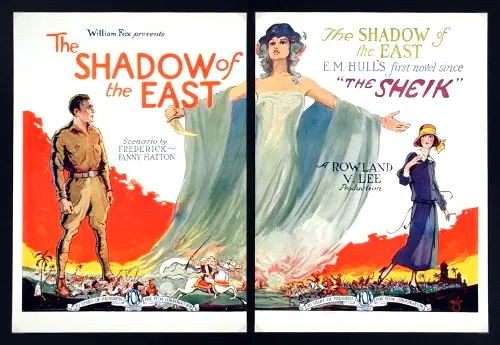
In the realm of silent cinema, 'The Shadow of the East' (1924) stands as a testament to the power of storytelling, boasting a narrative as intricate as it is captivating. Josef Swickard and Evelyn Brent star in this drama, which navigates the complexities of love, loyalty, and the supernatural, set against the exotic backdrops of India and Algeria.
The film commences with Barry Craven, played by Josef Swickard, reencountering his former sweetheart, Gillian Locke, portrayed by Evelyn Brent, in India. This chance meeting rekindles their long-lost love, but their happiness is contingent upon the resolution of Craven's complicated marital status. His native wife, Lolaire, takes her own life in a jealous rage, thereby freeing Craven to pursue a life with Gillian in England.
However, their union is short-lived, as Craven's life is once again entangled by the machinations of his Indian servant, Kunwar Singh, who casts a spell on Craven, driving him to abandon Gillian and embark on a journey to the Algerian desert. There, Craven reunites with Said, an old university friend and the son of an Algerian sheik, played by Norman Kerry. This pivotal moment marks the beginning of Craven's transformation, as he becomes increasingly entranced by the mystique of the East.
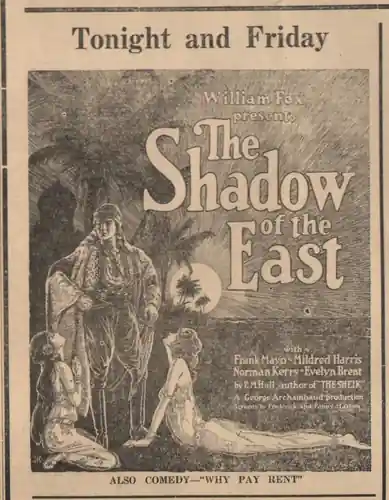
Gillian, resolute in her pursuit of Craven, follows him into the desert, where the fate of Kunwar Singh and the spell he cast become the focal points of a climactic confrontation. The demise of the servant results in the breaking of the spell, aptly referred to as 'The Shadow of the East,' thereby restoring Craven to his senses and allowing him to reconcile with Gillian.
The narrative of 'The Shadow of the East' is reminiscent of other films that explore themes of love, betrayal, and redemption, such as Put and Take and The Jungle Goddess. These films, though varying in their approach, collectively underscore the enduring appeal of stories that probe the depths of human emotion and the supernatural.
In terms of cinematography and production, 'The Shadow of the East' showcases the artistic ambitions of its creators, Edith Maude Hull, Frederic Hatton, and Fanny Hatton. The film's use of locales and settings adds to its visual allure, transporting viewers to the vibrant landscapes of India and the stark beauty of the Algerian desert.
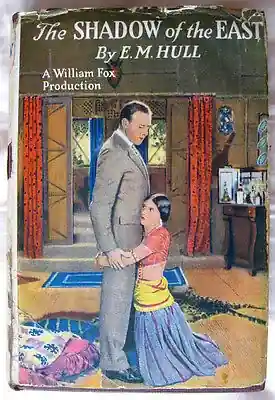
Upon comparison with contemporaneous films like Der Yoghi and The Beauty Shop, 'The Shadow of the East' distinguishes itself through its nuanced exploration of cultural and spiritual themes. The film's portrayal of the mystical and the unknown serves as a backdrop for exploring deeper questions of identity, loyalty, and the human condition.
The performances of the cast, including Swickard, Brent, and Norman Kerry, contribute significantly to the film's emotional resonance. Their portrayals imbue the narrative with a sense of authenticity, rendering the fantastical elements of the story all the more believable and engaging.
In conclusion, 'The Shadow of the East' is a mesmerizing tale that weaves together elements of romance, drama, and the supernatural. Its exploration of love, redemption, and the human condition, set against the rich tapestry of Indian and Algerian cultures, makes for a compelling cinematic experience. For those interested in the silent film era and the evolution of storytelling on screen, 'The Shadow of the East' is a must-view, offering insights into the artistic and thematic preoccupations of its time.
IMDb 5.5
1914
Community
Log in to comment.