DbcultAccessing Vault...
5.8/10
Senior Film Conservator
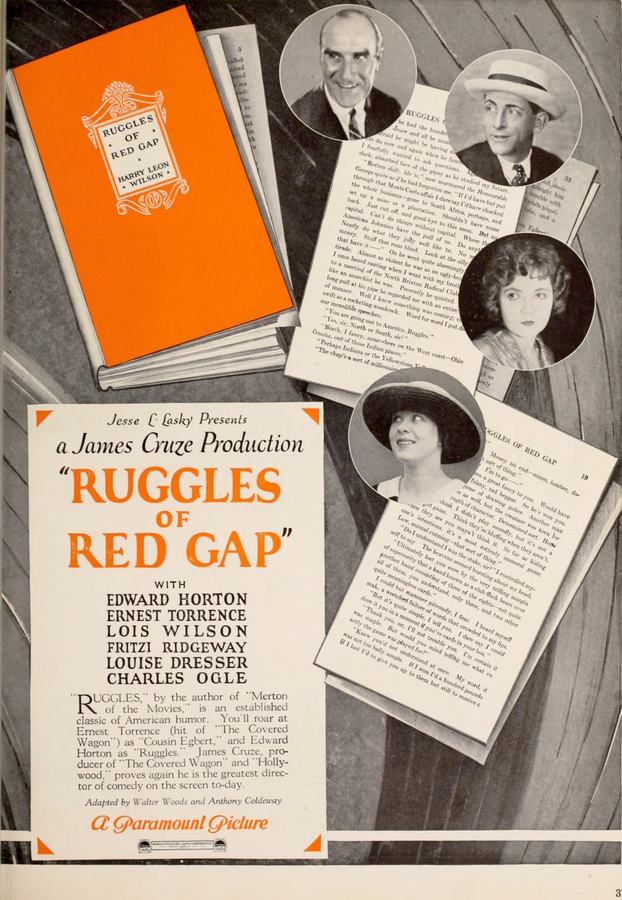
A definitive 5.8/10 rating for a film that redefined the boundaries of cult cinema. Ruggles of Red Gap remains a cornerstone of transgressive art.
The year 1923 was a pivotal moment in the evolution of cinematic grammar, a time when the silver screen began to move beyond mere spectacle toward a more nuanced exploration of identity and social mobility. Within this fertile landscape, the silent adaptation of Harry Leon Wilson's Ruggles of Red Gap emerges as a fascinating artifact of cultural collision. While many modern audiences are perhaps more familiar with the 1935 Charles Laughton vehicle, this earlier incarnation, featuring the incomparable Edward Everett Horton, offers a distinctively raw and visually inventive perspective on the 'fish out of water' archetype.
The film opens with a meticulous depiction of British aristocratic life, a world defined by static traditions and the invisible yet impenetrable walls of the class system. Marmaduke Ruggles is the personification of this environment—polished, efficient, and entirely devoid of personal ambition beyond the sphere of service. The Earl of Brinstead, played with a delightful nonchalance, treats Ruggles as an heirloom rather than a human being. When the Earl loses Ruggles in a game of chance to the Flouds, the sheer absurdity of the transaction highlights the dehumanizing nature of the European social order. This sequence serves as a stark contrast to the domestic dramas of the era, such as The Three of Us, where social standing is often tied to moral rectitude rather than mere luck of the draw.
As Ruggles is transported across the Atlantic, the visual language of the film shifts. The cramped, ornate interiors of London give way to the sprawling, untamed vistas of the American West. James Cruze, a director known for his epic sensibilities, treats the arrival of Ruggles in Red Gap not as a joke, but as a monumental clash of civilizations. The dusty streets and saloons of Washington state represent a chaotic freedom that Ruggles initially perceives as a descent into barbarism. It is here that the film begins to dissect the American psyche, contrasting the European obsession with the past against the American fixation on the future.
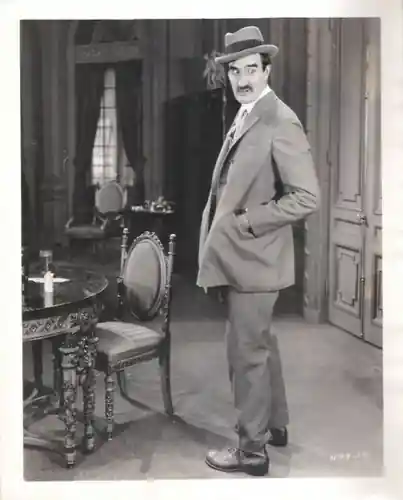
Edward Everett Horton’s performance is a masterclass in subtlety. In an era often characterized by histrionic gestures, Horton relies on the micro-expression. His Ruggles is a man whose internal world is constantly at war with his external training. Every time Egbert Floud, portrayed with infectious energy by Ernest Torrence, attempts to treat him as an equal, we see a flicker of terror in Ruggles’ eyes followed by a slow, agonizing realization that his 'betters' in America are anything but. This nuanced character work is far more sophisticated than the broad slapstick found in contemporary shorts like Golf, where physical comedy takes precedence over psychological depth.
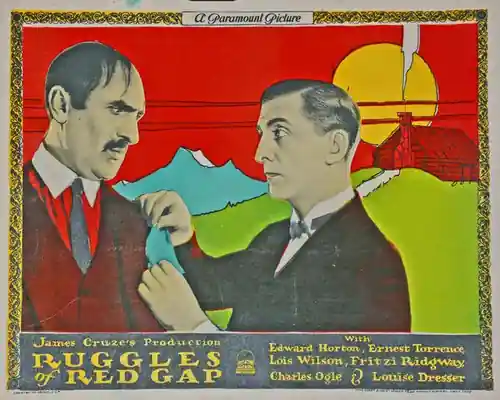
The supporting cast provides a vibrant tapestry of American life. Lillian Leighton as 'Ma' Pettingill and Fritzi Ridgeway as the social-climbing 'Cousin' Egbert’s wife offer a satirical look at the burgeoning middle class. They are the American counterparts to the British nobility, yet their authority is self-made and inherently fragile. The interaction between Ruggles and the Floud family creates a comedic friction that is both hilarious and deeply revealing of the insecurities inherent in the American project of the 1920s.
At its core, Ruggles of Red Gap is a meditation on the concept of 'liberty.' In the famous scene where Ruggles recites Lincoln's Gettysburg Address—a moment that remains powerful even in silence through the use of expressive intertitles—the film pivots from comedy to a profound political statement. Ruggles realizes that in this new world, his value is determined by his character rather than his lineage. This theme of self-actualization mirrors the struggles of characters in Poor But Honest, though Ruggles’ journey is complicated by his own ingrained subservience.
The cinematography captures the rugged beauty of the West with a sincerity that avoids the tropes of the typical Western. There are no outlaws or gunfights here; the conflict is entirely internal and social. The landscape is a character in itself, representing the vast, terrifying possibility of being 'nobody' in order to become 'somebody.' This transformation is not unlike the thematic weight found in The Flashlight, where the revelation of truth changes the protagonist's social standing irrevocably.
Cruze’s direction is remarkably modern for 1923. He utilizes cross-cutting to emphasize the distance between Ruggles’ old life and his new reality, and the pacing is brisk without sacrificing character development. The film avoids the pitfalls of being a mere stage adaptation, instead using the medium of film to expand on the sensory experience of the frontier. The use of lighting, particularly in the saloon scenes, creates a chiaroscuro effect that underscores the moral ambiguity of Ruggles’ transition. Unlike the often flat lighting of One of the Finest, the visual depth here suggests a world of complexity and hidden dangers.
The inclusion of 'Mister Barker the Dog' provides a touch of whimsy that grounds the more intellectual aspects of the plot. In silent cinema, animals often served as emotional barometers, and Barker’s presence highlights the genuine affection Ruggles begins to feel for his new environment. This domestic warmth is a far cry from the cold, transactional nature of his life in London, echoing the sentimental undercurrents of Bill's Baby.
Comparing this 1923 version to other international or contemporary works reveals its unique position. While Sukanya Savitri dealt with themes of devotion and duty within an Eastern framework, Ruggles of Red Gap examines the same concepts through the lens of Western individualism. The film challenges the viewer to question whether duty is a virtue or a cage. Similarly, the social critiques found in The Eleventh Commandment feel somewhat more rigid compared to the fluid, almost carnivalesque atmosphere of Red Gap.
As Ruggles eventually opens his own restaurant—the 'Anglo-American Grill'—the synthesis of his two identities is complete. He has not abandoned his British refinement; rather, he has repurposed it to serve his own interests. This act of entrepreneurship is the ultimate American gesture. It is a more optimistic resolution than the cautionary tales of Was She Justified?, where social transgressions often lead to ruin. Ruggles’ transgression—the act of stepping out of his place—leads to his salvation.
The film also touches on the absurdity of the American obsession with European status. The townspeople of Red Gap are desperate for Ruggles to be more than a valet; they want him to be a hero, a symbol of the very aristocracy they claim to have rejected. This irony is played for laughs, but it carries a sharp edge. The film suggests that while America may have abolished titles, it has not yet abolished the desire for them. This psychological complexity is reminiscent of the themes explored in Love Watches, where the performance of social roles often obscures the truth of human emotion.
In the final analysis, the 1923 Ruggles of Red Gap stands as a testament to the power of silent cinema to convey complex sociopolitical ideas through character and setting. It is a film that refuses to offer easy answers, choosing instead to celebrate the messy, contradictory process of becoming a new person in a new land. Whether it is the frantic energy of J-U-N-K or the stylized drama of Lotus Blossom, few films of the period managed to balance satire and sentiment as effectively as this one. It remains a vital piece of cinema history, a reminder that the struggle for identity is a universal story, whether told through the voice of a great orator or the silent, expressive face of a British valet in the heart of the American West.
The enduring appeal of the story, which would be adapted several more times, speaks to the fundamental truth at its center: the search for a place where one can truly belong. Ruggles finds that place not in the shadow of an Earl, but in the light of his own self-respect. It is a journey that continues to resonate, making this silent gem a must-watch for anyone interested in the roots of American cinematic storytelling and the timeless quest for personal freedom.
IMDb 5.6
1929
Community
Log in to comment.