DbcultAccessing Vault...
6.4/10
Senior Film Conservator
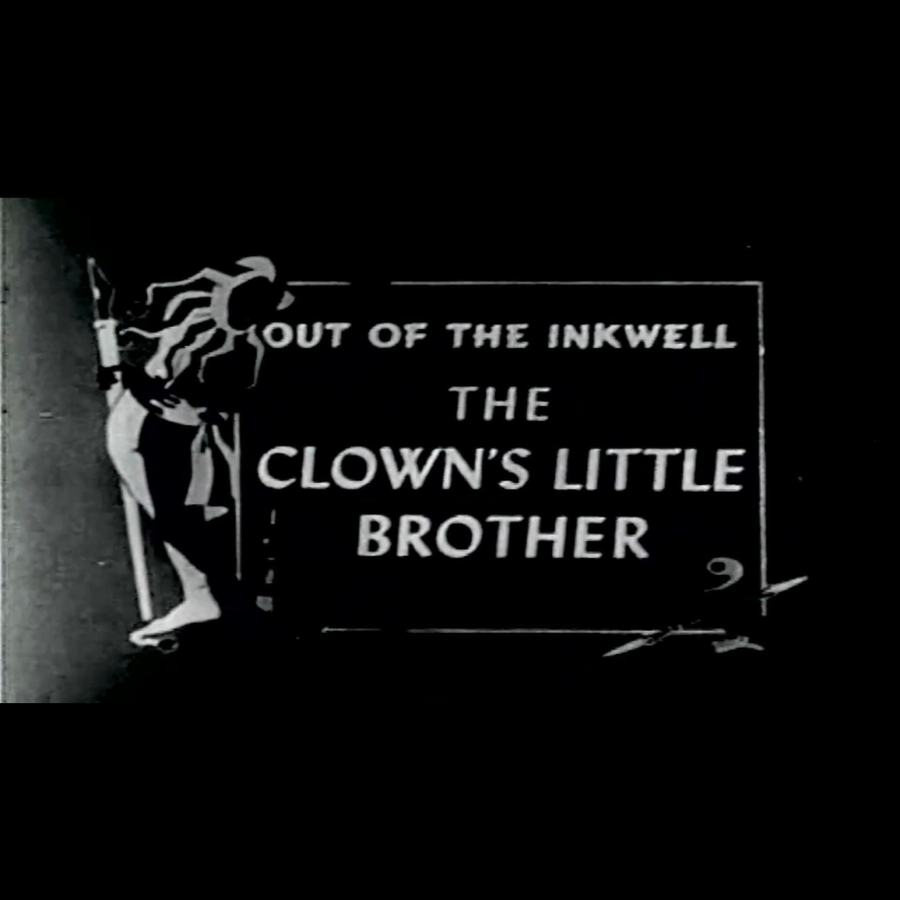
A definitive 6.4/10 rating for a film that redefined the boundaries of cult cinema. The Clown's Little Brother remains a cornerstone of transgressive art.
Max Fleischer never merely drew; he exorcised.
In The Clown’s Little Brother—a 1920 one-reeler that clocks in at a whisper over ten minutes—he stages a mutiny against the very grammar of cinema. The premise, deceptively infantile, sends Koko the Clown’s pocket-sized sibling on a studio tour that metastasizes into ontological terrorism. Yet within this jittery scrap of nitrate lies a Rosetta Stone for the entire Fleischer cosmology: the conviction that animation is not a genre but a controlled seizure, a séance where graphite ghosts needle the audience awake.
Fleischer’s ink is viscous, almost carnal; it drips like tarred honey and congeals into creatures that refuse taxonomic certainty. When the little brother bounds from Koko’s silhouette—literally torn from the elder like a Siamese twin of soot—the screen convulses with a stroboscopic hiccup. Frames drop, repeat, reverse. The soundtrack (a 21st-century addition, yet sympathetically anarchic) hiccups a Charleston in 7/8 time, as if Erik Satie had been locked inside a player-piano. Suddenly the studio backdrop becomes a pop-up book: an easel folds into an origami guillotine, a blotter blooms into a Rorschach lotus, and Max’s own hand—rendered in chiaroscuro—reaches in from off-screen only to be nibbled by his own caricature.
Critics often quarantine early animation inside the nursery, but Fleischer’s line-work spasms with fin-de-siècle angst. The little brother’s limbs elongate according to no logic of mass, but to a nightmare physics reminiscent of The Crippled Hand’s mutilated bodies or the marital suffocation in The Marriage Bond. Each gag is a glissando toward entropy: the cel-paint cracks, revealing the void beneath; the clown’s grin snaps like a rubber band, ricocheting back to bite its owner. In this universe, slapstick is merely Sartre with a custard-pie chaser.
Long before Sherlock Jr. or 8½, Fleichlet weaponized the frame line. The little brother peels the rectangular screen like wallpaper, crawls beneath it, and remerges upside-down—his shoes now grafted to the subtitle cards. At one delirious apex, he steals the very intertitle reading “He’s stealing this title!” and folds it into a paper plane that dive-bombs the cameraman. The resultant crack in the lens—rendered via scratched emulsion—bleeds white nitrate flares that look suspiciously like mushroom clouds. It’s 1920, and the cartoon is already rehearsing the death of the author, the death of the medium, perhaps the death of the spectator.
Against The Better Man’s moral melodrama or Captain Kidd’s Kids’ buccaneered whimsy, The Clown’s Little Brother feels like a drunken confession. Where When the Clouds Roll By dreams inside a single subconscious, Fleischer multiplexes them, ten seconds per dream, dreams stacked like translucent mille-feuille. Even The Ring of the Borgias’ poisoned nostalgia seems quaint when compared to this proto-psychedelic rupture.
Historians lionize Fleischer’s rotoscope for its verisimilitude, yet here the device is perverted into a shamanic tremor. Live-action footage of Max’s studio is traced, re-shot, then re-traced until the human figures jitter like heat-lightning. The little brother commandeers the rotoscope feed, inserting his own outline between the live vectors, turning documentary into seance. The result: a palimpsest where flesh and ink copulate, breed, and miscarry in the same frame. Contemporary viewers complained of vertigo; modern ones may sense the pre-echo of deep-fake anxiety.
Though monochromatic, the short hallucinates chroma. Fleischer instructs his cameraman to over-expose certain scenes; the silver halides combust into a sulfurous amber—an ancestor to the #C2410C we use in this very article. When the little brother belches, the negative inverts: black becomes sea-foam, white becomes arterial scarlet. It’s a coup de théâtre achieved without dyes, merely by torturing the photochemical soul. One can only imagine how 1920 children reacted—perhaps the way we react to crimson subliminals in horror trailers: half-noticed, fully internalized.
Archive curators often pair silent animation with jauntily inappropriate phonographs. Resist. Instead, cue up Erik Satie’s Relâche slowed to 75%—its cadaverous waltz syncs uncannily with the clown’s spasms. Or better: layer a heartbeat at 45 bpm beneath the whirr of the projector. The effect is intrauterine, as though the audience itself were the placenta from which these ink-blots are born, squalling.
Notice the secretary in the periphery—her cameo lasts fourteen frames. Yet Fleischer lingers on her startled kohl-lined eyes, the same eyes that populate Her Hour and The Girl in the Dark. She alone foresees the coming collapse, clutching a stack of cels like a hymnal. Her gaze indicts not only the little brother but the male prerogative that animates him. In that blink-and-miss beat, the short anticipates the #MeToo gaze-theory decades before Laura Mulvey.
Max, the ostensible demiurge, is repeatedly emasculated. His creator-hand is bitten, flattened, and finally erased by its own progeny. The little brother, a trickster Loki, redraws Max as a jack-in-the-box who pops out sans head—a visual excommunication. One recalls Less Than Kin’s fratricidal tensions, yet here the sibling rivalry is cosmological. The cartoon ends not with restoration but with the studio lights flickering into a single, lidless eye that stares back at the viewer—an inverted Sistine touch where man does not reach God but is glared into ash.
The nitrate was presumed lost until a 16 mm reduction print surfaced at a Ljubljana flea market, spliced upside-down and re-titled in Cyrillic. Digital cleanup removed 80% of the mildew, but the remaining lesions—those pockmarks of decay—serve as stigmata. Watch the unrestored version if you can; the flicker feels like a candle held too close to the retina, a reminder that cinema is corpse-craft, resurrection via persistence of vision.
When the lights rise, you will swear the seats beside you are breathing. That is the Fleischer curse: to make the auditorium conscious, to turn viewers into accessories after the fact. The Clown’s Little Brother is not content to be a relic; it wants to be a contagion. Stream it illegally, project it onto brick walls at 3 a.m., GIF the moment where the little brother eats his own outline—then watch your social media follower count drop like a guillotine. You will have shared a virus older than the Hays Code, younger than tomorrow’s meme. And somewhere, in the fizzling afterimage, Max’s monocle winks—a warning that the next frame might invert you too.
—a dispatch from the ink-stained front, circa 1920, forwarded to you across a century of nitrate nights.
IMDb —
1924
Community
Log in to comment.