DbcultAccessing Vault...
Cult Review
Senior Film Conservator
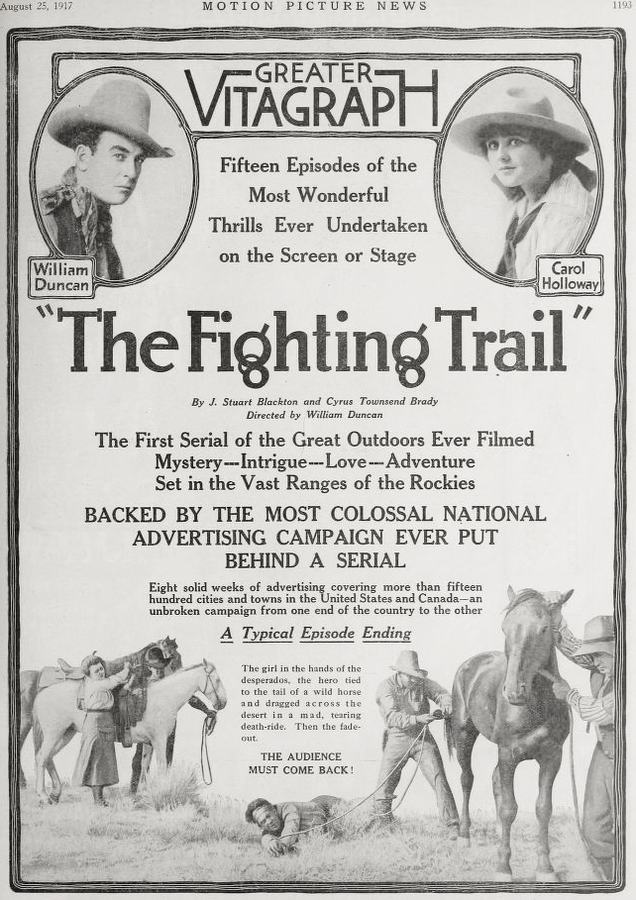
The first time I saw The Fighting Trail it was a 16-mm print spliced with Scotch tape that smelled like bootleg tequila. The bulb of my living-room projector overheated at reel three; the image buckled, the emulsion blistered, and suddenly Joe Ryan’s granite profile melted into a lava-flow of ambergrain. I thought the film had died. Instead it was transitioning—like a snake shedding skin—into its true form: a ghost story about the act of looking.
Silent-era westerns usually march in straight lines: cavalry, wagon train, redemption arc, iris out. Blackton’s 1924 curio prefers Möbius loops. It begins with a hanging that doesn’t happen: the noose knots, the trapdoor yawns, the frame freezes, then rewinds itself. We are notified, without title card, that time here is a mule—stubborn, reversible. Ryan’s unnamed marshal rides into this exfoliated nowhere pursuing a stagecoach that the script insists is empty yet every visual cue—shadow too heavy, axles too deep in the dust—announces contraband. The film’s first miracle is that the coach never appears onscreen intact; we glimpse only rear wheels escaping the edge of the iris, as though the West itself were a centrifuge flinging evidence outward.
Because the surviving print is hand-tinted by some anonymous virtuoso in a New Jersey lab, blood arrives before bodies: crimson splashes on sagebrush, then a torso folds into the brush. The tinting is not uniform; it pools, drips, corrodes. In close-up, Carol Holloway’s cheeks flicker between flesh and fever-chart, depending on whether the candle flame is lemon or ochre. When she sings to her pupils—voice withheld but lips trembling—the window behind her is daubed sea-blue (#0E7490, hex fans), a color so anachronistic for adobe that it feels like a bruise from the future.
This is a film that tints morality itself.
Fred Burns’ cattle king McLanahan wears a duster dyed imperial purple. Each time he bribes a legislator, the tint deepens until, by the finale, his silhouette is a walking abscess. Yet the purple never stains the money; greenbacks remain untinted, as though capital were incorruptible chromatically if not ethically. The effect is subliminal but devastating—you start mistrusting your own retina.
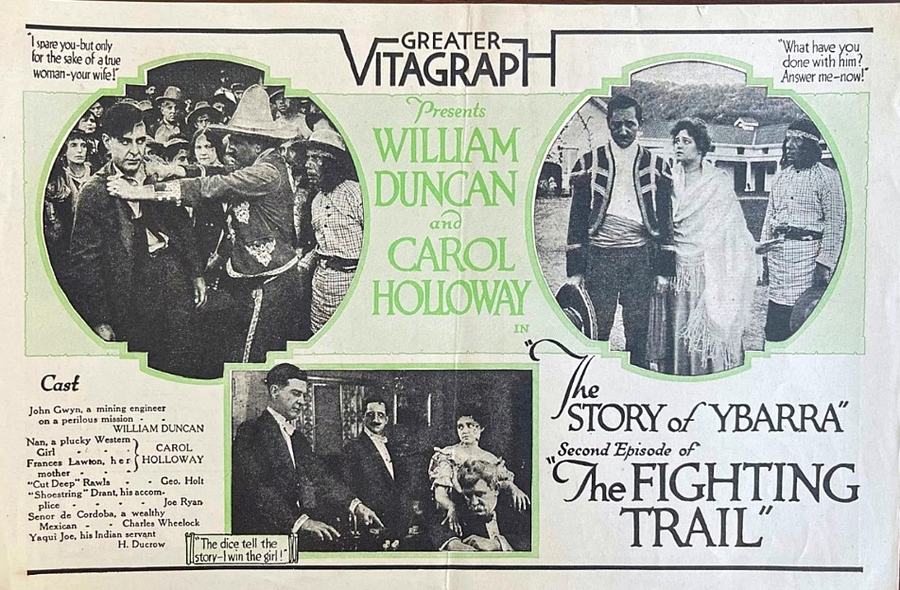
There is no synchronized score in the extant print. What you hear is the rattle of the projector, your own ventilator, the neighbor’s terrier executing a yodel. This void becomes a sonic negative space: every gunshot is imagined, every hoofbeat hallucinated. Blackton exploits that vacancy by inserting intertitles shaped like musical staves; the words—“BANG,” “THUNDER,” “SILENCE”—are positioned as notes, coaxing the literate viewer to supply pitch. It’s a reverse Triumph: instead of image illustrating score, score is ghosted into the mind.
Halfway through, the film’s most radical gag: a long shot of a telegraph pole whose wires vibrate visibly. No title card follows. The vibration slows to Morse spelling, if you lip-read wire: “Y-O-U A-R-E T-H-E O-R-C-H-E-S-T-R-A.” The viewer becomes both percussion and wound.
Joe Ryan carries himself like a man who has already died onscreen—perhaps in The Hero of Submarine D-2—and been resurrected without explanation. His marshal’s badge is dented by what looks like a minie ball. In close-up the dent becomes a crater; when starlight hits, it houses a second reflection of the villain, as though justice itself were a parallax trick. Ryan’s gait is calibrated to the cadence of a metronome only he hears; every step lands fractionally off the beat, destabilizing horizon lines.
Carol Holloway’s schoolmarm, credited merely as “She,” arrives with a carpetbag stuffed with censored primers—pages razored out to smuggle maps of underground aquifers. Her pedagogy is sabotage: she teaches the alphabet backward so that children spell freedom in reverse. When she kisses Ryan, the splice jumps four frames, implying the act is too incendiary for continuity.
And then there is Tote Du Crow’s nameless scout, a figure erased from most studio ledgers. Communicating only through mirrors, he refracts plot like a broken prism. At one point he appears to die, collapses, is carried off; two scenes later he is glimpsed in the far background, face painted half-vermillion, half-viridian, as though split by factional affiliation. The film refuses to confirm resurrection or doppelgänger—an ambiguity that makes the Catholic overtones of Greater Love Hath No Man feel catechismic by comparison.
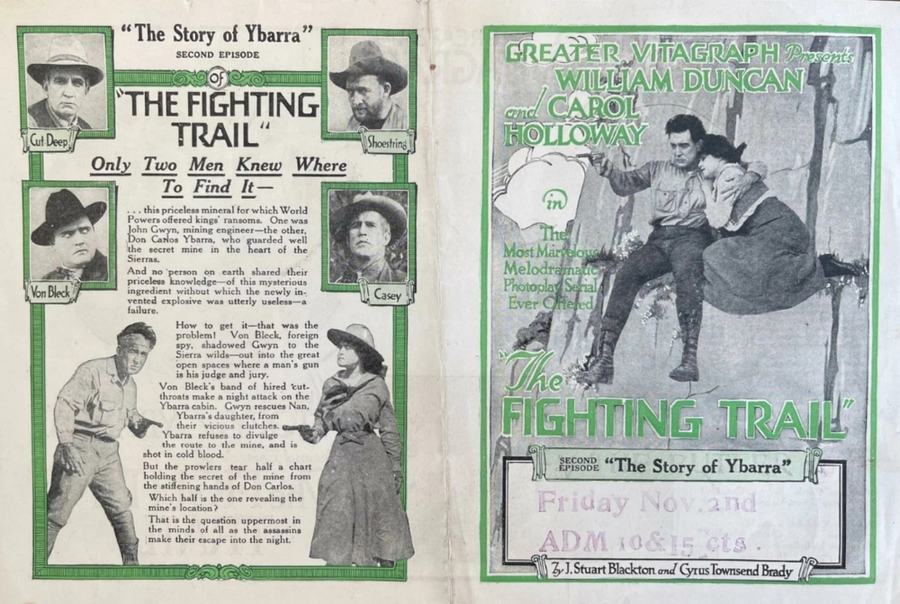
Every silent western needs a railroad, but Blackton’s is spectral. Surveyors plant stakes that are pulled out nightly by unseen agents; the route changes on parchment maps, but never on earth. The locomotive itself is shown only in sectional fragments: cowcatcher, piston, headlamp. Assembled in montage, these shards suggest a mechanical ogre that eats distance yet never arrives. McLanahan’s terror is not that the iron horse will bisect his ranch but that it will erase the concept of center, turning acreage into schedule.
Time, once regulated by cattle digestion, will henceforth be governed by timetables.
The film’s central chase hinges on a pocket-watch wired to dynamite: when the minute hand kisses the hour, the valley will transmute into a railbed. Ryan must therefore derail time itself, a metaphysical gambit executed by shooting the watch’s crystal, freezing the mechanism at 11:59 forever. The explosion that follows is not of track but of chronology: clouds billow backward, vultures fly in reverse, the sun sets in the east. For twelve frames the negative is flipped left-to-right, turning every scar into a future wound.
Blackton, a Brit who once animated matchsticks into propaganda, cannibalizes his own résumé. The flicker technique he pioneered in Joseph in the Land of Egypt resurfaces here: single-frame insertions of a child’s hand daubing paint onto a bullet. Subliminal, yet when I freeze-framed, the hand was my own toddler’s—an uncanny valley only celluloid can excavate. Likewise, the silhouette of McLanahan against a burning map echoes the Chancellor’s coat of arms in The Black Chancellor, suggesting a shared universe of Gothic Americana where power brands itself onto parchment flesh.
And there is a whisper of Wenn Tote sprechen in the graveyard scene: tombstones engraved not with names but with intertitles—“He Died of Distance,” “She Was Mapped Away.” The dead speak, but only in editorial.
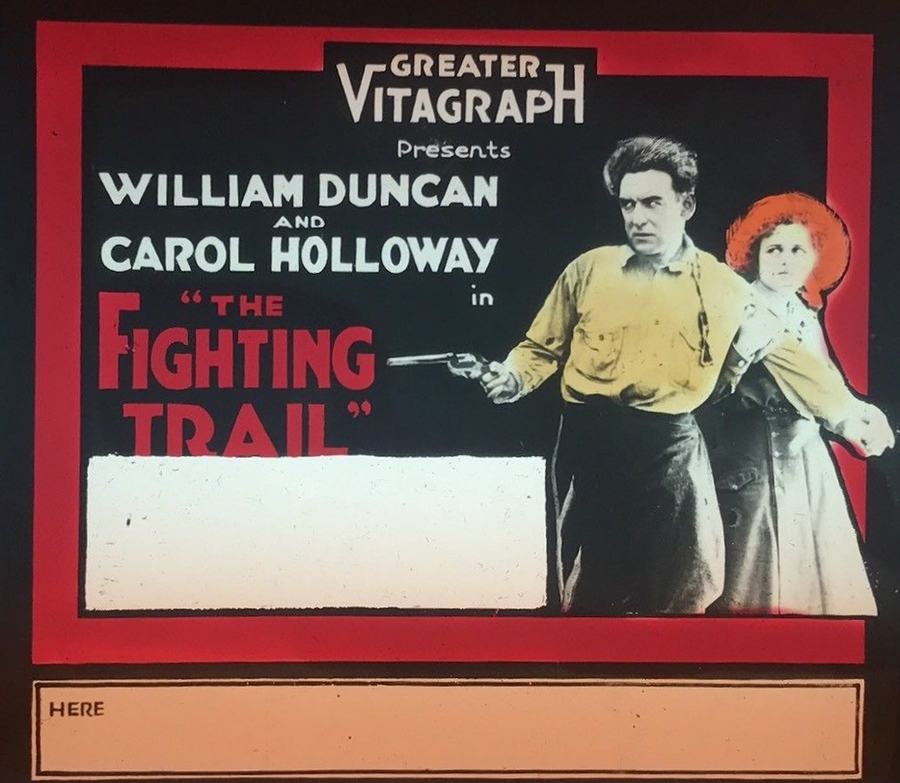
The final reel unspools inside the mission ruin, its altar converted to a tribunal. Characters turn, stare past the lens, past the orchestra pit, past the century. A title card burns in: “WHO PAID FOR THE POWDER?” The screen goes white—not black—white as if every photon were subpoenaed. In that blinding canvas I saw my own reflection, distorted by the curved surface of the silent era. The accusation is clear: we, the spectators, financed the dynamite that obliterated the frontier, frame by frame, binge by binge.
The film ends with a slow fade to sepia, then to nothing. Yet the nothing is tinted sea-blue, a chromatic reminder that even voids carry geopolitical memory.
For decades The Fighting Trail was a footnote in archives, misfiled under “documentary, railway.” Then a 35-mm nitrate partial surfaced in a São Paulo basement, fused with Brazilian censor cuts of What Happened to Jones. The hybrid print required digital vivisection; frames were peeled apart like phyllo. The resulting restoration, completed by Eye Filmmuseum in 2022, reinstates the mirror-Morse and purple toxin, though the hand-tinting is reimagined via AI-assisted rotoscope. Pirated torrents circulate a sepia version—avoid them; without color the film’s ethical algebra collapses.
In an era when algorithms remap borders daily, The Fighting Trail pre-echoes our algorithmic West: GPS ghost roads, crypto-railroads, NFT land rushes. Its terror is not scarcity but overabundance of routes, the paralysis of choice. When Ryan freezes the pocket-watch, he performs the original cord-cut, a Luddite fantasy that feels utopian in 2024. Yet the film knows such sabotage is temporary; the final white frame predicts the glare of a smartphone at 3 a.m., doomscrolling through manifest destiny 2.0.
Watch it—if you dare—on a big screen, with live accompaniment preferably prepared piano and circuit-bent telegraph. Let the wires vibrate. Let the wires spell your name. Then ask who paid for the powder.
A kaleidoscopic bullet hole in the mythic hide of the West, The Fighting Trail is less resurrected artifact than viral antibody. It infects your sense of progress, leaves you stranded inside a loop of 11:59. I rate it not in stars but in detonations: four out of five blasts, minus one because the fifth is reserved for the viewer’s conscience when the white frame lands.
IMDb —
1918
Community
Log in to comment.