DbcultAccessing Vault...
Cult Review
Senior Film Conservator
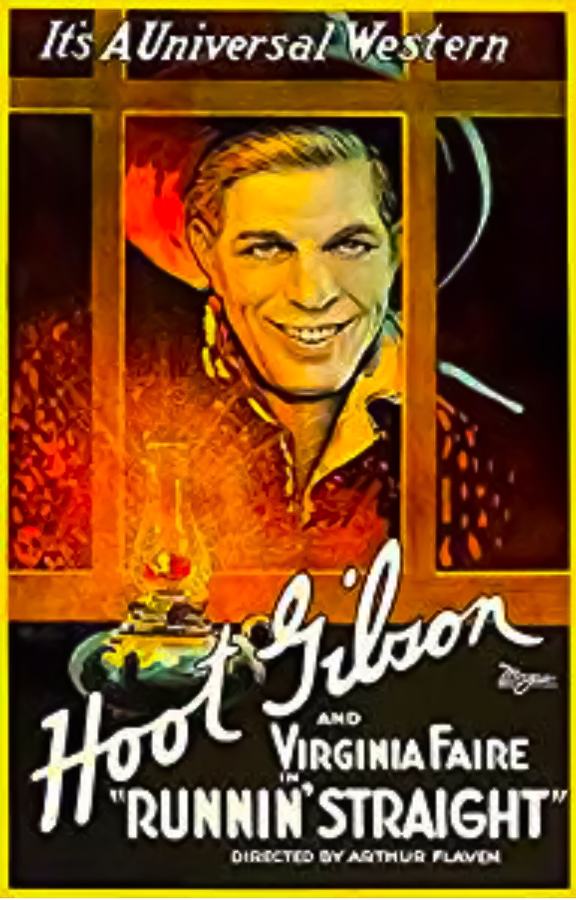
The 1920 cinematic landscape was a crucible of generic evolution, a period where the stark boundaries of the Western, the urban melodrama, and the social problem film began to bleed into one another. Philip Hubbard’s Runnin' Straight stands as a fascinating, if occasionally overlooked, relic of this era. It serves not merely as a vehicle for the burgeoning charisma of Hoot Gibson but as a sophisticated meditation on the transactional nature of gratitude. While many contemporary features like The Man from Painted Post leaned heavily into the rugged individualism of the frontier, Runnin' Straight internalizes that struggle, transposing the conflict from the open range to the claustrophobic moral corridors of high society and the jagged edges of the urban sprawl.
The film’s opening movements are characterized by a gritty, almost naturalistic depiction of slum life. We are introduced to a protagonist whose identity is initially defined by his environment—a milieu of scarcity and survival. Unlike the more polished tragedies of the period, such as Squandered Lives, Hubbard’s direction avoids the pitfalls of mawkish sentimentality. Instead, there is a palpable texture to the struggle. Gibson, before he was fully codified as the quintessential affable cowboy, brings a raw, kinetic energy to the role. His physicality suggests a man who has had to fight for every inch of sidewalk, a stark contrast to the languid elegance of the upper-class characters he eventually encounters.
The transition from the gutter to the parlor is handled with a narrative swiftness that emphasizes the transformative power of mentorship. When the benefactor enters the frame, played with a paternal gravitas by L.M. Wells, the film shifts its focus to the psychological burden of the 'self-made' man. This isn't merely a rags-to-riches tale; it is an examination of the ontological shift required to exist in a space where one’s past is a liability. The protagonist’s journey mirrors the anxieties found in The Woman Who Dared, where the fragility of social standing is constantly threatened by the specter of origin.
As the plot thickens, the introduction of the benefactor’s son creates a classic dramatic foil. If our protagonist represents the potential of the lower class to rise through merit and character, the son represents the rot that often festers within inherited privilege. This dynamic is a recurring trope in silent cinema, yet here it feels particularly pointed. The son’s fall from grace is not just a personal failure but a systemic one, echoing the thematic concerns of Who Is to Blame?. When the protagonist decides to shoulder the blame for the son’s misdeeds, the film transcends its melodramatic roots and enters the realm of secular hagiography.
This act of sacrifice is framed not as a simple choice, but as an inevitable repayment of an unpayable debt. The cinematography during these pivotal scenes utilizes deep shadows and tight framing to emphasize the protagonist's isolation. He is 'runnin' straight' not toward a reward, but toward a self-imposed exile. The moral clarity he exhibits is almost frightening in its intensity, a sharp contrast to the murky ethics displayed in films like Scandal. It is here that Rhea Haines and Virginia Brown Faire provide essential emotional grounding, their performances reflecting the collateral damage of such extreme altruism.
Philip Hubbard’s directorial hand is most visible in the film’s pacing. While silent features often suffered from erratic timing, Runnin' Straight maintains a rhythmic consistency that builds tension effectively. The use of intertitles is sparse but impactful, allowing the actors' expressions—particularly Gibson’s stoic resolve—to carry the narrative weight. There is a visual echoes of Traps and Tangles in the way the film visualizes the protagonist’s predicament; he is caught in a social and moral snare of his own making, yet he remains the only free man in the room because he has chosen his fate.
The production design, though limited by the constraints of 1920, manages to differentiate the disparate worlds of the film with remarkable clarity. The slums feel oppressive, while the benefactor's estate feels cavernous and cold, suggesting that while the protagonist has gained comfort, he has lost the visceral reality of his former life. This spatial storytelling is reminiscent of the atmospheric work seen in The Branding Iron, where the environment serves as an extension of the character’s internal scars.
To fully appreciate Runnin' Straight, one must view it within the broader tapestry of international silent cinema. While it shares some DNA with the Danish moral dramas like For sin Dreng, it possesses a uniquely American optimism—or perhaps a uniquely American brand of martyrdom. It lacks the decadent cynicism of La Salome or the gothic undertones of Die Maske, opting instead for a rugged, almost ascetic devotion to duty. This film represents a pivotal moment for Hoot Gibson, proving he could handle the weight of a dramatic lead before the industry pigeonholed him into the 'hoot-and-holler' Westerns that would later define his career.
Furthermore, the film’s exploration of male friendship and the surrogate father-son dynamic is far more nuanced than the typical 'buddy' films of the era, such as Lions and Ladies. There is a simmering tension between the characters that suggests a deeper, almost unspoken understanding of the costs of social mobility. The female characters, while perhaps less central to the primary conflict, are not merely decorative. They serve as the moral compasses that the men often ignore at their peril, a theme also explored in The Woman Between Friends and Her Great Hour.
In the final analysis, Runnin' Straight is a testament to the power of silent storytelling to convey complex ethical dilemmas through action and countenance. It avoids the easy out, refusing to grant its hero a painless victory. The resolution is bittersweet, a somber acknowledgment that 'runnin' straight' often means running alone. While it may not possess the technical wizardry of Washington's Sky Patrol, its emotional resonance is significantly more durable. It remains a vital piece of the 1920 cinematic puzzle, a work that asks what we owe to those who believe in us when we have nothing, and what we are willing to lose to keep that belief alive.
The film’s enduring relevance lies in its refusal to simplify the protagonist's choice. In an era where cinema was often used for blatant moral instruction, Hubbard offers a more contemplative approach. The sacrifice isn't just about saving a man's name; it's about the preservation of an ideal. Like the protagonists in Heart and Soul, Gibson’s character understands that the soul's integrity is the only currency that truly matters in the end. For any serious student of silent film or the evolution of the American hero, Runnin' Straight is an essential, evocative, and deeply moving experience that deserves its place in the pantheon of early dramatic achievements.
IMDb 6.8
1935
Community
Log in to comment.