DbcultAccessing Vault...
Cult Review
Senior Film Conservator

In the annals of early cinema, few narratives capture the intoxicating allure and the devastating consequences of unearned wealth with the same visceral intensity as 1917's 'Sudden Riches'. This compelling feature, brought to life by the directorial vision and the pen of Richard Schayer, delves into the moral complexities that arise when a family, already teetering on the brink of financial strain, is suddenly thrust into an opulent, yet ultimately corrosive, inheritance. It’s a story that resonates with timeless themes of ambition, vengeance, and the fragile architecture of domestic bliss, reminding us that sometimes, the greatest treasures are not found in vaults, but in the steadfast bonds of human connection.
At the heart of 'Sudden Riches' lies a meticulously crafted plot, a slow-burn tragedy ignited by a past transgression. Robert Crewe, portrayed with a compelling earnestness by Robert Warwick, is introduced as a man of admirable qualities: a successful architect, a devoted husband to Marion (Lillian Cook), and a loving father to Emily (Madge Evans). Yet, beneath this veneer of respectable domesticity, financial anxieties gnaw. He struggles to maintain the lifestyle his wife and daughter aspire to, a common predicament that grounds his character in relatable human experience. This struggle, however, is merely a prelude to a far more sinister machination, one born of a long-festering grudge held by his Uncle Abner (Emil De Varney). Abner's animosity, we learn, stems from a profound betrayal: Robert's father had, years prior, stolen Abner's fiancée, an act that led to her untimely death in childbirth. This backstory, while a classic melodramatic trope, is handled with a gravity that elevates it beyond mere sensationalism, imbuing Abner's actions with a tragic, albeit misguided, sense of purpose. One might draw parallels to the intricate familial vendettas seen in films like The Iron Hand, where personal grievances dictate the fates of generations, though 'Sudden Riches' imbues its revenge with a more psychological, rather than overtly physical, weaponization of wealth.
Abner’s initial attempts to shatter Robert's home life are predictably insidious, involving the deployment of a 'beautiful seductress' (Jeanette Horton). This narrative device, a staple of silent era dramas, serves to highlight Robert's initial moral fortitude. He resists temptation, proving his devotion to Marion and Emily. This early triumph of virtue, however, is short-lived. Abner's premature demise, rather than ending the vendetta, merely transforms it into a more insidious form. His will, a masterstroke of posthumous malice, bequeaths his entire fortune to Robert, not as a gesture of reconciliation, but as a calculated instrument of destruction. Abner's twisted logic dictates that this sudden influx of wealth will, paradoxically, be Robert's undoing, a belief rooted in the corrupting influence of easy money. This particular twist is remarkably prescient, anticipating countless cautionary tales about the perils of inheritance, and sets the stage for the film's most compelling dramatic arcs. The insidious nature of this 'gift' is a potent dramatic device, far more nuanced than a direct confrontation, and it's here that the film truly begins to explore the psychological toll of affluence.
The immediate aftermath of Robert's inheritance is a slow, agonizing unraveling of his once-stable life. The family's newfound prosperity, instead of bringing joy and security, acts as a corrosive agent. Robert and Marion, once united by their shared struggles and aspirations, begin to drift apart. The subtle nuances of their estrangement are conveyed with remarkable skill by Cook and Warwick, whose performances capture the growing chasm between them through unspoken glances and increasingly distant interactions. This is where the film truly shines, illustrating how external pressures, even seemingly positive ones, can erode the internal architecture of a relationship. The absence of immediate financial worry paradoxically creates a vacuum, allowing dormant desires and resentments to surface. One might recall the delicate portrayal of marital discord under duress in Tangled Fates, but 'Sudden Riches' highlights the unique dangers of prosperity rather than adversity.
The most heartbreaking casualty of this familial disintegration is young Emily. Left in the hands of an uncaring nurse, her innocent cries for parental affection go unheeded, echoing through the cavernous, newly opulent home. Madge Evans, despite her tender age, delivers a profoundly moving performance, her wide, tear-filled eyes conveying a depth of sorrow that is both poignant and damning. Her nightly tears become a haunting leitmotif, a constant reminder of what the adults are sacrificing for their self-indulgence. This depiction of childhood neglect, a direct consequence of parental distraction and self-absorption, is a powerful indictment of the era's social mores concerning wealth and family. It’s a stark reminder that material abundance can never compensate for emotional deprivation.
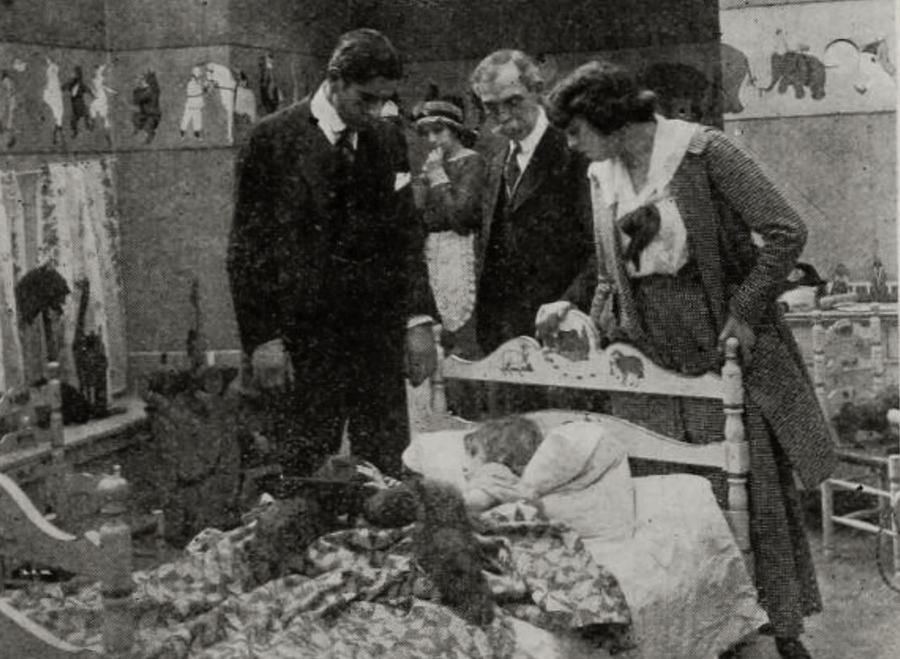
As the emotional distance between Robert and Marion widens, both seek solace and excitement outside their fractured marriage. Robert, succumbing to the temptations of his newfound freedom and wealth, embarks on an affair with a glamorous Broadway actress (Clara Whipple). This dalliance is depicted not as a passionate romance, but as a superficial escape, a symptom of his deeper malaise. His descent into reckless behavior is further exacerbated by highly speculative business investments, a classic pitfall for those unaccustomed to managing significant wealth. The film portrays his financial misjudgments with a keen eye, highlighting the hubris that often accompanies sudden prosperity. The rapid squandering of his inheritance serves as a stark warning against unchecked extravagance and poor judgment, a theme explored with similar cautionary zeal in films like Fine Feathers, though 'Sudden Riches' grounds its narrative in a more personal, familial tragedy.
Marion, equally adrift and perhaps seeking to fill the void left by Robert's emotional absence, finds herself romantically entangled with a prominent sculptor (Horace Davies). Her affair, while perhaps born of loneliness and neglect, mirrors Robert's transgression, illustrating the symmetrical breakdown of their marital vows. The film avoids moralizing excessively, instead presenting their infidelities as natural, albeit destructive, consequences of their alienation. This nuanced approach to marital infidelity, rather than demonizing one party, emphasizes the shared responsibility for their predicament. The parallel narratives of their affairs underscore the profound disconnect that Abner's 'gift' has wrought upon their lives, turning their once-solid foundation into a crumbling edifice of deceit and regret.
The climax of 'Sudden Riches' arrives with a harrowing revelation: Emily's health has deteriorated significantly, a direct result of her parents' prolonged neglect. This crisis serves as the ultimate wake-up call, a moment of stark clarity that shatters their self-absorbed reveries. The threat of losing their daughter, the innocent victim of their folly, finally jolts Robert and Marion out of their destructive spirals. It is a powerful narrative pivot, demonstrating that even amidst the deepest moral decay, there remains a flicker of hope for redemption, especially when confronted with the potential loss of something truly irreplaceable. The film masterfully builds to this critical juncture, making Emily's illness not just a plot device, but the emotional core of the story, forcing the audience to confront the devastating human cost of the characters' choices. This dramatic turn echoes the intensity of familial crisis seen in films like Should a Mother Tell, where the fate of a child often serves as the ultimate catalyst for parental reckoning.
The final act sees Robert and Marion, stripped of their illusions and facing the consequences of their actions, embark on a difficult path towards reconciliation. Their decision to 'change their lives and bring the family back together once again' is not presented as an easy fix, but as a hard-won choice, fraught with emotional labor and genuine regret. The film's conclusion, while offering a glimmer of hope, does not shy away from the scars left by their journey. It suggests that while fortunes can be squandered and relationships broken, the fundamental human capacity for love and forgiveness can, sometimes, mend even the most fractured of bonds. The performances of Warwick and Cook in these concluding scenes are particularly noteworthy, conveying a raw vulnerability and a nascent determination that rings true. They portray characters who have been profoundly changed by their experiences, emerging from the crucible of wealth and despair with a newfound appreciation for what truly matters. The film’s lasting message is a powerful one: true wealth lies not in material possessions, but in the integrity of one's character and the strength of one's family ties. This profound journey from hubris to humility makes 'Sudden Riches' a compelling and timeless cinematic exploration of human nature's darker impulses and its enduring capacity for renewal.
'Sudden Riches', with its intricate plot and powerful character arcs, stands as a testament to the narrative sophistication achievable in silent cinema. The film's exploration of themes like the corrupting influence of wealth, the fragility of familial bonds, and the long shadow of past grievances is handled with a depth that belies its era. The performances across the board are commendable, particularly the nuanced portrayals by the lead actors and the heartbreaking innocence of Madge Evans. Richard Schayer's writing ensures a tight, emotionally resonant story that unfolds with a relentless, yet organic, pace. The visual storytelling, characteristic of the period, is effective in conveying the emotional states and narrative developments without the aid of spoken dialogue, relying instead on expressive acting, evocative set designs, and well-placed intertitles.
This film serves as a potent reminder that while external circumstances can dramatically alter the course of one's life, the internal compass of morality and love ultimately dictates true happiness. It's a classic cautionary tale, yet one infused with enough human drama and potential for redemption to elevate it beyond mere didacticism. The film's ability to weave together a complex narrative of revenge, temptation, and eventual atonement makes it a significant entry in the cinematic landscape of its time, and a fascinating study for contemporary audiences. Its enduring relevance lies in its unflinching portrayal of human flaws and the timeless struggle to reconcile personal desires with familial responsibilities. For those interested in the psychological dramas of the silent era, 'Sudden Riches' offers a rich, thought-provoking experience that continues to resonate long after the credits roll.
IMDb 6
1920
Community
Log in to comment.