DbcultAccessing Vault...
Cult Review
Senior Film Conservator
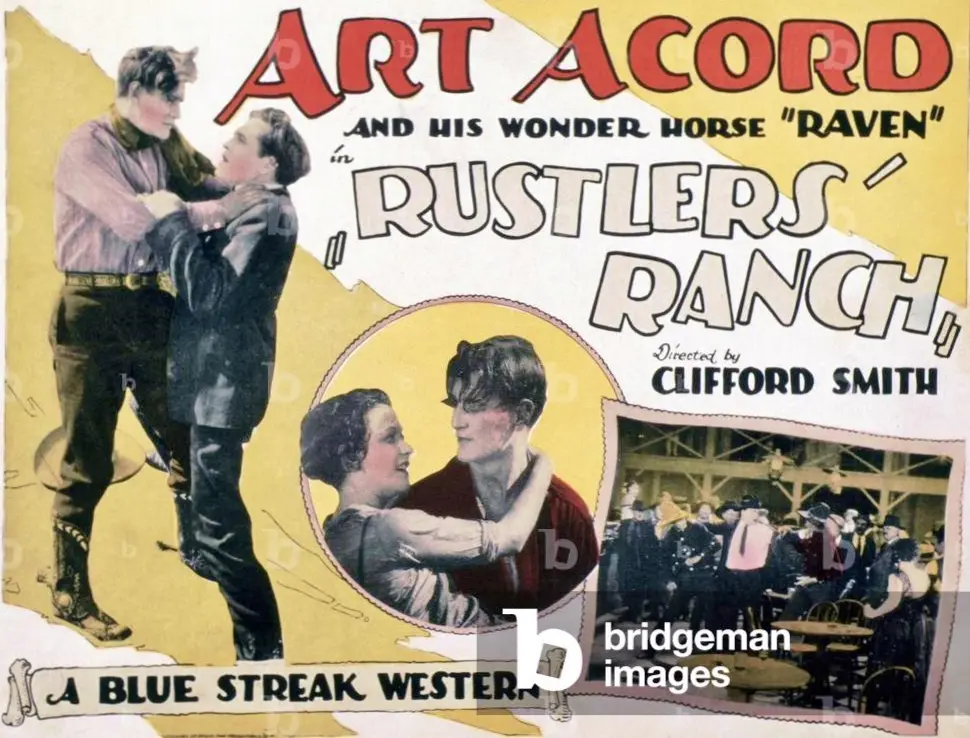
Is Rustlers' Ranch worth watching today? Short answer: yes, but with significant caveats that demand a certain cinematic palate. This 1920s Western, a relic from an era when the genre was still finding its spurs, offers a fascinating glimpse into early Hollywood's approach to storytelling, yet it will undeniably test the patience of modern audiences.
This film works because of its unpretentious charm and historical significance as a snapshot of early Western storytelling. It fails because its narrative simplicity and dated execution will test the patience of contemporary viewers accustomed to more complex, polished productions. You should watch it if you possess a genuine appreciation for the foundational elements of the Western genre and are willing to engage with cinema from a bygone era, understanding its limitations. Conversely, if your cinematic tastes lean towards contemporary pacing, intricate plots, or high-fidelity sound design, this film is decidedly not for you.
To approach Rustlers' Ranch with a contemporary mindset is to do it a disservice. This isn't a film designed for the multi-layered narratives or psychological depth we expect today. Instead, it’s a foundational text, a cinematic blueprint for the tropes that would define the Western for decades to come. Released in an era when the silent film was giving way to the talkie, it embodies a specific, often rudimentary, approach to character and conflict.
The film’s simple structure, penned by Richard Schayer, W.C. Tuttle, and Harrison Jacobs, is its most defining characteristic. We follow Lee Crush, played by Duke R. Lee, as he inadvertently becomes a fugitive. This setup, born from a barroom brawl and a presumed death, is classic Western fare: a man on the run, seeking redemption or a new start. The subsequent arrival at the Shawn ranch and the immediate entanglement in a land dispute, coupled with a burgeoning romance, are all familiar beats.
What strikes an unconventional chord is the film's title itself. “Rustlers’ Ranch” implies a narrative centered on cattle theft, yet the core conflict revolves around a swindler, Clem Allen, attempting to defraud a widow. This discrepancy, while minor, highlights a certain looseness in early genre titling, perhaps designed more for immediate audience appeal than strict narrative accuracy. It's a small detail, but one that subtly underlines the film's unpolished charm.
Duke R. Lee, as our protagonist Lee Crush, delivers a performance typical of the era. His acting style is broad, leaning into the physical expressiveness required for silent film, even if this particular feature included sound. Emotions are conveyed through exaggerated gestures and direct gazes, a stark contrast to the nuanced internalizations we see from actors today. It’s effective for its time, but can feel somewhat two-dimensional to a modern viewer.
Edith Yorke as the Widow Shawn provides a sympathetic presence, embodying the vulnerability often exploited in these narratives. Her portrayal is earnest, conveying a quiet strength in the face of adversity. Olive Hasbrouck, as her daughter Mary, fulfills the role of the damsel in distress and romantic interest with a degree of grace, though her character arc is, by necessity, limited by the film's brevity and focus on Lee's journey.
However, the true standout performances, and perhaps the most genuinely humanizing elements, come from the animal actors: Rex the Dog and Raven the Horse. Their contributions are not merely background; they are integral to the plot and often more expressive than their human counterparts. Rex, in particular, often steals scenes with his loyalty and timely interventions, a testament to the enduring appeal of animal companions in cinema. This is a genuinely surprising observation for a film of this vintage; the animals feel more “acted” than some of the human roles.
The directing in Rustlers' Ranch is straightforward, prioritizing clear storytelling over stylistic flourish. The camera rarely moves, often framing scenes in static, wide shots that capture the action as if from a theatre audience's perspective. There are no elaborate tracking shots or complex compositions that would become hallmarks of later Westerns. This directness, while lacking visual sophistication, ensures that the audience's focus remains squarely on the narrative.
Cinematography, while basic by today's standards, effectively captures the vastness of the Western landscape. The outdoor scenes, likely shot on location, lend an authenticity that studio sets often struggled to replicate. While lacking the artistic depth of a film like The Texas Trail, the natural light and sweeping vistas serve their purpose, grounding the story in a recognizable, albeit idealized, American West.
The pacing is brisk, almost frantic at times, a common characteristic of early features designed to keep audiences engaged without the benefit of intricate dialogue or special effects. The plot moves from conflict to resolution with an almost relentless efficiency. Lee's flight, his arrival, the swindler's schemes, the romance, and the final reveal all unfold rapidly. While this prevents boredom, it also sacrifices any real opportunity for character development or deeper thematic exploration. It works. But it’s flawed.
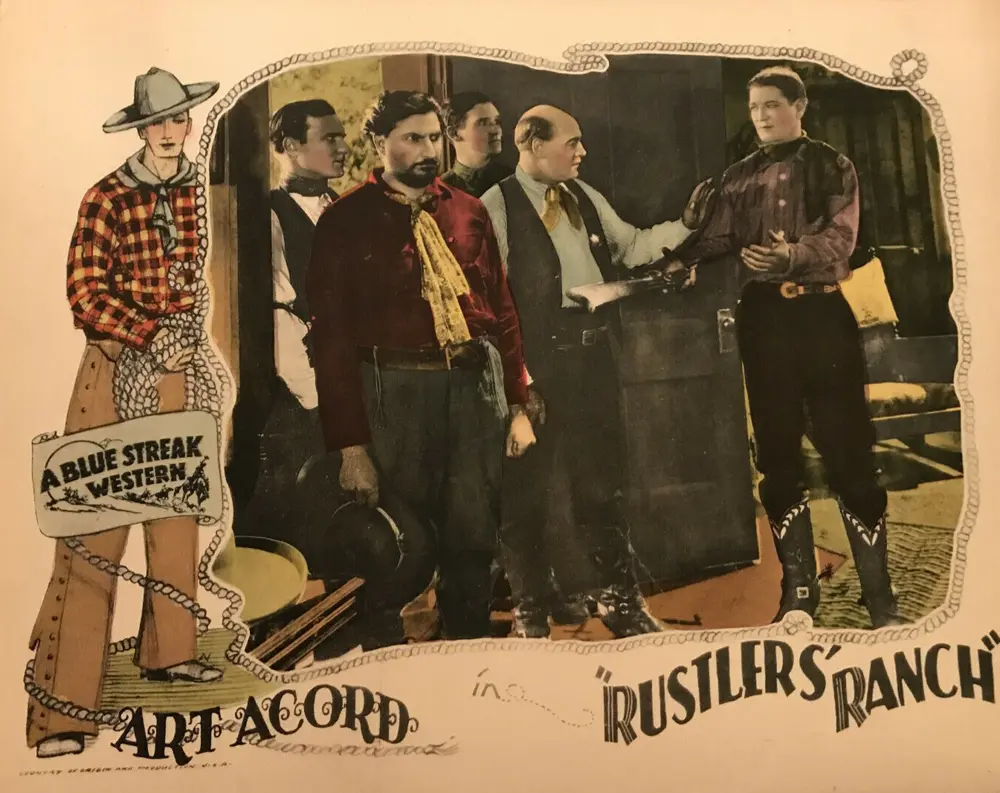
Thematically, Rustlers' Ranch explores classic Western motifs: justice, mistaken identity, the struggle of the honest rancher against unscrupulous forces, and the redemptive power of love and a new life. Lee Crush's journey from presumed murderer to heroic protector and husband is a clear arc of personal absolution and societal integration. The film's tone is overtly moralistic, championing good over evil in no uncertain terms.
There's an innocence to the storytelling that feels almost quaint today. The stakes are clear, the villains unambiguously bad, and the heroes unequivocally good. There are no shades of gray, no complex moral dilemmas. This straightforward approach is both its strength and its weakness. It offers a comforting, uncomplicated vision of justice, but it lacks the resonance and challenge that more sophisticated narratives provide.
One could argue that this very simplicity is a refreshing antidote to the often cynical and convoluted narratives prevalent in modern cinema. It’s a film that knows exactly what it is and doesn't pretend to be anything more. This directness, for all its lack of subtlety, is a testament to the foundational power of myth-making in early film.
Released in the 1920s, Rustlers' Ranch exists in a fascinating transitional period for cinema. It predates the full blossoming of the 'Golden Age' of Hollywood Westerns, yet it clearly lays down many of the genre's enduring elements. It's a film that would have been consumed as entertainment, a thrilling diversion, in an era before television and widespread radio. Its value today lies primarily in its archival significance, offering a window into how these stories were first told.
Comparing it to other films of its time, its narrative simplicity is striking. While films like The Price of Silence or The Cost might have explored more dramatic social issues, Rustlers' Ranch sticks firmly to its genre conventions. It reminds us that the Western, in its earliest form, was often about elemental conflicts and straightforward resolutions, a cinematic comfort food for audiences seeking escapism.
It's a testament to the enduring appeal of the Western archetype that even a film as structurally basic as this can still evoke a sense of nostalgia and appreciation for the origins of a beloved genre. It's not a film that broke new ground, but rather one that solidified existing paths.
For the casual moviegoer, Rustlers' Ranch will likely prove a challenging watch. Its dated technical aspects, broad acting, and simplistic narrative demand a significant adjustment in expectation. The lack of sophisticated sound design, the often-static camera work, and the rapid-fire plot might feel alienating.
However, for film historians, students of the Western genre, or those with a deep curiosity about early American cinema, this film offers invaluable insight. It’s a primary source document, illustrating the nascent stages of cinematic grammar and storytelling. It provides context for how the Western evolved, showing us the raw materials from which cinematic giants would later craft their masterpieces. It’s worth watching for education, not for pure entertainment value.
Pros:
- Authentic snapshot of early Western storytelling.
- Charming, straightforward plot.
- Historically significant for genre studies.
- Strong animal performances add unexpected warmth.
Cons:
- Dated acting style and technical execution.
- Extremely simplistic narrative by modern standards.
- Pacing can feel rushed, limiting depth.
- Lack of sophisticated cinematography or sound.
Rustlers' Ranch is not a film that will captivate the masses today, nor should it be expected to. It is, however, a valuable piece of cinematic archaeology, offering a clear, if unsophisticated, look at the nascent stages of the American Western. Its charm lies in its earnestness and its unpretentious adherence to genre conventions that were still being forged. While it lacks the polish and complexity we've come to expect, its historical footprint is undeniable.
For those willing to adjust their expectations and appreciate cinema as a evolving art form, Rustlers' Ranch serves as a quaint, educational diversion. It's a reminder of where it all began, a simple tale told with a directness that modern films often shy away from. It's not a film you'll rewatch for its entertainment value, but one you'll appreciate for its place in the grand tapestry of film history.
IMDb —
1923
Community
Log in to comment.