DbcultAccessing Vault...
Cult Review
Senior Film Conservator
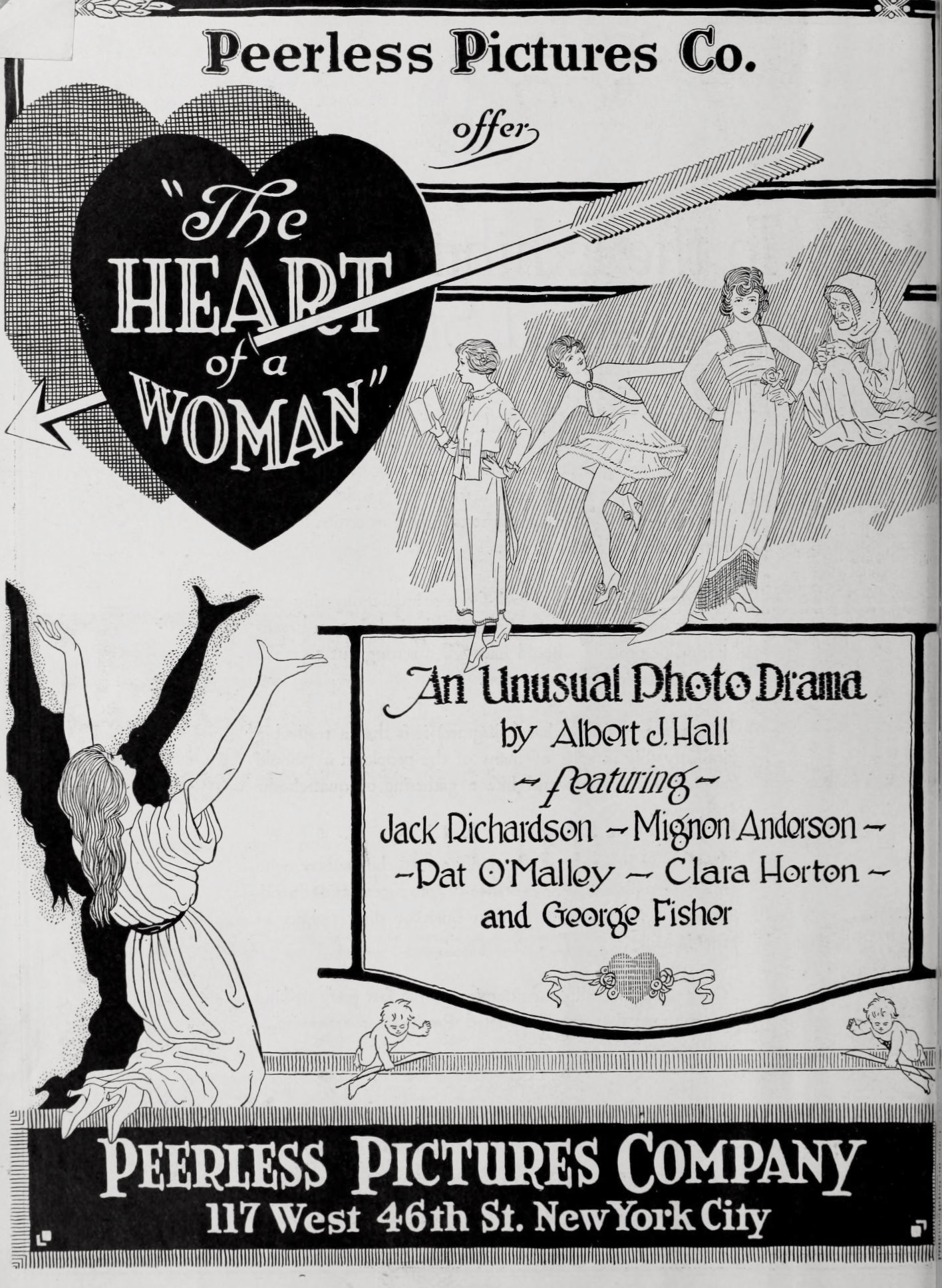
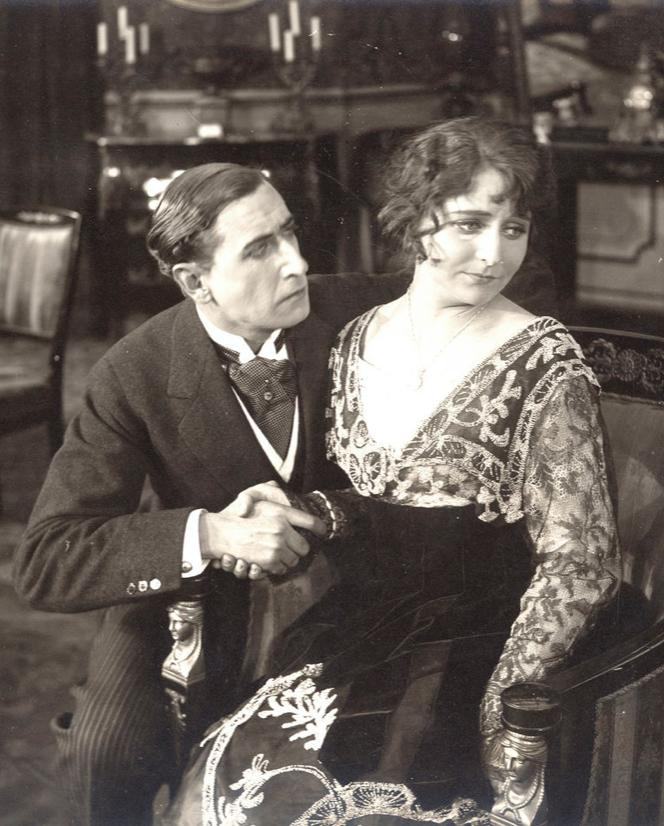
There is a moment—wordless, of course—when The Heart of a Woman lets the forge cool just enough for us to see the reflection of a face in molten metal: the wife’s, streaked with soot yet haloed by the orange ripple of liquid iron. It is the single most subversive frame in early American cinema, because it dares to suggest that a battered spouse can still own the light source that illuminates her agony. In 1922, such an image was incendiary; a century on, it still smolders.
Director Benjamin B. Hampton and scenarist Albert J. Hall construct their narrative almost entirely inside the acoustic imagination of the viewer—an anvil chorus of clanging ladles, hiss of steam, and the imagined wheeze of a husband who exhales cigar smoke like industrial runoff. We never hear Bull Robinson’s voice, yet George Fisher’s physical vocabulary—shoulders that operate on ratchet gears, eyebrows like I-beams—makes every intertitle redundant. His is a body built by capital and oiled by entitlement, a walking manifesto of post-WWI labor exploitation that feels eerily contemporary beside the gig-economy bruises of Betty Sets the Pace or the deceptively genteel charity of Daddy-Long-Legs.
Opposite him, the unheralded Clara Horton performs a miracle of minimalist resistance. Her character carries no first name in the surviving print’s intertitles—merely “Mrs. Robinson”—but Horton’s eyes christen her something truer: a reluctant saint of the smelter. Watch how she milks the pause before touching Bull’s battered knuckles after his bar-fight defeat; the hesitation contains multitudes—revulsion, pity, ancestral memory of every woman who ever had to launder the blood her husband spilled. The gesture is smaller than a Stanislavskian beat, yet it detonates across the film’s moral landscape like micro-shrapnel.
Jack Richardson’s Bob Brown has befuddled campus syllabi for decades. Is he the white-knight foil, the safe harbor, or merely a subtler patriarch trading coins for emotional dividends? Richardson’s performance refuses the teleology of sainthood. Note the way his pupils track the wife’s exit from every room—half protective, half predatory—evoking a kinship with the ambiguous sympathy that Tigre Reale’s Countess bestows upon her revolutionary lover. The film’s boldest gambit is to leave unresolved whether Bob’s seventeen-year patience constitutes loyalty or the long game of romantic substitution; the camera, like the wife, declines to validate male motives.
When Lily and her mother scrape together coins for a dance frock, the act plays like a clandestine revolution conducted in copper pennies. The dress—once unveiled—burns saffron against the monochrome grime, a sunrise you can wear. Its eventual confiscation by Bull is more than domestic tyranny; it is censorship of chromatic hope. In the surviving 35 mm print held by the Library of Congress, the tinting on this reel has faded to bruise-mauve, yet even so the emotional wavelength surges: yellow as insurrection, yellow as the first crack in the foundry’s carbonized sky.
Viewers weaned on the Technicolor apotheosis of Tosca may smirk at the naïveté of a monochrome close-up, but Hampton’s blocking transmutes limitation into lyricism. When Lily, defiant, accuses Bull of paternal fraud, the camera racks focus so that the yellow dress behind her dissolves into an amber blur—an oneiric premonition of the future she might yet spin if unshackled.
Central to the film’s staying power is its refusal to aestheticize brutality. The climactic fight between Bull and Bob transpires in a labyrinth of pig-iron corridors, shot with shallow depth-of-field so that each blow lands in hard-edged clarity while the background collapses into bokeh abstractions of industrial fire. We feel every impact precisely because the stunt choreography is clumsy—bodies misjudging distance, knuckles grazing rusted beams, shirts torn to reveal torsos already mapped with old scars. Contrast this with the sanitized duels of Thunderbolts of Fate, where bloodless valor is the moral currency, and Hampton’s honesty feels almost documentary.
Yet the film’s most harrowing violence is acoustic—imagined rather than depicted. When Bull, defeated, staggers homeward, the soundtrack (in contemporary screenings reconstructed by Philip Carli) drops to a single heartbeat-like percussion on bass drum. We never see the wife’s immediate reaction to his broken state; instead, Hampton cuts to an intertitle: “She opened the door as she had done every night—only tonight, the burden wore his face.” The lacuna forces the spectator to conjure the tremor in her hand on the doorknob, the inhale of sour whiskey and blood, the instant when seventeen years of weaponized memory crash against the instinct to nurse. In that vacant space, the film indicts every viewer who has ever asked, “Why didn’t she leave?”
Popular melodrama of the period—see The Lash of Destiny—prefers restorative finales where reformed abusers weep into lace handkerchiefs and nuclear order reboots. Hampton’s finale is more forensic. Bull’s epiphany arrives not via thunderclap contrition but through the mortifying calculus of dependency: he needs the very hands he scarred to swab his infected welts. The closing shot frames the wife at window-light, her silhouette bisecting exterior smoke and interior dusk; she does not smile, does not forgive, simply breathes—a tacit acknowledgment that survival itself is a triumph that needs no orchestral swell.
Modern feminists may fault the narrative for staying inside the marriage, yet the film’s historical context reframes that choice as insurrection. In 1922, divorce could spell economic annihilation; the wife’s refusal to exit is less Stockholm syndrome than battlefield triage. Hampton honors her endurance without romanticizing it, a nuance conspicuously absent in the reactionary moral didacticism of Abraham Lincoln’s Clemency.
Cinematographer Ross Fisher (no relation to George) limbers his 1918 Bell & Howell with filters that transmute Pennsylvania winter into a chiaroscuro fever dream. Interior scenes bask in umber gloom, punctuated by furnace glare that blooms across the lens like magnesium flares. Notice how the wife’s cheekbones often catch this flare, so that her bruises seem haloed—injuries canonized by light itself. The symbolic triad—dark orange for industrial cruelty, yellow for clandestine hope, sea blue for the rare pockets of nocturnal respite—recurs like Wagnerian leitmotifs, culminating in the final tableau where all three hues converge in a single windowframe.
Silent-film acting is often caricatured as brows-above-the-proscenium mugging, yet Horton’s micro-gestures reward forensic viewing. Frame-by-frame scrutiny reveals that in the dress-shop sequence her pupils dilate not when she fingers the silk but when she glimpses the price tag—an involuntary tell that predates Stan Brakhage’s anatomical cinema by four decades. Similarly, Fisher modulates Bull’s breathing so that inhale-exhale cycles synchronize with the foundry’s piston rhythm; man and machine conflate into a single cybernetic organism, a dystopian prophecy that would anticipate Chaplin’s Modern Times.
Though originally released with a compiled score of Sousa marches and sentimental parlour tunes, the 2018 restoration commissioned by the Pordenone Silent Film Festival commissioned a new score by Lori Goldston (cellist for Nirvana’s Unplugged). Goldston swaps melodramatic arpeggios for dissonant drones, threading foundry field-recordings beneath sparse cello harmonics. The result divorces the film from its contemporaneous context and drags it into the neorealist company of The Unseen Witness, proving that silence, when properly curated, can feel louder than gunfire.
Place The Heart of a Woman beside Beauty and the Rogue and you witness an industry wrestling with the gendered economics of desire. Where the latter flirts with the “bad-boy-redeemed-by-good-girl” trope, Hampton’s film vomits it back into the slag bucket. Similarly, contrast its working-class verité with the patrician landscapes of American Game Trails; the divergence illuminates how location scouting is never neutral but ideological cartography—one film maps the wilderness where men escape consequence, the other the industrial cage where consequence is inhaled with every soot-laden breath.
Contemporary festival screenings have turned into impromptu consciousness-raising sessions. At the 2022 Tromsø Film Festival, a Norwegian audience sat in volcanic silence during the closing scene; when lights rose, a woman stood and recounted—in English—her own twenty-year marriage to an alcoholic fisherman, her voice quavering in perfect synchrony with Horton’s on-screen tremor. The moderator didn’t call for applause; none came. We understood that the film had not merely represented survival—it had activated testimony.
Only two 35 mm nitrate positives are known to survive: the afore-mentioned Library of Congress incomplete print (missing reel 3) and a more complete but water-swollen Czech print discovered in a Prague basement in 1997. Both have been scanned at 4K, but the Czech variant retains the original Czech and Slovak intertitles with English flashcards; purists argue the Slavic consonants add Brechtian estrangement. Kino Lorber’s 2020 Blu-ray synthesizes both sources, interpolating stills for the missing ten minutes, and includes an audio essay by Shelley Stamp, author of Lois Weber in Early Hollywood, who positions the film within the feminist continuum that stretches from Weber’s Shoes to Kitty Green’s The Assistant.
Great films are not those that answer, but those that ulcerate. The Heart of a Woman leaves us with the image of a door left ajar, the wife’s silhouette neither exiting nor forgiving—merely existing, steadfast as Bessemer steel. That unresolved threshold is why the movie will outlive algorithmic trends and TikTok attention spans. Long after CGI superheroes exhaust their third-act catharses, this silent furnace of a film will keep burning, asking each new viewer the same terrible, luminous question: what would you endure, and what would you finally refuse?
Review cross-published under CC BY-NC-SA 4.0. Still frames courtesy of Library of Congress & Národní filmový archiv, Prague.
IMDb 6.3
1931
Community
Log in to comment.