DbcultAccessing Vault...
6.2/10
Senior Film Conservator
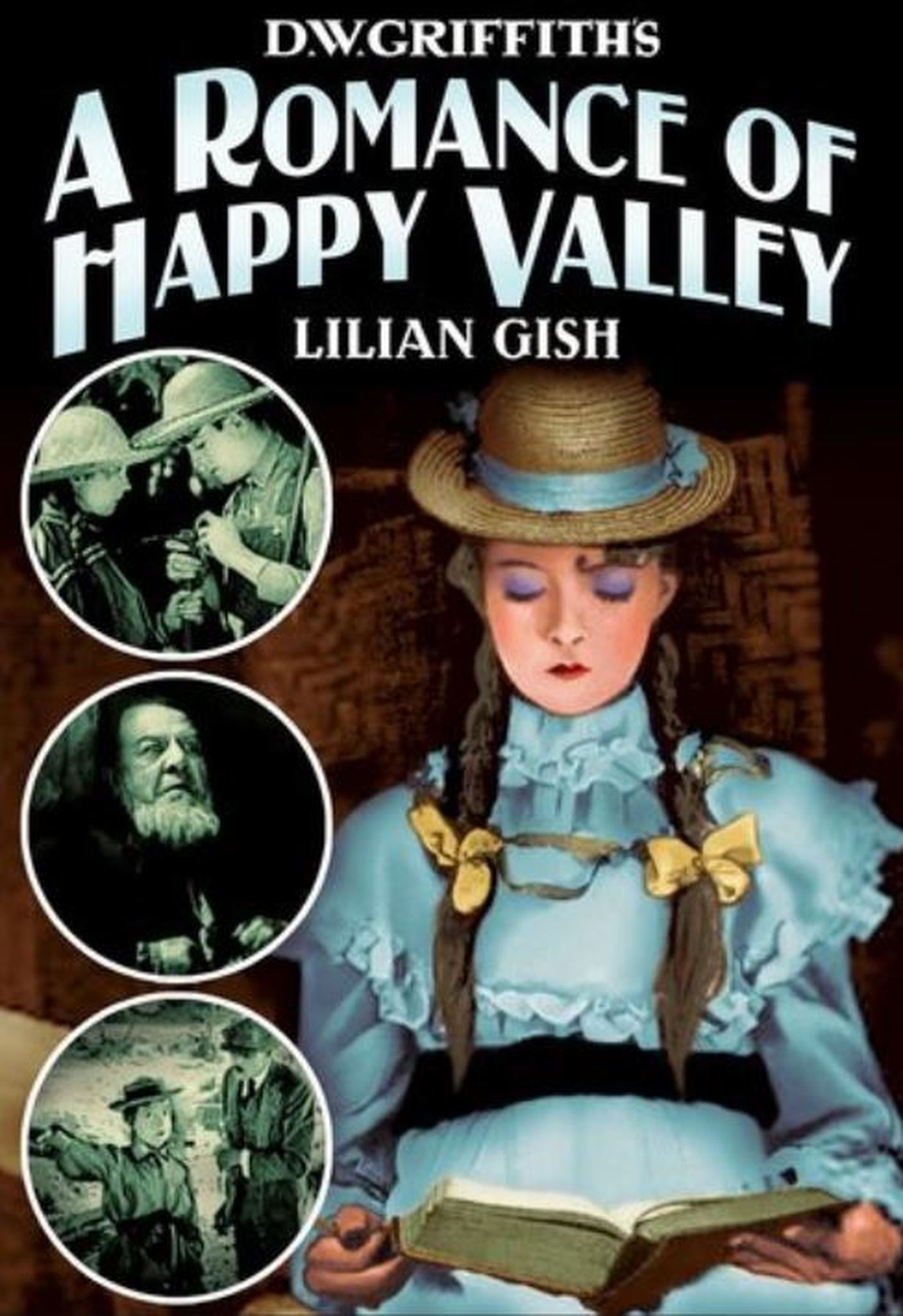
A definitive 6.2/10 rating for a film that redefined the boundaries of cult cinema. A Romance of Happy Valley remains a cornerstone of transgressive art.
In the pantheon of early cinema, few directors wielded the pastoral landscape with the same evocative potency as D.W. Griffith. While his legacy is often overshadowed by the monumental scale of his historical epics, it is in the intimate, dust-moted corners of 1919's A Romance of Happy Valley that we find the director at his most humanistic and visually poetic. This film represents a departure from the grandiosity of his previous works, opting instead for a localized, almost folkloric exploration of the American spirit. It is a work that breathes with the rhythm of the seasons, yet vibrates with the anxiety of a nation transitioning from the plow to the piston.
Griffith, alongside his indispensable cinematographer Billy Bitzer, constructs Happy Valley not merely as a setting, but as a psychological state. The soft-focus photography and the deliberate pacing evoke a sense of timelessness that is both comforting and claustrophobic. Unlike the grit found in The Lesson, where the environment serves as a harsh moral instructor, Happy Valley is a gilded cage. The rolling hills of Kentucky are rendered with a painterly sensitivity that rivals the luminosity seen in The Diamond from the Sky, yet there is an underlying melancholy here—a sense that this beauty is predicated on a refusal to engage with the modern world.

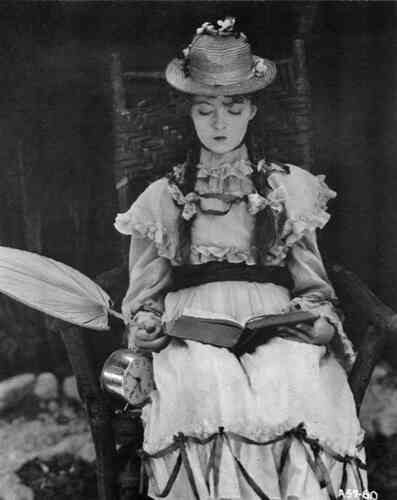
The film’s visual language is deeply rooted in the Victorian tradition of sentimental art, yet it transcends mere kitsch through its meticulous attention to detail. The way the light catches the stray hairs of Lillian Gish’s character, or the heavy, slumped shoulders of the elder Logan as he faces financial ruin, provides a tactile reality to the melodrama. We see a similar devotion to atmospheric world-building in Das Bildnis des Dorian Gray, though Griffith trades the gothic for the bucolic.
One cannot discuss this era of cinema without acknowledging the ethereal brilliance of Lillian Gish. In A Romance of Happy Valley, Gish delivers a performance of profound interiority. As Jennie, the sweetheart left behind, she is tasked with portraying years of agonizing patience. Her face becomes a map of shifting emotions—hope, doubt, resignation, and eventually, a fragile, hard-won joy. It is a masterclass in the "less is more" philosophy of silent acting. While contemporary films like The Candy Girl relied on more overt theatricality, Gish finds power in stillness.

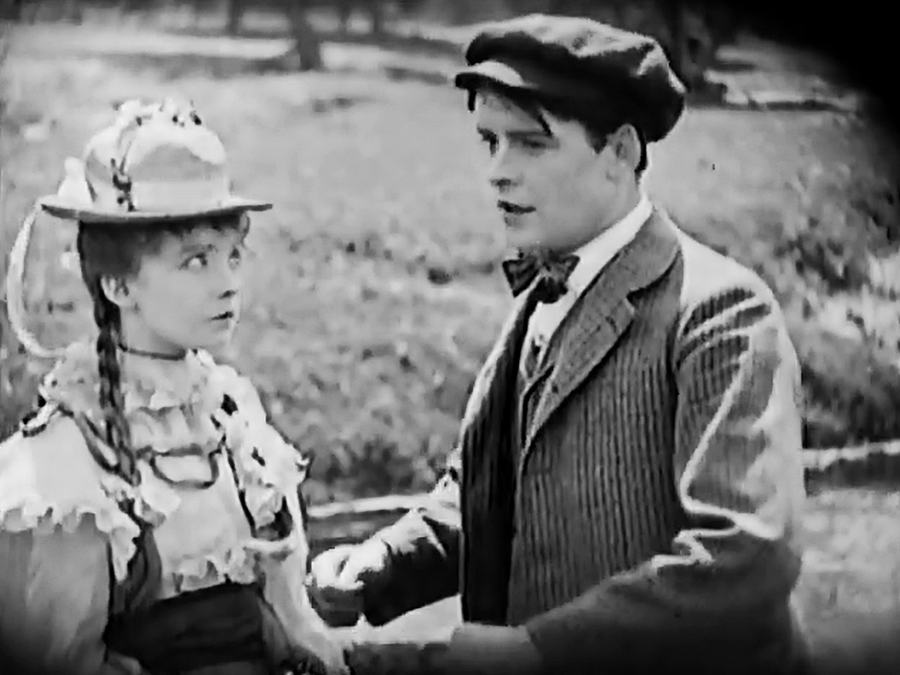
Her chemistry with Robert Harron is palpable, grounded in a shared history rather than sudden artifice. Harron, as John Logan, embodies the restless energy of the burgeoning 20th century. His departure is not portrayed as a betrayal, but as a biological necessity—the frog leaping out of the well. The tragedy lies in the disconnect; while John is out conquering the mechanics of the city, Jennie is frozen in the amber of Happy Valley. This temporal dissonance creates a tension that elevates the film above standard melodrama, echoing the thematic weight found in The Vow.
"Griffith captures the silent scream of the rural heartland, where the silence of the fields is often more deafening than the roar of the city's machinery."
Griffith’s treatment of the city is fascinatingly ambivalent. In many of his other works, the urban environment is a den of iniquity, a place where innocence goes to die. However, in this narrative, the city is also the land of opportunity—the only place where John’s "toy" (his invention) can be transformed into capital. This pragmatism is a refreshing departure from the black-and-white morality often seen in films like The Iron Heart or The Cub. The city is a crucible; it tests John, but it also rewards him.
Conversely, Happy Valley is shown to have a dark underbelly of judgmental piety. The local community, led by the stern, religiously obsessed father, is quick to condemn John as a failure. Their lack of faith is not just a personal failing but a collective stagnation. This critique of provincial narrow-mindedness adds a layer of sophistication to the film. It suggests that while the city may be cold and indifferent, the small town can be actively predatory in its expectations. We see echoes of this societal pressure in The Enemy, where the collective will often crushes the individual.
Technically, the film is a showcase for Griffith’s refined editing techniques. The cross-cutting between the decaying Logan farm and John’s struggles in the city serves to heighten the emotional stakes. Every time we see the father’s health failing or the bank moving closer to foreclosure, we feel the ticking clock of John’s ambition. This rhythmic juxtaposition is what made Griffith the architect of modern cinematic language. It is far more sophisticated than the linear storytelling of Skinner's Baby or the episodic nature of Lady Mackenzie's Big Game Pictures.
The use of masks and irises—iris-ins and iris-outs—is employed here with surgical precision. Griffith uses these techniques to focus our attention on minute details: a hand clutching a letter, a tear on a cheek, the silhouette of a lonely figure against the sunset. These visual punctuations create a sense of intimacy that pulls the viewer into the frame. It is a technique that demands a certain level of patience from a modern audience, but for those willing to engage, the rewards are immense. The visual storytelling here is as potent as anything found in The Face in the Dark, though far more grounded in emotional truth.
The climax of the film, where John returns as a wealthy man just as his family is at their lowest ebb, is pure Griffith. It is a sequence designed to elicit maximum catharsis. The tension of the "stranger" returning to his own home, unrecognized and unheralded, is a classic trope, yet Griffith imbues it with a genuine sense of dread and subsequent relief. The scene where he reveals his identity and his success is not just a victory for him, but a validation of Jennie’s unwavering faith. It is a moment of secular grace that rivals the religious fervor of The Rosary.

However, the film doesn't end with a simple "happily ever after." There is a lingering sense of what was lost during those years of absence. The lines on the parents' faces cannot be erased by money, and the time Jennie spent in stasis cannot be reclaimed. This subtle acknowledgment of the cost of success gives the film a maturity that distinguishes it from more simplistic fare like Untamed or After Sundown. Griffith understands that every gain involves a loss, a theme he would continue to explore with varying degrees of success throughout his career.
A Romance of Happy Valley is a vital piece of cinematic history that deserves more than its current status as a footnote in Griffith’s filmography. It lacks the controversy of his more famous works and the sheer scale of his epics, but it possesses a soulfulness and a technical grace that are rare. It is a film about the American dream in its infancy—before it became synonymous with greed, when it was still about the dignity of labor and the loyalty of the heart. Much like the protagonist of Panna Meri, John Logan must navigate a world of shifting values, but he does so with a moral compass that remains fixed on the valley he left behind.
For the modern viewer, the film offers a window into a vanished world. It is a slow-burn experience, one that requires us to disconnect from our high-speed digital existence and inhabit the deliberate, sun-drenched reality of 1919. It is a reminder that cinema, even in its earliest forms, was capable of capturing the complexities of the human condition with profound eloquence. Griffith may have been a man of his time, with all the prejudices and sentimentalities that entails, but in A Romance of Happy Valley, he touched upon something universal: the yearning for home, and the courage it takes to leave it.
IMDb 4.9
1933
Community
Log in to comment.