DbcultAccessing Vault...
Cult Review
Senior Film Conservator
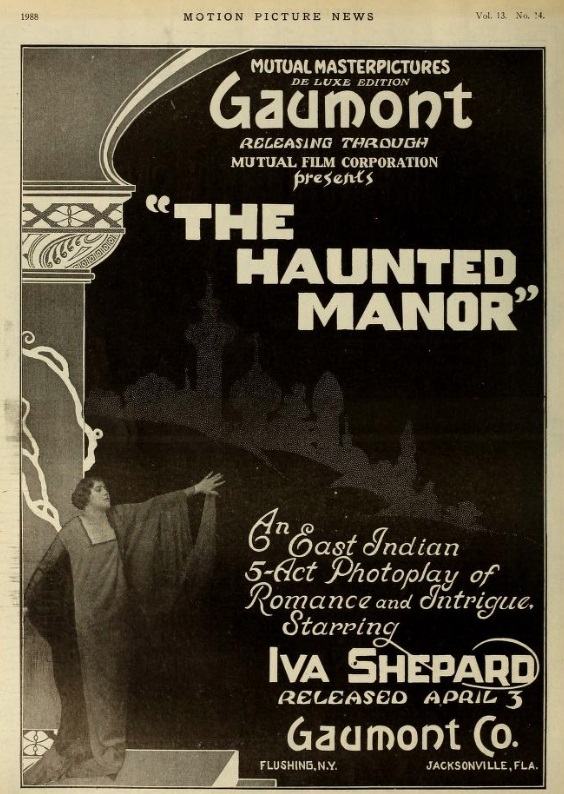
The cinematic landscape of 1916 was a fertile ground for narratives that grappled with the burgeoning American identity against the backdrop of global mysticism. The Haunted Manor stands as a quintessential artifact of this period, weaving a tapestry of romance, cultural collision, and psychological turmoil. While many films of the era sought to simplify the 'Other,' this production—penned by C.A. Nelson—navigates the precarious waters of international liaison with a fervor that is both captivating and historically symptomatic.
Olive Trevor’s portrayal of the American adventuress is a masterclass in silent-era nuance. In the context of early 20th-century cinema, the 'adventuress' was often a coded term for a woman who defied the domestic constraints of her homeland. Unlike the protagonists in Only a Factory Girl, who are defined by their socioeconomic struggle within the industrial machine, Trevor’s character exerts a magnetic autonomy. She is not a victim of circumstance but an architect of her own destiny, choosing the Rajah’s court as her stage. This choice reflects a broader cultural fascination with the 'East' as a space where Western social mores could be temporarily suspended or entirely reinvented.
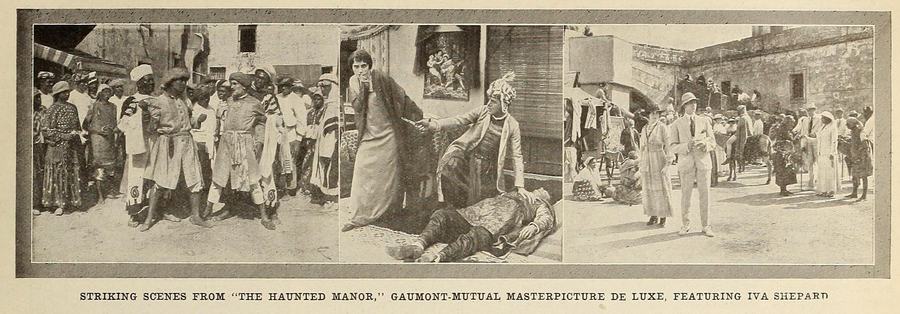
The Rajah, played with a simmering intensity, represents a complex intersection of Western anxieties. Initially, he is the benevolent host and lover, his court depicted with a visual richness that rivals the grandeur seen in The Napoleonic Epics. However, the film utilizes the Rajah’s character to explore the fragile veneer of 'civilized' royalty. When the American artist enters the frame, the Rajah’s transformation is not merely one of romantic jealousy but a perceived violation of his sovereign domain. This thematic thread echoes the territorial disputes found in The Great Divide, where the landscape itself becomes a character in the struggle for possession.
The introduction of the young American artist serves as the narrative’s centrifugal force. He represents the 'New World'—idealistic, observant, and inherently invasive. His desire to capture the adventuress’s likeness on canvas is a metaphor for the Western gaze’s attempt to claim and categorize the exotic. This conflict of 'gaze' vs. 'possession' creates a tension that is far more sophisticated than the melodramas of the time, such as Should a Woman Tell?. Here, the question isn't about moral secrets, but about the ownership of identity. The artist does not just want her heart; he wants to extract her from the Rajah’s reality and place her back into a Western frame.
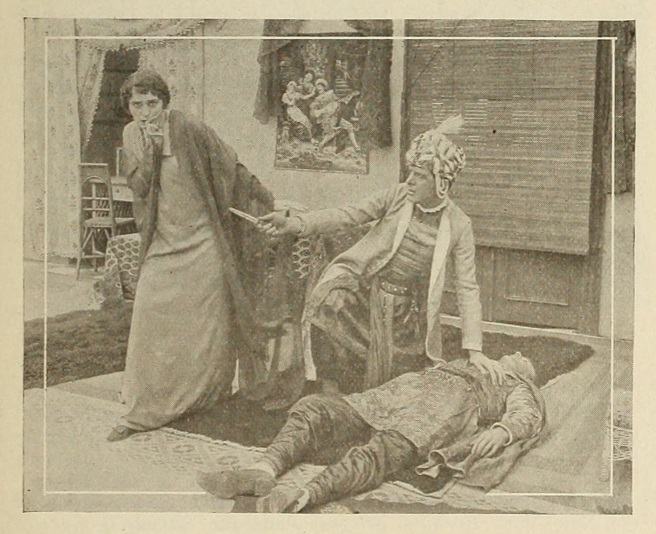
Despite its title, The Haunted Manor is less a ghost story and more a study of psychological haunting. The 'manor'—the Rajah’s court—becomes haunted by the specter of infidelity and the looming shadow of Western intervention. The cinematography utilizes deep shadows and claustrophobic framing to mirror the Rajah’s encroaching madness. It shares a certain aesthetic kinship with the dark, brooding atmospheres of Drankersken, though it swaps the grit of urban vice for the suffocating luxury of a palace. The 'ghosts' here are the memories of a peaceful coexistence that can never be reclaimed once the artist has planted the seeds of doubt.
The cast, featuring stalwarts like Gertrude Robinson and Joseph Levering, provides a robust emotional foundation. Robinson, in particular, brings a level of pathos that elevates the film beyond mere pulp fiction. Her interactions with Professor Chira provide a curious, almost mystical undercurrent to the courtly life. The ensemble work here is reminiscent of the tight-knit character studies in The Prodigal Son, where every secondary character serves to reflect a facet of the protagonist's moral journey. Even the smaller roles, such as those played by Martha Franklin and Iva Shepard, contribute to a sense of a living, breathing world that exists independently of the central love triangle.
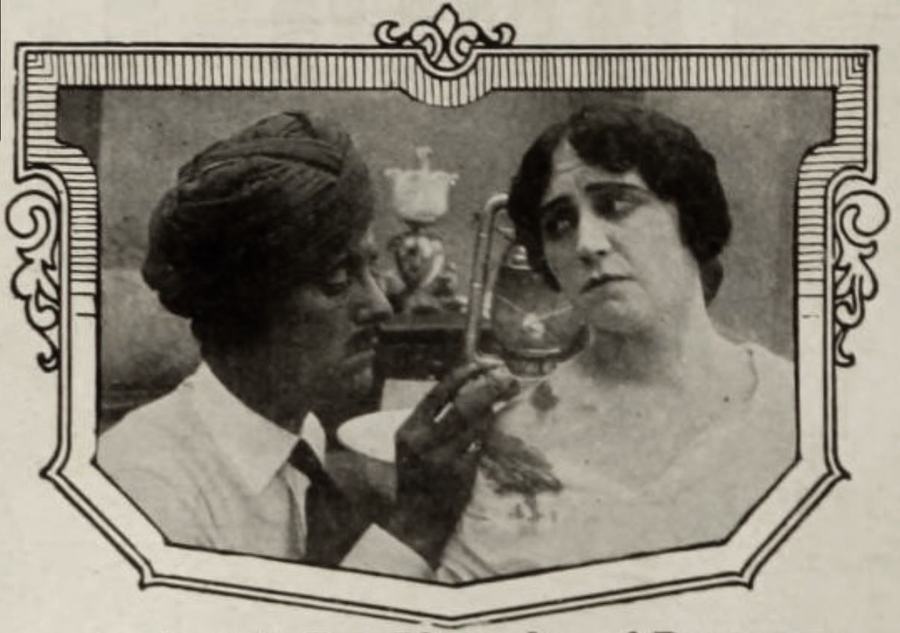
To view The Haunted Manor solely as a romance would be to ignore its inherent political dimensions. Produced in an era of colonial expansion, the film reflects the anxieties of a world where borders were being redrawn. The Rajah is not just a man; he is a symbol of an older world order that is being encroached upon by the 'American' spirit. This clash of civilizations is handled with more nuance than in The Jungle, which focused on internal American labor struggles. Here, the struggle is external and existential. Is the American adventuress a bridge between cultures, or is she the Trojan horse that brings about the Rajah’s downfall?
When comparing this work to contemporary European cinema like Valdemar Sejr, one notices a distinct difference in the treatment of royalty. While European films often treated monarchy with a historical reverence, American films like The Haunted Manor viewed it through a lens of romanticized danger. It shares the vibrant, almost operatic emotionality of Gypsy Love, where passion overrides social duty. Furthermore, the film’s sense of adventure and peril prefigures the serialized excitement of The Adventures of Peg o' the Ring, though it maintains a more somber, tragic tone.
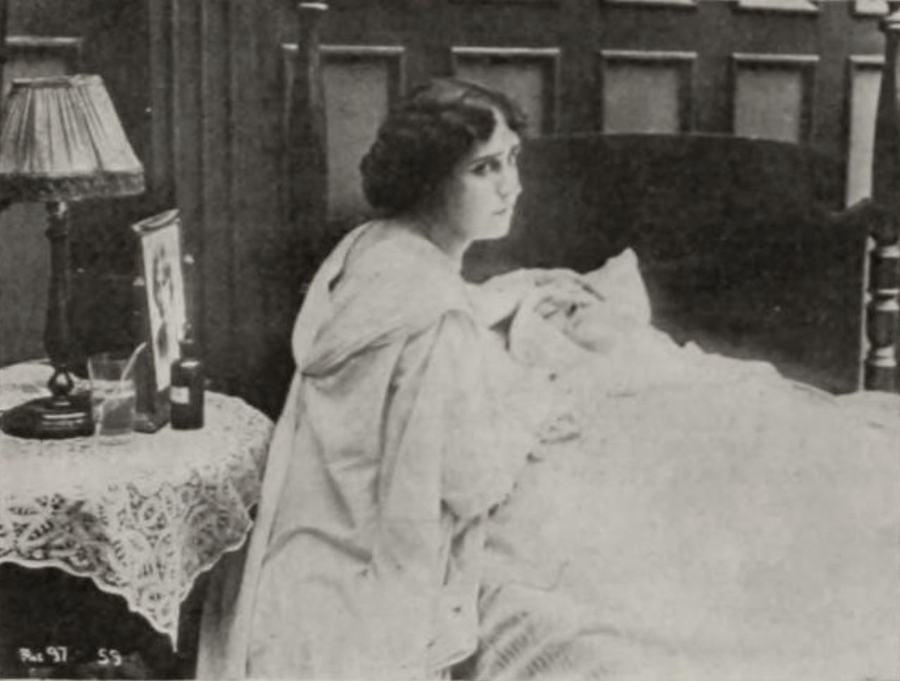
The set design of the manor deserves special mention. It is a labyrinth of silk, stone, and shadow. Every room seems to hold a secret, much like the thematic density of The Steel King's Last Wish. The contrast between the bright, sun-drenched gardens where the artist paints and the dark, oppressive interior of the Rajah’s private quarters serves as a visual shorthand for the film’s central conflict. The use of light in this film is not merely functional; it is narrative. Yellow hues signify the fleeting joy of the American lovers, while deep, sea-blue shadows represent the Rajah’s growing isolation and eventual descent into vengeance.
The climax of the film, where the Rajah’s rage finally boils over, is a sequence of visceral power. It is not a sudden explosion but a calculated, chilling manifestation of his absolute authority. Unlike the more traditional villains in The Long Arm of the Law, the Rajah is a figure of tragic depth. His actions, while violent, are rooted in a profound sense of betrayal. He has lost not just a lover, but the sanctity of his world. The film leaves the audience with a haunting question about the cost of cultural interference—a theme that resonates with the moral complexities of Money and The Stubbornness of Geraldine.
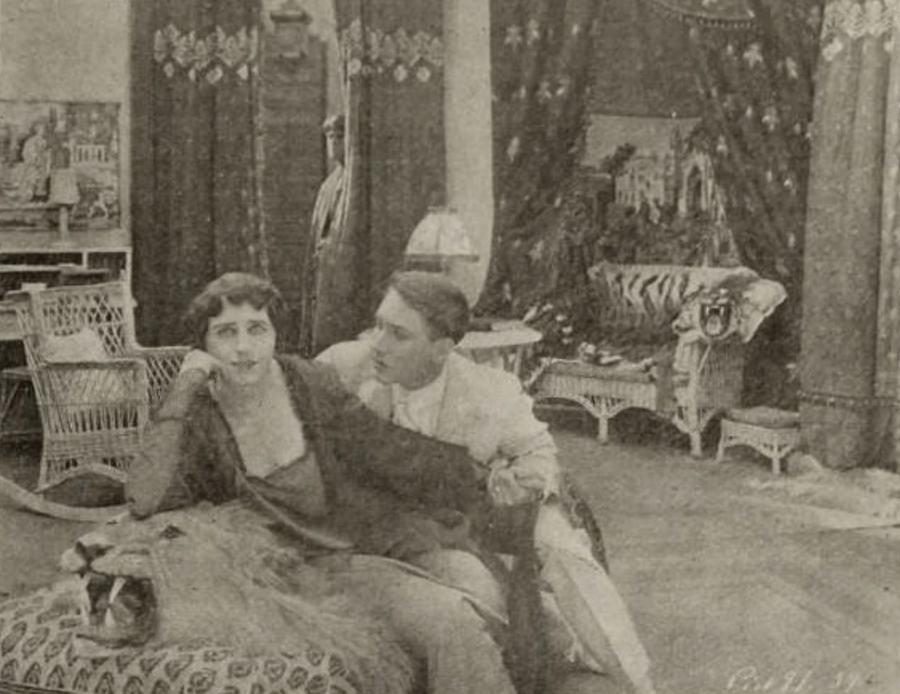
The Haunted Manor is a film that demands to be viewed through multiple lenses. It is a romantic tragedy, a cultural critique, and a showcase of early cinematic craft. While it occasionally falls into the tropes of its time, its commitment to exploring the darker side of passion and the volatility of the 'East-West' encounter makes it a standout work. It lacks the lightheartedness of Liliomfi, opting instead for a heavy, atmospheric resonance that lingers long after the final frame. For the modern viewer, it provides a fascinating, if sometimes uncomfortable, window into how the early 20th century conceptualized the intersection of love, power, and the exotic.
In the pantheon of silent cinema, this film serves as a reminder that the 'haunting' is often not done by spirits, but by the irreconcilable differences between the worlds we inhabit and the people we choose to love within them.
IMDb —
1919
Community
Log in to comment.