DbcultAccessing Vault...
Cult Review
Senior Film Conservator
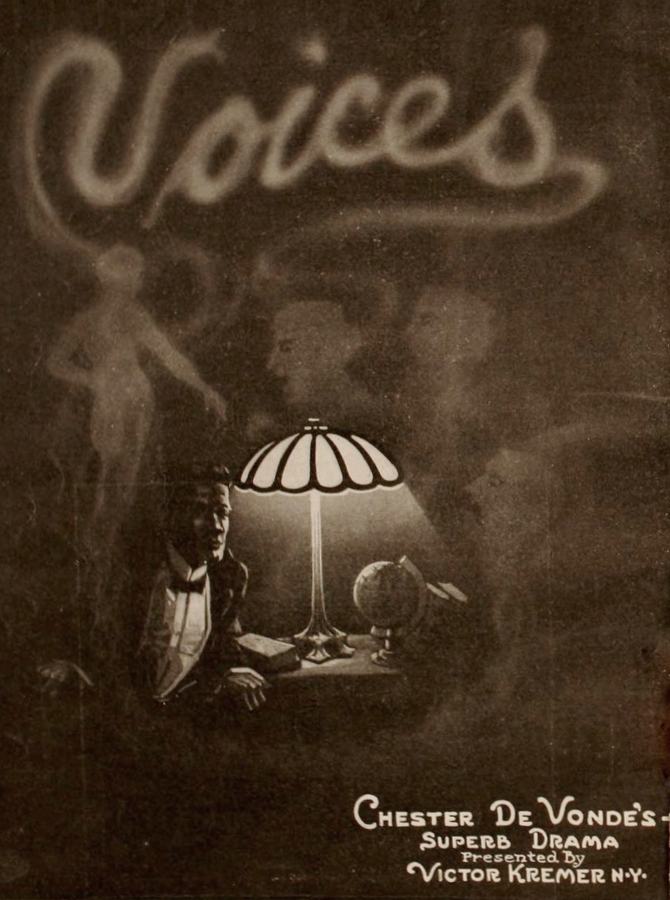
Imagine, if you will, a nickelodeon yearning to be a Grand Guignol chapel: that is Voices, a 1915 one-reel fever dream belched out of Fort Lee when the Hudson still mirrored klieg lights like liquid mercury. Chester M. De Vonde’s script—laconic yet lurid—treats Manhattan as a carnivorous chrysalis ready to digest every small-town songbird who dares flutter toward its carbon monoxide sunset.
Corliss Giles’s Mary alights from a soot-speckled carriage clutching a scholarship letter that might as well be a death warrant. De Vonde withholds establishing shots of conservatories; instead, he smash-cuts to opium-tinged parlor rooms where silk pillows perspire and gramophones exhale corrupted ragtime. The first time we see Mary’s face, it is through a beveled mirror fractured by a hairline crack—an omen rendered in pure cinema before language can blunt its sting.
Horror here is not the whip but the whisper: the hushed promise of auditions that never materialize, the perfumed acquaintance who knows every doorman by name yet never introduces you to a teacher.
Enter Gladys Coburn as the unnamed faux-student—part siren, part ticket-taker—who drapes herself in borrowed academic gowns like a wolf testing sheep’s clothing. Her performance is all sidelong glances and predatory yawns; watch how she drums a high-heeled foot against a barstool rung, syncing to the pianist’s tempo as though calculating the precise beat at which innocence will fracture.
Half a reel later, Mary is effectively disappeared. Contemporary synopses bark about “white-slave traffic,” but De Vonde is cannier than mere moral pamphleteering. He evokes the terror of erasure: letters unanswered, boarding-house bed unslept, a human being reduced to a coat left on a hook. The camera lingers on that abandoned coat—a limp husk—longer than on any purported abductor, suggesting that the crime is less bodily abduction than existential erasure.
Meanwhile, rural attics exhale dust. Gilbert Rooney’s John—a farmer, or perhaps a failed seminarian—wrestles with a scythe that refuses metaphysical comfort. De Vonde intercuts this bucolic dread with a superimposed vignette: Mary and John’s mother, long buried, materializes above a harmonium, her veil stitched from moonlight and nitrate decay. She does not speak; she transmits—a ghostly wireless warning predating radio’s ubiquity by almost a decade.
This spectral cameo lasts maybe ten seconds, yet it detonates the narrative. It is the first instance in American cinema where the afterlife is treated as a long-distance operator, patching guilt across state lines.
John’s response is not detection but kidnap capitalism: abduct the abductor’s kin. He snatches Marion (Diana Allen), Justin Lord’s polo-playing progeny, and spirits her to a squalid pier warehouse that reeks of tar and wet rope. Note how De Vonde frames Marion’s bound wrists against a porthole—through it, we glimpse the Statue of Liberty, a cruel reminder that captivity can coexist with icons of freedom.
Yet the film refuses cathartic violence. Marion, initially a bargaining chip, begins to narrate bedtime stories of her father’s loneliness; John, expecting venality, encounters vulnerability instead. Their Stockholm rapport blooms not with grand declarations but with micro-gestures: she loosens a rope to ease his blistered palm; he shares stale bread crusts as though distributing communion.
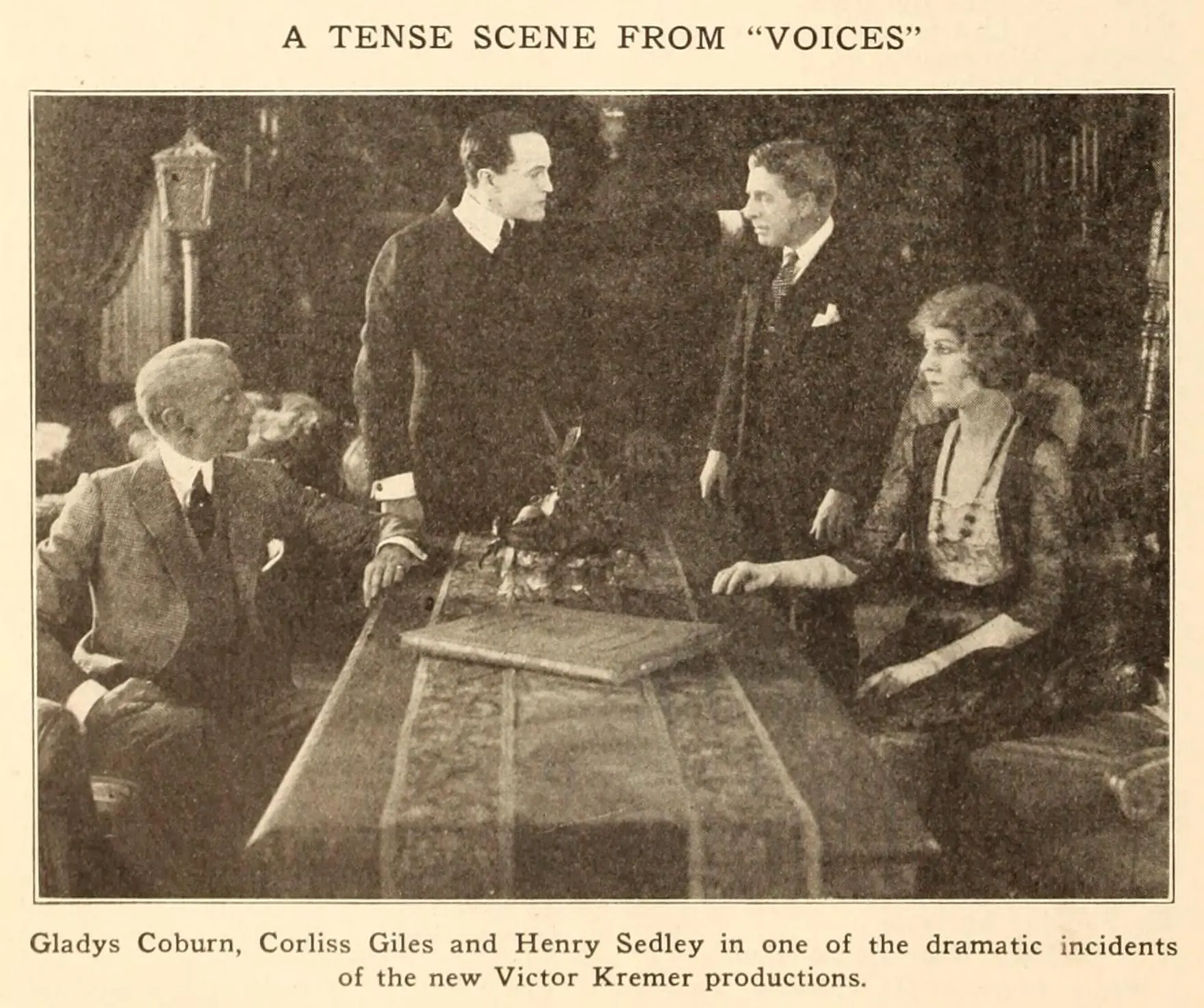
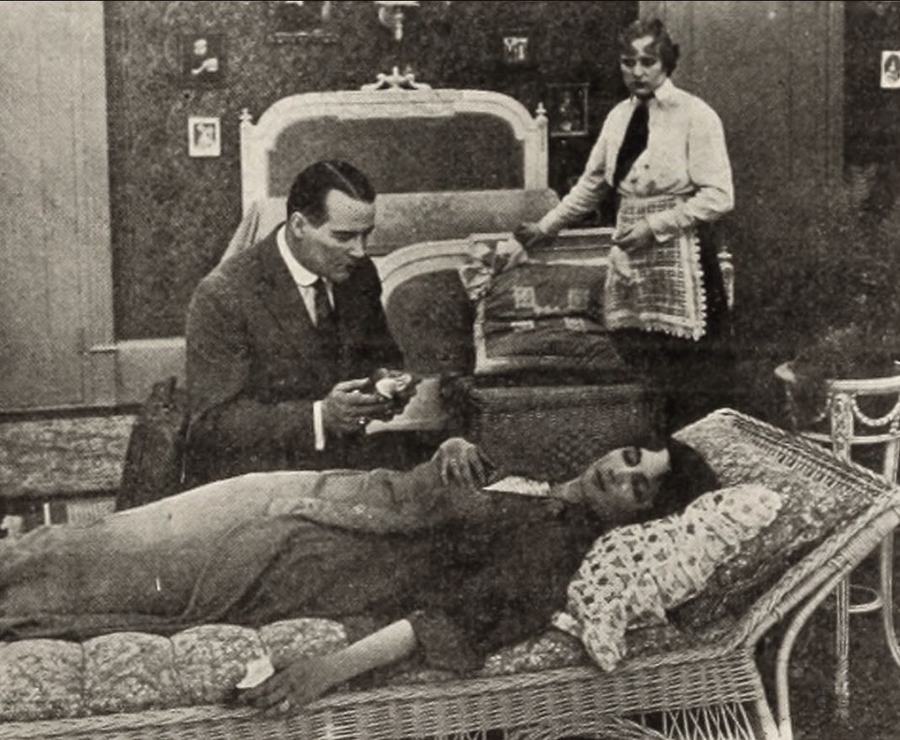
Just as vengeance primes its blade, Mary re-emerges, disheveled but defiant, on the arm of her fiancé Tom (Harold Foshay). She recounts a bedroom farce: Justin Lord, drunk on absinthial hubris, attempted seduction, tripped on an ottoman, cracked his skull on a fender, and lay motionless. Believing herself a murderess, Mary vanished into Chinatown basements, hiding among laundry baskets and immigrant lullabies. Lord, however, merely suffered a concussion; his remorse arrives gift-wrapped in bandages.
With a single expositive monologue, the film’s Grand-Guignol scaffolding collapses into commedia dell’arte. The white-slave specter evaporates; what remains is the residue of moral panic, a cultural hangover that mistook shadows for shackles.
Having threatened to orphan Marion, John now courts her. De Vonde stages their rapprochement inside a rooftop garden at dawn, the horizon bleaching from noir cobalt to hopeful amber. Marion’s nightgown flutters like a surrender flag; John’s eyes, once stony with vendetta, now glisten with sheepish awe. Their handshake—an archaic social contract—lingers two beats too long, transmuting hostility into dowry.
Likewise, Lord relinquishes Dionysian excess, donating banknotes to the settlement house where Mary volunteers. The camera, previously vertiginous, now glides with the serenity of a repentant sinner leaving confession.
Cinematographer Gaspard Hicks employs chiaroscuro like a pickpocket: shadow is not absence but presence wearing darkness for camouflage. In one insert, Mary’s profile dissolves into the silhouette of a caged canary—an image that would prefigure Lang’s use of bird imagery in The Golden Sea by six years.
Mirrors recur whenever identity destabilizes: the fake student powders her nose while reflecting multiple selves; John glimpses his mother’s ghost in a wardrobe mirror fogged by breath. Each reflection is a visual echo chamber where selves refract ad infinitum, evoking the psychoanalytic labyrinth later plumbed by Hick Manhattan.
Negative space, meanwhile, articulates erasure: doorframes swallow bodies, windows open onto voids. De Vonde learned from European masters that what the audience cannot see will torment them longer than any monster.
Corliss Giles’s Mary is no fainting doyenne; her terror manifests as a twitching thumb that drums against her thigh in rhythmic Morse. When she believes herself a killer, her pupils dilate until iris borders vanish—an effect achieved by the actress staring into kliegs until tears formed, a masochistic devotion predating method acting.
Gilbert Rooney navigates John’s arc from bumpkin to avenging angel to penitent lover with only his gait: shoulders forward like a battering ram in act one, spine erect with hesitant nobility by finale.
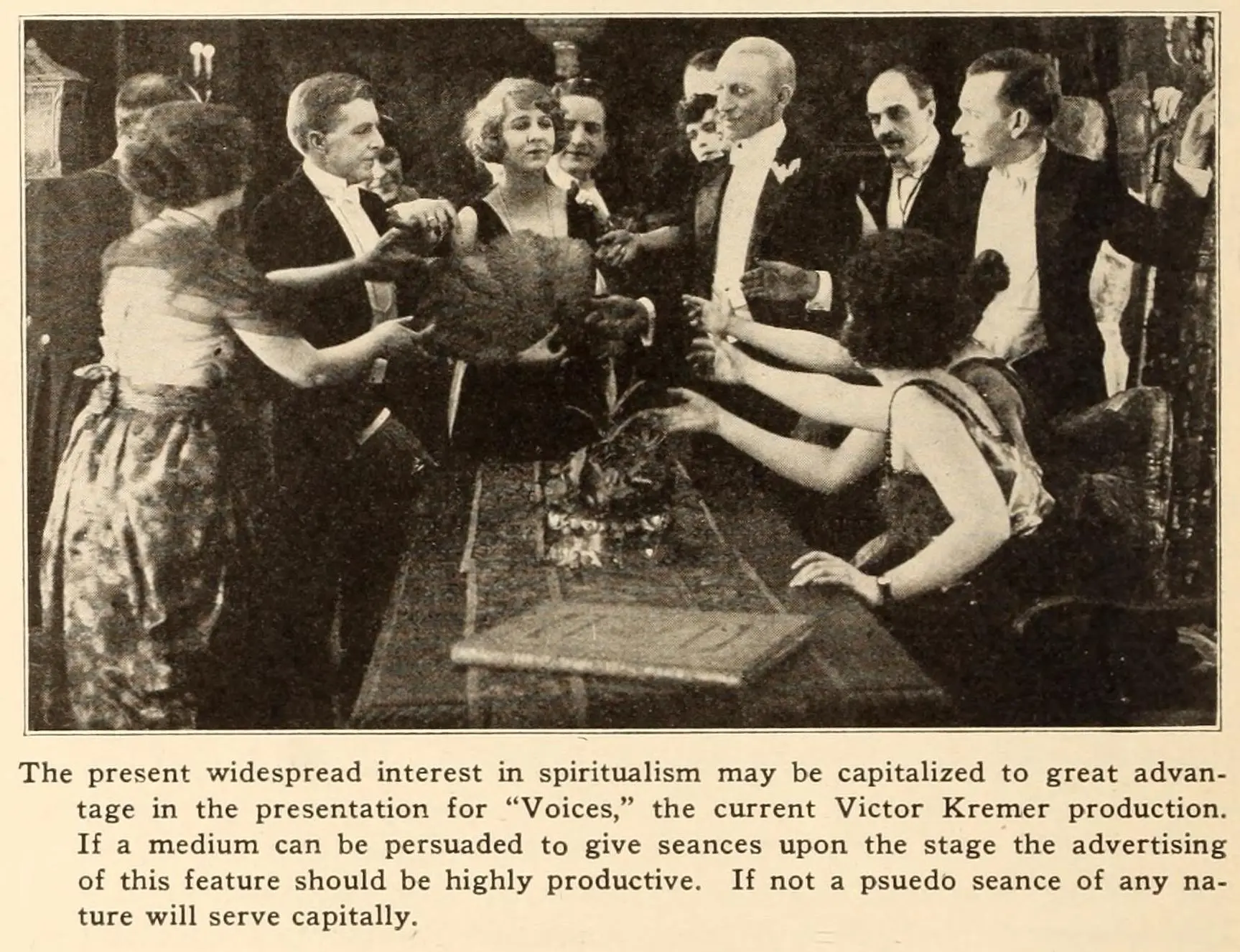
Henry Sedley’s Justin Lord, decked out in satin lapels and the perpetual sneer of the overfed, never tilts into caricature. Watch the moment he awakens concussed: his smirk trembles, falters, then reconfigures into the tremulous smile of a man who has glimpsed his own obituary.
Though mute, Voices was designed for live accompaniment—cue sheets demanded a discordant tango whenever moral peril looms, shifting to a lullaby in D-minor for spectral visitations. Modern restorations sync a prepared-piano score that interpolates Scott Joplin fragments with Cecil Taylor clusters; the result is a temporal ricochet that makes 1915 feel like 1965’s free-jazz underground.
De Vonde’s montage anticipates Soviet rhythms: repeated close-ups of telegraph keys hammering out urgency, intercut with spinning newspaper presses. Each splice shortens by one frame, accelerating the heartbeat until the audience itself becomes the Morse apparatus.
Released months after the Rockefeller Grand Jury exposed Manhattan’s white-slave underbelly, the film rides the crest of moral hysteria yet also deconstructs it. The supposed trafficking never materializes on-screen; De Vonde implies that the idea of slavery is more titillating—and lucrative—than its reality. In doing so, he indicts both the vice reformers and the penny-press that thrived on their exposés.
Compare this with the proletarian candor of Salt of the Earth or the anarchic fatalism of Vendetta; Voices stands apart by exposing panic as a commodity marketable to both pulpit and nickelodeon.
Early reels trap Mary within masculinist voyeurism: every male extra turns to leer as she traverses Herald Square, the camera adopts their POV, and the city itself becomes a collective predatory gaze. Yet by reel four, Mary reclaims ocular authority. When she recounts Lord’s accident, De Vonde grants her a subjective flashback—the only POV flip in the film—allowing her to narrativize her own body. The gesture is modest but seismic; it prefigures feminist self-voice in The Heart of Paula by nearly a decade.
Modern palates may balk at the tidy reconciliation: a single mea culpa absolves Lord’s predation, and Marion’s affection feels like narrative expediency rather than earned empathy. The final kiss, backlit by a studio sunrise, reeks of patriarchal wish-fulfillment—the same mechanism that allowed 1910s audiences to gasp at sin, then sigh with relief when order restored itself.
Additionally, the middle reel sags under expository telegram montages; De Vonde, constrained by one-reel runtime, opts for redundancy rather than visual ellipsis. These are not fatal wounds, but scars that remind us the film is both artifact and living tissue.
For decades, Voices survived only in a battered 9-mm orphan print hoarded by a Québec seminary. A 2018 MoMA restoration—funded by a Kickstarter that surpassed its goal within hours—yielded a 2K scan from the original camera negative discovered in a Jersey barn. The new edition includes optional tinting that cycles from viridian for rural calm to amber for metropolitan temptation, replicating 1915 exhibition practices.
Streaming rights remain tangled in estate limbo, but repertory houses occasionally pair it with Alice in Wonderland for a double bill of innocence warped by surreal peril. Catch it if you can; some silents you merely watch—Voices watches you back, its maternal ghost whispering that cities still devour songbirds, only the cages have become glassier.
Absolutely—if you crave a film that functions as séance, sociological X-ray, and cinematic missing link. It will frustrate those who demand moral absolutes or seamless plotting, but exhilarate anyone hungry for shadows that pulse with undigested modernity. De Vonde may not be a household name, yet his flicker remains a lantern swinging at the intersection of commerce, conscience, and celluloid myth. Step close, and you might hear your own pulse syncing to that maternal Morse from beyond the nitrate veil.
IMDb 6.5
1936
Community
Log in to comment.